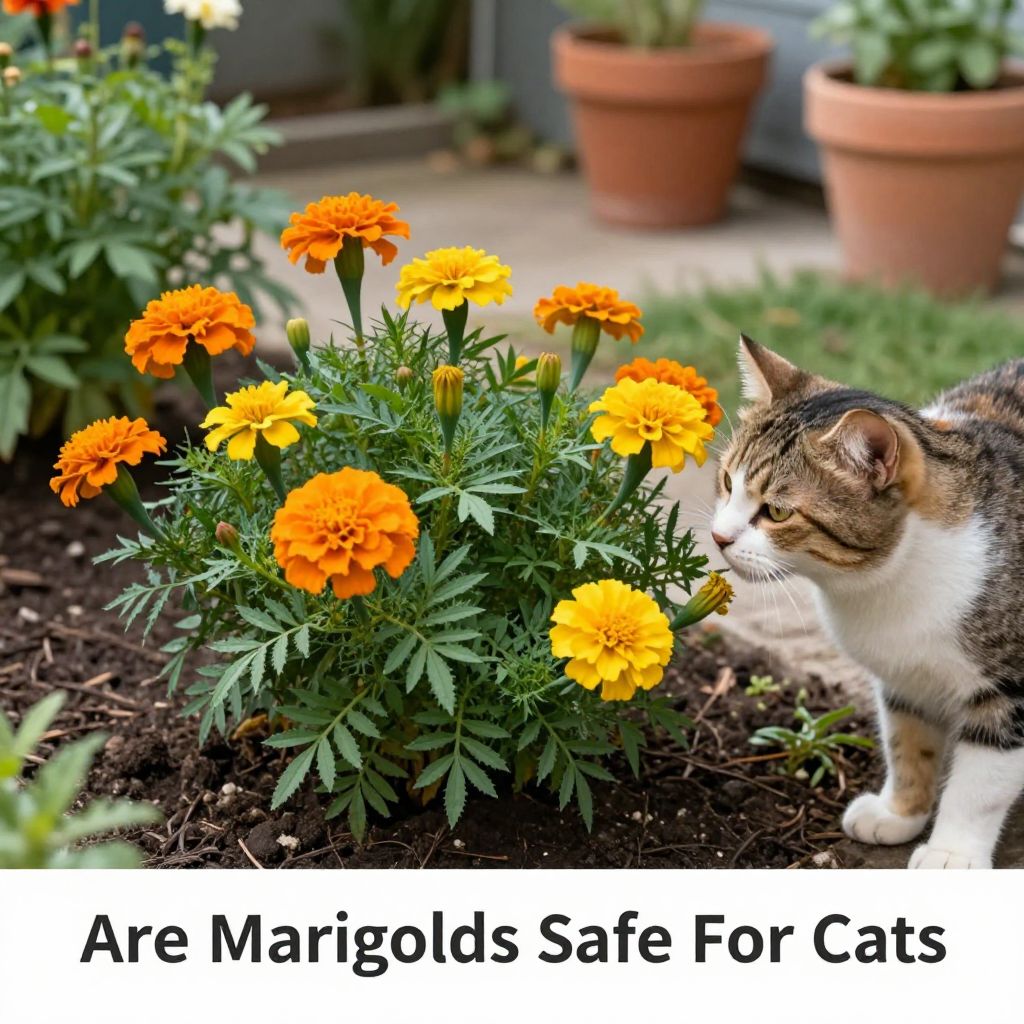
Are marigolds safe for cats? If you grow these bright annuals in a garden where cats roam, the short answer matters. Marigolds are generally considered low-risk for cats, but they are not something you want pets to chew on regularly, and some cats may still develop mild stomach upset or skin irritation.
Knowing how marigolds behave in the garden helps you decide where to plant them, how to keep cats away from nibbling, and how to handle any accidental exposure. With a few practical precautions, you can enjoy marigolds for color, pollinators, and pest management without creating unnecessary risk for your cat.
Are marigolds safe for cats?
Marigolds are usually regarded as non-toxic or low-toxicity to cats, but they can still cause mild digestive upset if eaten and may irritate sensitive skin or mouths. If your cat chews a lot of plant material, it is best to discourage access and monitor for vomiting, drooling, or pawing at the mouth.
What to know before planting marigolds around cats
Marigolds are popular in home gardens because they are easy to grow, bloom for a long season, and fit well in borders, containers, and vegetable beds. The main concern for cat owners is not usually severe poisoning, but accidental nibbling, digging, or contact with plant sap and foliage.
Why cats may be drawn to them
- Bright flowers can attract curious cats.
- Loose, freshly worked soil invites digging.
- Some cats chew plants out of boredom or habit.
What symptoms to watch for
If a cat eats marigold leaves or petals, possible signs are usually mild and short-lived. Watch for:
- Vomiting
- Drooling
- Reduced appetite
- Mild diarrhea
- Redness or irritation around the mouth
If symptoms are severe, persistent, or your cat seems distressed, contact a veterinarian promptly. It is also wise to check whether your cat may have eaten fertilizers, mulch, or pesticides along with the plant.
Growing marigolds safely in a cat-friendly garden
If you want marigolds in a yard with cats, the goal is to grow them where the plants are attractive to you but less accessible to your pet. Marigolds do best in full sun, well-drained soil, and regular deadheading, so placement matters both for plant health and for limiting cat traffic.
Best planting spots
- Raised beds with a border or edging
- Containers placed on patios or shelves cats cannot reach
- Front borders away from common cat paths
- Vegetable beds protected with fencing or low barriers
Container planting is often the easiest option if you have indoor-outdoor cats or neighborhood cats that wander through your garden. Choose a pot with drainage holes and a stable base so it does not tip over if bumped.
Soil and drainage
Marigolds prefer soil that drains well rather than staying soggy. In heavy clay, work in compost to improve structure, or grow them in containers filled with a quality potting mix. Good drainage helps prevent root problems and keeps the planting area less muddy for paw traffic.
Sunlight and spacing
Most marigolds flower best in full sun, which generally means at least 6 hours of direct light daily. Space plants so air can move around them, since crowded, damp foliage is more prone to disease and can create a dense hiding spot for cats.
How to keep cats from chewing or digging in marigolds
Even if marigolds are low-risk, it is still smart to prevent repeated chewing. A cat that samples one plant may move on to another, and garden damage often starts with one curious visit.
Practical deterrents
- Use low fencing, wire cloches, or decorative plant guards around young plants.
- Mulch with materials cats dislike walking on, such as coarse pine cones or larger decorative stones, while avoiding anything sharp.
- Place sticks or short twiggy prunings lightly over bare soil to discourage digging.
- Keep the area tidy so fallen petals and leaves do not invite play.
- Offer a separate, cat-safe distraction area elsewhere in the yard if your cat likes to explore.
Avoid using repellents unless the label specifically says they are safe for pets and intended for garden use. Some products can irritate paws or mouths even when they are meant to deter animals.
Planting and care tips for healthy marigolds
Healthy marigolds are less likely to attract pest problems and are easier to maintain in a cat-accessible garden. They are generally straightforward annuals, but a few care habits make a big difference in bloom quality and plant sturdiness.
Planting from seed or transplants
You can start marigolds from seed or buy young plants. Seeds are useful if you want to fill a larger area economically, while transplants give you a head start in shorter seasons. Follow the spacing on the seed packet or plant tag, since mature size varies by type.
Watering
Water newly planted marigolds regularly until they establish, then water when the top layer of soil begins to dry. Try to water at the base rather than overhead, which helps reduce leaf spotting and keeps the foliage drier in humid weather.
Feeding
Marigolds usually do not need heavy feeding. Too much nitrogen can produce lush leaves and fewer flowers, so use compost or a balanced, light feeding only if your soil is poor. In rich garden soil, many marigolds bloom well with minimal extra fertilizer.
Deadheading and pruning
Remove spent flowers to encourage more blooms and keep the plants looking tidy. Pinch or trim leggy stems if the plant becomes stretched, especially after windy weather or if it is growing in partial shade.
Common marigold problems in gardens with cats
Most marigold issues are ordinary garden problems, but a cat-friendly planting can add a few extra challenges. The key is to separate plant health concerns from pet behavior so you can troubleshoot the right issue.
Fungal disease and wet foliage
Powdery mildew, leaf spots, and root rot are more likely when plants are crowded or soil stays wet. Improve spacing, water at the soil line, and remove badly affected leaves. If the plant is in a pot, make sure excess water can drain freely.
Insect pests
Aphids, spider mites, and thrips may appear, especially in hot or sheltered spots. Rinse small infestations off with a strong spray of water or use a garden-safe control method labeled for edible or ornamental plants, following the label carefully if pets are in the area.
Cat-related damage
Broken stems, flattened seedlings, and scratched pots are often caused by curious cats rather than disease. If this happens repeatedly, move the plants, add a barrier, or switch to heavier containers that are harder to knock over.
What to do if your cat eats marigolds
If you catch your cat nibbling marigolds, remove the plant material from their mouth only if you can do so safely. Then observe your cat for the next several hours for vomiting, drooling, or unusual behavior.
Simple response checklist
- Take the plant away and prevent more chewing.
- Check whether the cat may also have eaten mulch, fertilizer, or another plant.
- Offer fresh water.
- Monitor for symptoms such as vomiting or lethargy.
- Call your veterinarian if symptoms are strong, repeated, or you are unsure what was eaten.
If your cat has a history of chewing houseplants or garden plants, it is worth reviewing the whole planting area, not just the marigolds. Some common ornamentals are much more dangerous than marigolds, so plant selection matters.
Good companion planting choices for a cat-conscious garden
Marigolds are often used in vegetable gardens and borders because they are easy to mix with other plants. If cats visit your beds, choose companions that tolerate similar sun and soil conditions and avoid plants known to be risky for pets.
Useful design ideas
- Use marigolds as edging around tomatoes or herbs in sunny beds.
- Plant them in containers near entrances where you can monitor them easily.
- Combine them with sturdy, non-toxic ornamentals that do not flop onto walkways.
Keep in mind that companion planting should not replace cat-proofing. A well-placed barrier and good garden layout are still the most reliable ways to prevent nibbling.
Conclusion: grow marigolds with simple cat-safe habits
So, are marigolds safe for cats? In most gardens, yes, they are considered low-risk, but they are still best treated as a plant to discourage chewing rather than a snack. Plant them in sunny, well-drained spots, keep the area tidy, and use barriers or containers if your cat is especially curious.
If you want to make your garden even safer and easier to maintain, consider reading more about container planting, deadheading annual flowers, and pet-friendly garden design for practical next steps.