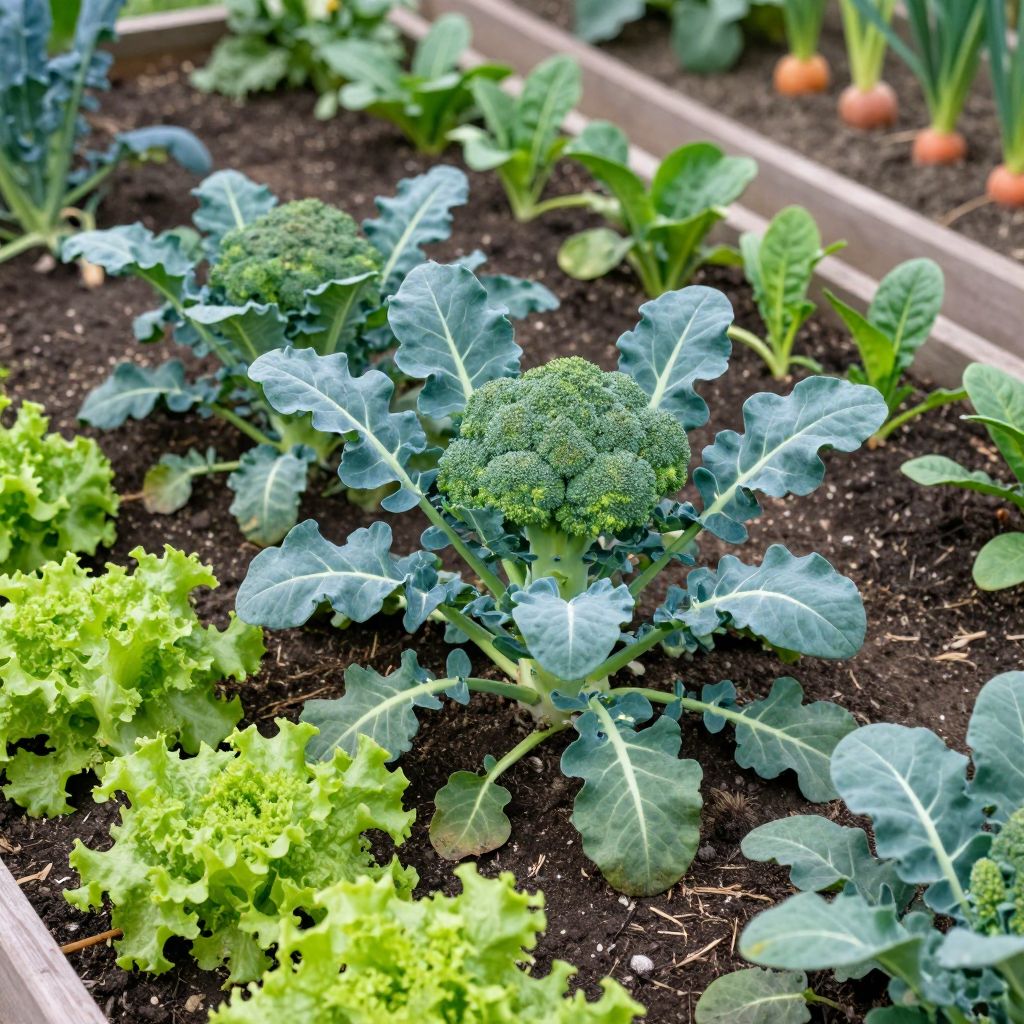
Wondering what to plant with broccoli so it grows well and uses your garden space efficiently? Broccoli is a cool-season crop that benefits from thoughtful companions, especially plants that help with pest control, shade the soil, or fill gaps before and after harvest.
The best companions are usually herbs, leafy greens, root crops, and a few flowers. The wrong neighbors can compete for nutrients, crowd the bed, or increase pest pressure, so spacing and timing matter as much as plant choice.
What to plant with broccoli?
Good companions for broccoli include lettuce, spinach, beets, carrots, onions, garlic, dill, chamomile, thyme, and nasturtiums. These plants either mature quickly, use different root zones, attract beneficial insects, or help confuse pests like cabbage worms and aphids without competing heavily with broccoli.
Best companion plants for broccoli
Leafy greens that fit around broccoli
Broccoli grows upright and leaves some usable space between plants, especially early in the season. Fast-growing greens can make excellent companions because they mature before broccoli gets large and shaded.
- Lettuce – Tolerates partial shade and can be harvested before broccoli fills in.
- Spinach – A cool-season crop that works well in the same weather window.
- Arugula – Quick to harvest and useful as a short-term filler crop.
- Swiss chard – Can work at the edge of the bed if space is available, though it is more vigorous than lettuce.
These crops are useful because they do not usually compete aggressively with broccoli for root space. They also let you harvest something from the bed while broccoli is still developing.
Root crops that use the lower soil layer
Root vegetables often pair well with broccoli because they occupy a different part of the soil profile. This makes them a practical choice in small beds where you want to maximize yield.
- Carrots – Best when sown where broccoli will not shade them too heavily.
- Beets – A reliable companion in cool weather and easy to harvest between larger plants.
- Radishes – Very fast, making them ideal as a temporary filler crop.
- Turnips – Good in cool weather, though they need enough room to size up.
Radishes are especially useful because they can be harvested before broccoli needs the space. Carrots and beets work best when planted early and kept evenly moist so they germinate well.
Alliums that may help deter pests
Onions, garlic, chives, and leeks are often planted near broccoli because their strong scent may help confuse some insect pests. They also have a relatively narrow growth habit, so they do not take up much room.
- Onions
- Garlic
- Chives
- Leeks
These are not a magic pest barrier, but they can be useful in mixed plantings. They are especially practical in beds where you want a tidy layout and low competition.
Herbs and flowers that support beneficial insects
Some herbs and flowers help attract pollinators and beneficial insects that prey on garden pests. Broccoli does not need pollination for the edible head, but nearby flowers can improve the overall balance of the garden.
- Dill – Attracts beneficial insects, but give it enough room so it does not crowd broccoli.
- Chamomile – A light, airy companion that can fit along bed edges.
- Thyme – Low-growing and useful as an edging plant.
- Nasturtiums – Often used as a trap crop for aphids and as a pollinator-friendly flower.
- Calendula – A practical flower for attracting beneficial insects in cool-season beds.
Flowers are most useful when planted around the edges or in nearby rows, not jammed directly against broccoli stems. Good airflow still matters more than decorative density.
Plants to avoid near broccoli
Broccoli belongs to the brassica family, so it usually does best when you avoid close planting with other heavy-feeding brassicas in the same small space. The main issue is competition, shared pests, and disease buildup.
- Other brassicas such as cabbage, cauliflower, Brussels sprouts, kale, collards, and kohlrabi can attract the same pests and use similar nutrients.
- Fennel is generally a poor neighbor for many vegetables and is best kept separate.
- Large, aggressive crops that shade broccoli or crowd the roots can reduce head size and slow growth.
If you have a small garden, avoid packing too many brassicas into one bed. Rotating crops from year to year is usually more effective than trying to “fix” a crowded planting with companion plants alone.
How to plant broccoli with companions
Plan for sunlight and spacing first
Broccoli needs full sun in most climates, though it can tolerate a little light afternoon shade in warm regions. Companion plants should fit around that need, not block it.
- Choose a bed with at least 6 hours of direct sun if possible.
- Place taller broccoli where it will not shade sun-loving companions too early.
- Use low-growing herbs, greens, or root crops in the open spaces between plants.
- Leave enough airflow to reduce disease, especially in humid weather.
A common mistake is planting broccoli too tightly with “helpful” companions. Crowding can lead to smaller heads, more aphids, and higher risk of fungal problems.
Use rich, well-drained soil
Broccoli is a heavy feeder and does best in fertile soil with good drainage. A bed amended with compost before planting usually performs better than one fed only after problems appear.
- Work in compost to improve moisture retention and soil structure.
- Avoid waterlogged soil, which can stress roots and slow growth.
- Keep soil evenly moist, especially while seedlings are establishing.
If your soil is sandy, it may dry too quickly for broccoli and its companions. If it is heavy clay, raised beds or broad mounded rows can improve drainage and root growth.
Match companion timing to broccoli’s growth cycle
Broccoli is usually planted for cool weather, and many companion crops should be timed to fit that window. Quick crops are especially useful because they can be harvested before broccoli reaches full size.
- Before broccoli fills in: sow radishes, spinach, lettuce, or arugula between transplants.
- At planting time: tuck in onions, chives, or herbs along the edges.
- After harvest: replant the space with another cool-season crop or a soil-building cover crop suited to your climate.
In warmer climates, broccoli may bolt or become bitter if planted too late. In cooler climates, it may hold longer, giving you more time to use interplanted greens and roots.
Broccoli care when grown with companions
Water consistently
Broccoli and many of its companions prefer steady moisture. Irregular watering can cause stress, poor growth, and uneven development in roots and leaves.
Water deeply when the top layer of soil begins to dry, adjusting for rainfall, soil type, and temperature. Mulch can help conserve moisture and keep the root zone cooler.
Feed lightly but effectively
Because broccoli is a heavy feeder, compost-rich soil is important. If plants look pale or growth slows, the issue may be nutrient availability, but avoid overfertilizing leafy companions at the expense of broccoli head development.
- Use compost as the foundation of fertility.
- Side-dress only if your soil and plants clearly need it.
- Avoid pushing too much nitrogen late in the season, which can produce lots of leaves but weak heads.
Watch for pests and diseases
Companion planting can help, but it does not replace basic pest management. Broccoli is commonly affected by cabbage worms, aphids, flea beetles, and root problems in poorly drained soil.
- Check leaf undersides for eggs and caterpillars.
- Use row cover early in the season if pests are a recurring problem.
- Remove yellowing or diseased leaves promptly to improve airflow.
- Keep the bed free of weeds that can harbor pests.
Nasturtiums and herbs may help draw pests away or attract beneficial insects, but they work best as part of a broader care routine. If you see repeated damage, inspect the crop closely instead of assuming the companions are enough.
Good broccoli companion planting combinations
Simple bed layout ideas
If you want a practical starting point, use combinations that balance height, root depth, and harvest timing. These pairings are easy for beginners to manage.
- Broccoli + lettuce + radishes – A classic cool-season mix with fast harvests.
- Broccoli + onions + carrots – Good for a tidy bed with different root zones.
- Broccoli + spinach + dill – Useful when you want leafy greens and beneficial insect support.
- Broccoli + chives + nasturtiums – A compact mix for pest awareness and edge planting.
Keep taller or bushier companions at the edges so broccoli still gets enough light. In smaller gardens, think in layers: low greens in the middle, alliums or herbs around the border, and flowers at the corners.
Common mistakes when choosing what to plant with broccoli
- Planting too many brassicas together and increasing pest pressure.
- Ignoring spacing, which reduces airflow and head size.
- Choosing companions that need full sun later in the season when broccoli starts shading the bed.
- Letting the soil dry out unevenly, which stresses both broccoli and nearby crops.
- Assuming companion plants replace pest control when insects are already active.
If you are unsure what to plant, start with the safest options: lettuce, spinach, radishes, onions, and chives. These are generally easy to fit into a broccoli bed without creating major competition.
Conclusion
When deciding what to plant with broccoli, choose companions that fit the season, stay relatively compact, and do not compete heavily for light or nutrients. Leafy greens, root crops, alliums, and a few beneficial-insect plants are usually the best choices. Start with one or two simple combinations, then adjust based on your local weather and how crowded your bed becomes.
For more help planning a productive cool-season garden, you may also want to read about companion planting for vegetables and how to grow broccoli successfully.
Leave a Reply