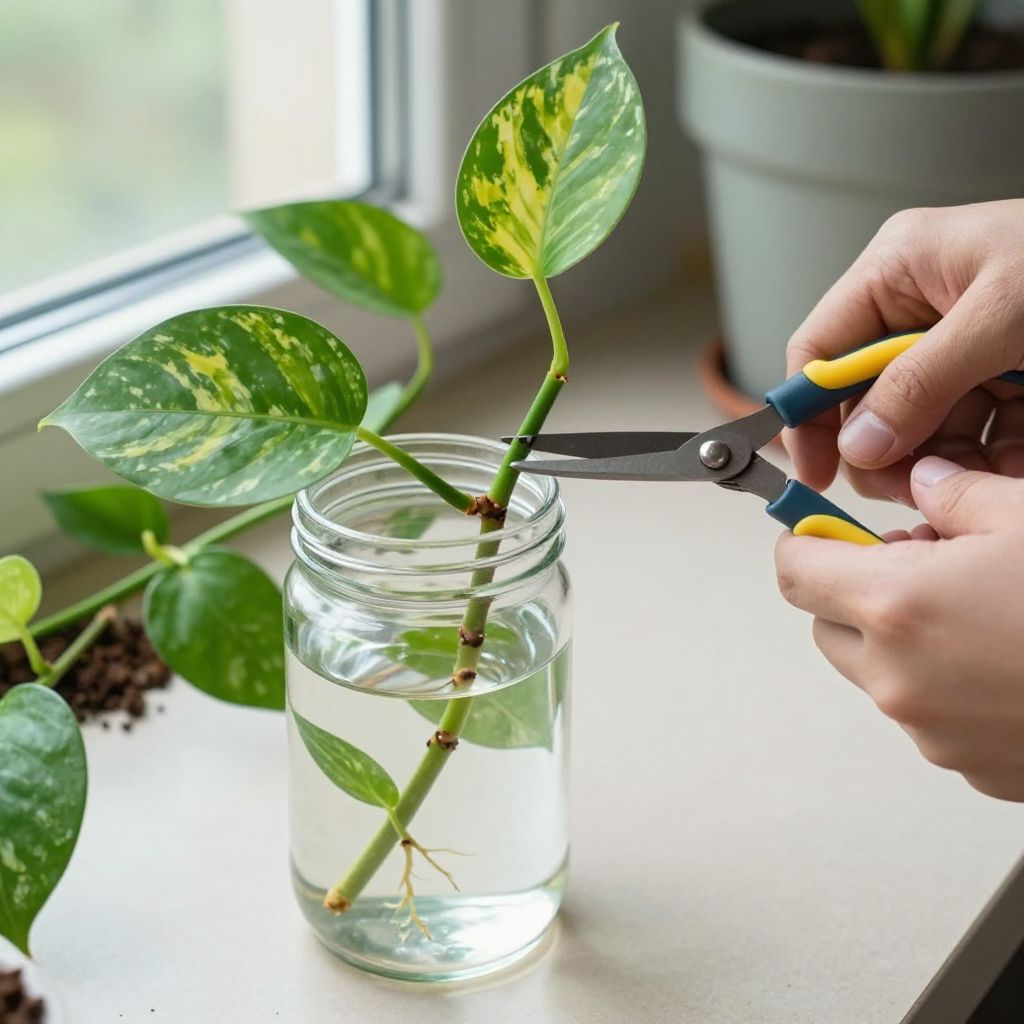
If you’re wondering where to cut pothos to propagate in water, the short answer is: cut just below a node. That’s the little bump on the vine where leaves and aerial roots grow. A cutting with at least one node, and ideally one or two leaves, is the best choice for reliable rooting in water.
Make the cut with clean scissors or pruners, then place the node in water while keeping the leaves above the surface. With bright indirect light, warm indoor temperatures, and fresh water changes, pothos usually roots quickly and is one of the easiest houseplants to propagate.
Where To Cut Pothos To Propagate In Water?
Cut 1/4 to 1/2 inch below a node on a healthy pothos vine. The node is the part of the stem where a leaf attaches and where roots can form. For the best results, choose a section with at least one node and one healthy leaf, then place that node in water while keeping the leaf out of the water.
How to Identify the Right Spot on a Pothos Vine
Pothos vines have repeating sections along the stem. Each section usually includes a leaf, a node, and sometimes a small aerial root nub.
What a node looks like
- A slightly swollen bump on the vine
- The point where a leaf emerges
- A small brown or pale root nub on some stems
When you are deciding where to cut pothos to propagate in water, do not cut through the middle of a leaf stem and expect roots. The node is the part that matters most.
Best cutting lengths
- Single-node cutting: good for saving space and making several cuttings from one vine
- 2- to 4-node cutting: often roots well and gives you a fuller plant later
- Long vine sections: useful if you want a bushier plant, but they are not required
If you are new to propagation, start with a cutting that has at least one node and one leaf. That gives you a simple, easy-to-handle piece while still providing enough energy for rooting.
Step-by-Step: Propagating Pothos in Water
- Choose a healthy vine. Pick a stem with firm leaves, good color, and no obvious pests or rot.
- Find a node. Look for the bump where a leaf grows from the stem.
- Cut below the node. Make a clean cut about 1/4 to 1/2 inch beneath it.
- Remove lower leaves. Strip off any leaves that would sit below the waterline.
- Place the cutting in water. Make sure the node is submerged and the leaves stay dry.
- Set it in bright, indirect light. Avoid harsh direct sun, which can heat the water and stress the cutting.
- Refresh the water regularly. Change it every few days or whenever it looks cloudy.
A clear jar or glass is helpful because you can watch root growth. Just be sure the container is stable enough to keep the cutting upright.
How Many Nodes Do You Need?
One node is enough to root a pothos cutting in water, but two or more nodes can improve your chances and give you a stronger start. If you want a fuller plant later, use a longer cutting with multiple nodes and divide it after roots develop.
Why nodes matter so much
Nodes contain the tissue that can produce new roots and shoots. Without a node, a pothos cutting may stay green for a while but usually will not root properly.
Where to Cut on Different Types of Pothos Vines
Whether your plant is trailing from a shelf or climbing a moss pole, the cutting rule is the same: cut just below a node. Still, the best place on the plant can vary depending on what you want to do next.
If you want to keep the mother plant full
Cut longer vines back to just above a node on the parent plant. That node can branch and help the original plant grow bushier.
If you want several cuttings
Take a long vine and divide it into sections, making each piece about 4 to 6 inches long with at least one node. This is a good way to multiply a healthy pothos quickly.
If the vine is leggy
Use propagation as a chance to rejuvenate the plant. Cut back long, sparse stems and root the healthy top sections in water, then replant them later to make the pot fuller.
Common Mistakes to Avoid
- Cutting above a node instead of below it
- Leaving leaves underwater, which often causes rot
- Using a dull or dirty tool, which can crush stems or spread disease
- Placing cuttings in low light, which slows rooting
- Forgetting to change the water, which can lead to cloudy, stagnant conditions
- Waiting too long to pot up, especially if roots become tangled or weak in water
One of the most common errors is taking a cutting with no node at all. If you are unsure, look for the little bump on the stem before you cut.
How Long Does It Take for Pothos to Root in Water?
Rooting time varies with light, warmth, and the plant’s health, but many pothos cuttings begin forming roots within a couple of weeks. Some take longer. Warm indoor conditions and steady bright indirect light usually speed things up.
What healthy roots should look like
- White or pale roots at first
- Gradual lengthening from the node
- Firm, not mushy, texture
If roots are dark, slimy, or smell bad, the cutting may be rotting. Remove the damaged part, refresh the water, and try again with a healthier section if needed.
When to Move a Water-Rooted Pothos to Soil
You can pot up a pothos cutting once it has several roots that are a few inches long and look sturdy enough to handle soil. Very tiny roots can struggle after transplanting, so a little patience helps.
How to transition it safely
- Fill a small pot with a well-draining indoor potting mix.
- Make sure the pot has drainage holes.
- Plant the rooted cutting so the roots are covered and the node sits just below the soil surface.
- Water lightly to settle the mix.
- Keep it in bright, indirect light while it adjusts.
Soil-grown pothos usually need less frequent watering than water-grown cuttings. Let the top inch or two of mix dry before watering again, adjusting for your home’s temperature and humidity.
Best Conditions for Successful Propagation
Pothos is forgiving, but a few conditions make a noticeable difference. Aim for warmth, indirect light, and clean water.
- Light: bright, indirect light is best
- Temperature: typical indoor room temperatures are usually fine
- Water: clean, room-temperature water
- Container: glass or jar with enough depth to support the cutting
Avoid placing cuttings in hot sun or cold drafts. Both can slow rooting and stress the plant.
Troubleshooting: Why Your Pothos Cutting Isn’t Rooting
If your cutting looks healthy but nothing is happening, check the basics first. Most propagation problems come down to cutting placement, light, or water quality.
Possible causes and fixes
- No node included: recut a stem section that clearly has a node
- Too little light: move it to a brighter spot without direct sun
- Water not changed often enough: refresh it and rinse the container
- Stem rot: trim off soft, dark tissue and restart with a healthy piece
- Cold room: move it away from chilly windows or vents
Sometimes a cutting looks unchanged for a while before roots appear. That can be normal, especially in lower light or cooler seasons.
Can You Propagate Pothos Any Time of Year?
You can propagate pothos indoors at almost any time if the plant is actively growing and your home conditions are steady. That said, rooting is often faster during brighter, warmer parts of the year when the plant is growing more vigorously.
If your indoor light is weak in winter, expect slower progress. You can still propagate, but be more patient and keep the cutting in the brightest suitable spot you have.
Practical Tips for a Fuller, Healthier New Plant
- Take several cuttings from one healthy vine instead of relying on just one piece.
- Group rooted cuttings together in one pot for a fuller look.
- Trim long vines on the mother plant to encourage branching.
- Rotate the pot occasionally so growth stays even.
- Use a pot with drainage holes and a loose, airy mix after transplanting.
If you want a fuller pothos faster, combine propagation with pruning. Cutting back long vines on the parent plant often improves the shape of the original plant and gives you new starts at the same time.
Conclusion
To propagate pothos in water, cut just below a node, remove any leaves that would sit in water, and keep the cutting in bright indirect light. If you want the best chance of success, choose a healthy vine with at least one node and change the water regularly. Start with one cutting today, and you’ll quickly get the hang of it.
If you’d like to keep building your indoor plant skills, you may also enjoy reading more about indoor plant care basics and how to prune houseplants for fuller growth.
Leave a Reply