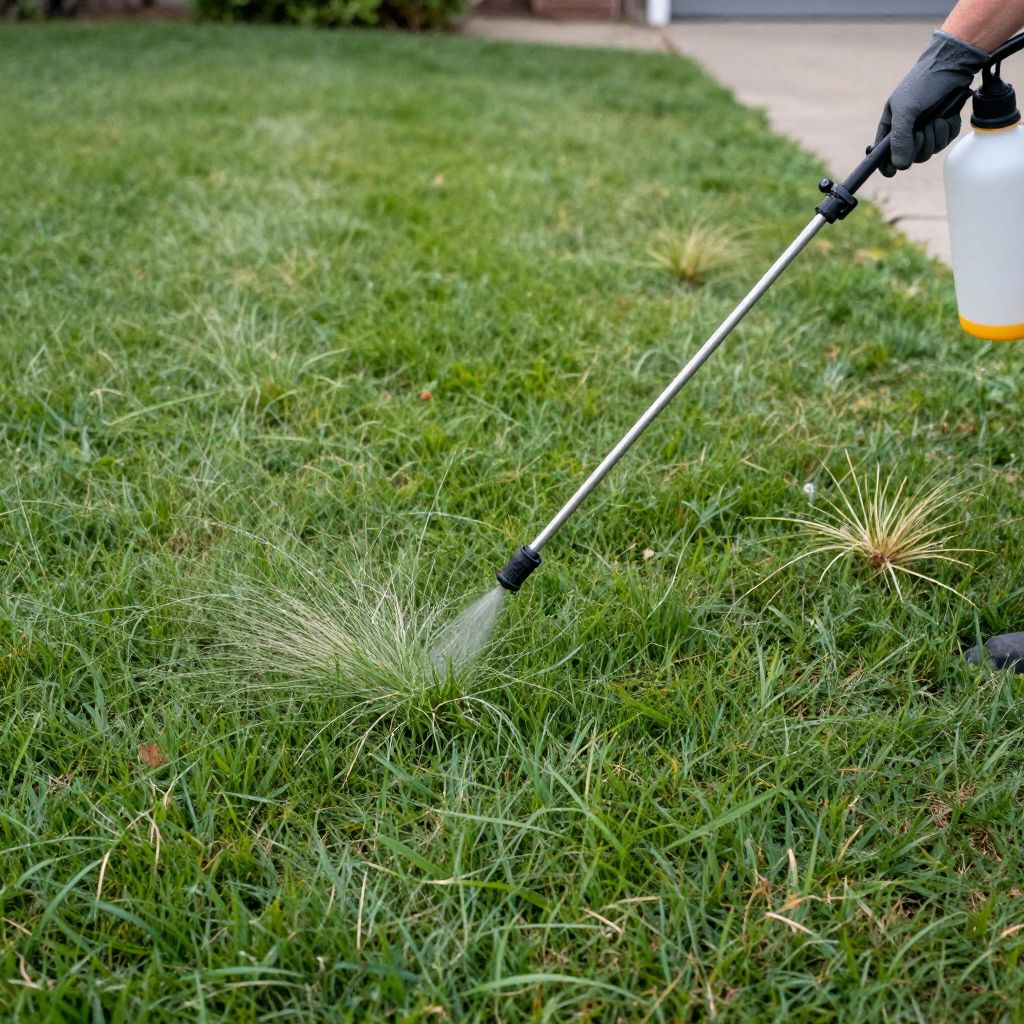
Does 24D kill crabgrass? It can help with crabgrass control, but it is not the most reliable herbicide for established crabgrass plants. 2,4-D is better known for broadleaf weeds, while crabgrass is a grassy weed that often responds more fully to products labeled for grassy weeds or to pre-emergent prevention.
If you are trying to clean up a lawn, the best approach depends on whether the crabgrass is young, mature, or already seeding. Timing, lawn type, and product label directions matter just as much as the active ingredient.
Does 24D kill crabgrass?
2,4-D may suppress young crabgrass, but it usually does not give dependable control of mature crabgrass. It is primarily a broadleaf herbicide, so it works best on weeds like dandelion and clover. For crabgrass, prevention with a pre-emergent and spot treatment with a product labeled for grassy weeds is usually more effective.
What crabgrass is and why it is hard to control
Crabgrass is an annual grassy weed that germinates from seed when soil warms up in spring. Once it starts spreading, it grows low and wide, rooting at the nodes and competing aggressively with turfgrass for light, water, and nutrients.
Because it is a grass, crabgrass can be harder to kill selectively in a lawn than broadleaf weeds. That is why many homeowners see only partial results from 2,4-D alone.
Why timing matters
Crabgrass is easiest to stop before it emerges. Once seedlings are established, they become more difficult to control without damaging the lawn around them.
- Pre-emergent herbicides stop crabgrass seeds from sprouting.
- Post-emergent herbicides help kill already visible plants.
- Dense turf shades the soil and reduces new crabgrass seedlings.
When 24D can help and when it will not
2,4-D can sometimes injure very young crabgrass seedlings, especially if they are mixed with other herbicides in a lawn product. But once crabgrass is tillering and spreading, 2,4-D alone is usually too weak to give complete control.
If your lawn product contains 2,4-D plus other active ingredients, read the label carefully. The combination may be designed for a broader range of weeds, but the label is the only reliable guide for what it will actually control.
Situations where 2,4-D is less effective
- Large, mature crabgrass clumps
- Hot, drought-stressed lawns
- Weeds growing in thin or patchy turf
- Repeated crabgrass flushes from a heavy seed bank
Best ways to control crabgrass in lawns
For most home lawns, the most dependable crabgrass plan is prevention first, then spot treatment if needed. That gives you better control and reduces the chance of repeated outbreaks.
1. Use a pre-emergent herbicide at the right time
Apply a pre-emergent before crabgrass seeds germinate. In many climates, that means early spring when soil temperatures begin to warm, but local timing varies. A soil thermometer is more useful than the calendar.
- Apply before crabgrass seedlings appear.
- Water it in if the label calls for irrigation.
- Avoid disturbing the soil afterward, since that can break the barrier.
Important: Pre-emergents prevent new seedlings, but they do not kill crabgrass that is already growing.
2. Spot-treat existing crabgrass with a labeled post-emergent
If crabgrass is already visible, use a post-emergent herbicide labeled for crabgrass and your turfgrass species. Products containing quinclorac are commonly used for crabgrass control in many lawns, but always confirm compatibility with your lawn type.
Apply to actively growing weeds, not drought-stressed turf. Follow the label for repeat applications if they are allowed.
3. Pull small plants by hand when practical
Small crabgrass plants can be hand-pulled, especially after rain or watering when the soil is soft. Remove as much root as possible and bag seedheads if they are present.
This works best for isolated patches. It is less practical for widespread infestations.
How to tell crabgrass from other lawn weeds
Correct identification matters because many herbicides target either broadleaf weeds or grassy weeds, not both. Crabgrass has a coarse texture and often grows low and flat with finger-like stems radiating from the center.
Common clues
- Wide, spreading growth habit
- Light green to dull green color
- Clumps that hug the ground
- Seedheads that appear later in the season
If you are unsure, compare the weed to nearby turfgrass. Crabgrass usually looks coarser and more sprawling than the lawn around it.
How to improve lawn conditions so crabgrass has less room to grow
Healthy turf is one of the best long-term crabgrass controls. Thin, compacted, or underfed lawns leave open soil where crabgrass seeds can germinate easily.
Build thicker turf
- Mow at the recommended height for your grass species.
- Do not scalp the lawn.
- Overseed thin areas when conditions are right for your grass type.
- Reduce compaction with core aeration if the soil is dense.
Water deeply, not constantly
Light, frequent watering encourages shallow roots and can favor crabgrass. In established lawns, deeper watering on a less frequent schedule usually supports turfgrass better, but always adapt to your soil, weather, and grass species.
Clay soils may need less frequent watering than sandy soils. If water runs off or puddles, improve drainage and adjust irrigation time rather than simply adding more water.
Feed the lawn appropriately
A lawn that is too weak or nutrient-starved is more vulnerable to weeds. Use soil test results when possible so you can correct deficiencies without overfertilizing.
Excess nitrogen can also create problems, especially in hot weather, so avoid guessing. A balanced lawn care plan is better than heavy feeding.
Common mistakes when trying to kill crabgrass
Many crabgrass failures come from product choice or timing, not from the lawn itself. Avoid these common errors if you want better results.
- Using 2,4-D alone and expecting full crabgrass control
- Applying herbicide to drought-stressed or heat-stressed turf
- Missing the pre-emergent window in spring
- Mowing too low and weakening the turf
- Ignoring seedheads, which can replenish the seed bank
- Not reading the label for turfgrass safety
Seasonal crabgrass control guide
Crabgrass management changes through the season. A simple seasonal plan helps you stay ahead of it instead of chasing it after it spreads.
Early spring
Focus on prevention. Apply pre-emergent at the correct soil temperature window for your area and keep the lawn healthy as it wakes up.
Late spring and summer
Watch for breakthrough seedlings. Spot-treat small infestations with a labeled post-emergent, or hand-pull isolated plants before they seed.
Late summer and fall
Crabgrass often weakens as temperatures cool, but seedheads may still mature. Remove plants before they drop seed and repair thin turf with overseeding if your grass type and climate allow it.
What to do if 2,4-D did not work
If you sprayed 2,4-D and the crabgrass is still alive, that does not necessarily mean the product failed. It may simply be the wrong tool for the job.
- Check the product label to confirm crabgrass is listed.
- Identify whether the weed is actually crabgrass or another grassy weed.
- Look at the weed stage: seedlings are easier to control than mature plants.
- Consider a labeled crabgrass-specific post-emergent if the turf type allows it.
- Plan a pre-emergent application for next season.
If the infestation is severe, you may need a two-part approach: kill what is present now and prevent new seedlings next season.
Conclusion
So, does 24D kill crabgrass? Sometimes it can injure young plants, but it is not the most dependable answer for established crabgrass. For better control, combine proper identification, a crabgrass-labeled post-emergent when needed, and a spring pre-emergent plan. If you want fewer weeds next year, start by improving turf density and timing your prevention correctly.
For more lawn-care help, you may also want to read about pre-emergent weed control timing and how to overseed a thin lawn.
Leave a Reply