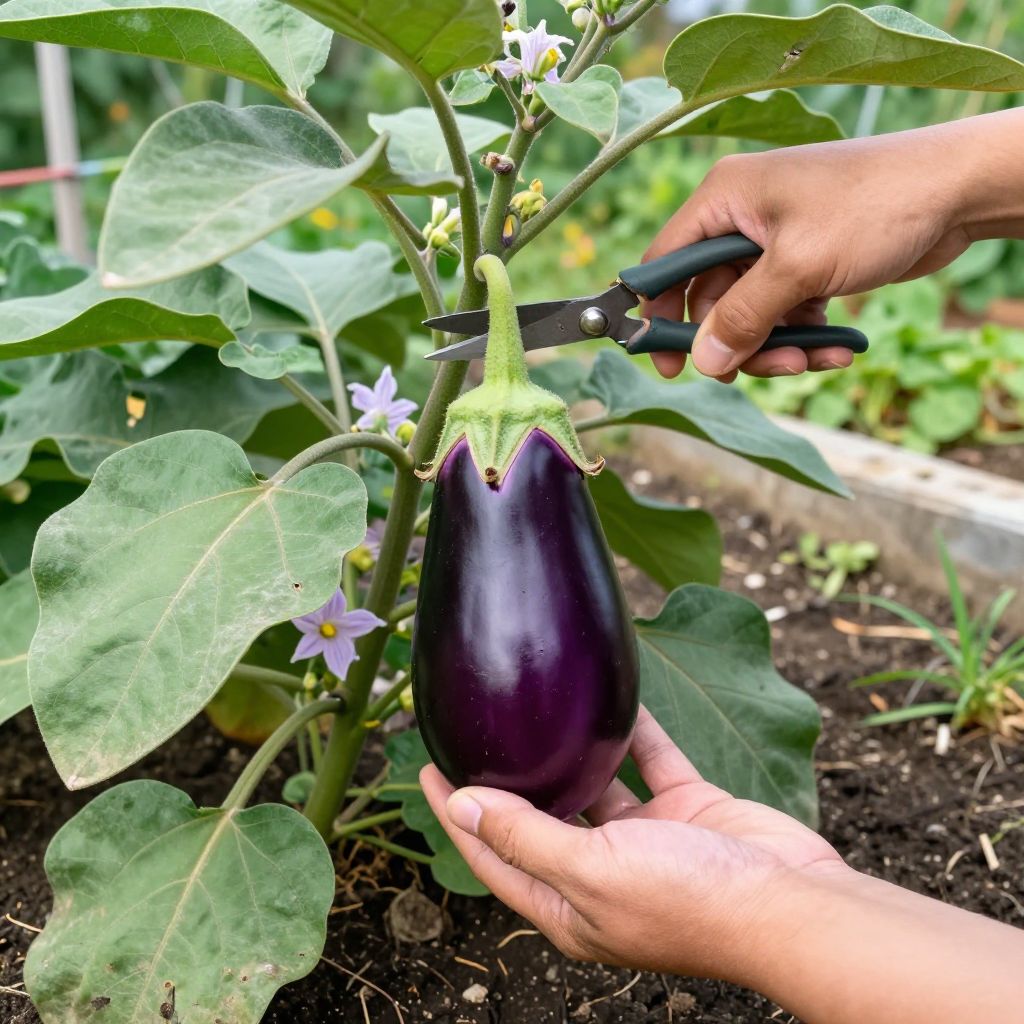
Wondering when to pick eggplant so it’s tender, glossy, and full of flavor? The best time is usually when the fruit has reached its mature size for the variety, the skin is shiny, and the flesh springs back slightly when pressed. If you wait too long, eggplant can turn dull, seedy, and bitter.
Harvest timing matters because eggplant does not continue to improve much after it’s picked. Knowing the right stage helps you get better texture, better taste, and a longer picking window from each plant.
When to pick eggplant?
Pick eggplant when the fruit is fully colored, glossy, and firm but not hard. Most varieties are best harvested before the skin turns dull or the seeds become noticeable. Use a knife or pruners to cut the stem, leaving a short piece attached, and harvest regularly to encourage more fruit.
How to tell eggplant is ready to harvest
Eggplant maturity is easier to judge by appearance and feel than by size alone. Different varieties mature to different sizes, so compare the fruit to the expected size for that type rather than relying on one universal measurement.
Signs eggplant is ready
- Glossy skin: The surface should look shiny, not dull or leathery.
- Firm texture: The fruit should feel solid, with a little give when pressed gently.
- Good color: Harvest when the skin has reached its mature color, whether deep purple, white, striped, or green.
- Right size for the variety: Smaller fruits are often sweeter and more tender, while overgrown fruit may be tough.
- Stem and calyx look healthy: The cap at the top should still be green and fresh-looking.
Signs eggplant is too ripe
- Skin looks matte, faded, or bronzed.
- Fruit feels soft, spongy, or overly light for its size.
- Seeds inside are large and obvious.
- The flesh tastes bitter or has a dry, cottony texture.
If you are unsure, harvest one fruit and cut it open. A good eggplant should have creamy flesh with small, pale seeds. Large, dark seeds are a clue that the fruit was left on the plant too long.
Seasonal timing: when eggplant is usually ready
Eggplant is a warm-season crop, so harvest timing depends on when it was planted, your climate, and the variety you’re growing. In many gardens, fruits begin to ripen in mid to late summer and continue until cool weather slows the plant down.
What affects harvest timing
- Temperature: Eggplant ripens best in warm weather and slows down when nights cool.
- Sunlight: Plants in full sun usually set and mature fruit faster.
- Variety: Long, slender types often mature differently from round or large-fruited varieties.
- Plant health: Stress from drought, poor soil, or pests can delay ripening.
- Growing method: Container plants may mature sooner or later depending on heat exposure and pot size.
In cooler regions, the first fruits may be smaller and slower to ripen. In hot climates, eggplant may produce heavily through much of the season if you keep harvesting promptly and the plant stays healthy.
How to harvest eggplant correctly
Use a clean knife, pruners, or garden snips to cut eggplant from the plant. The stem can be tough and thorny, so avoid twisting or pulling the fruit, which can damage the plant and bruise the harvest.
- Check the fruit for shine, firmness, and mature size.
- Hold the fruit gently with one hand.
- Cut the stem about 1 to 2 inches above the fruit.
- Place harvested eggplant in a shaded spot right away.
- Handle carefully to avoid skin bruising.
Wear gloves if needed. Some eggplant stems and calyxes have sharp spines, especially on older plants or certain varieties.
Why harvesting at the right time matters
Eggplant harvested at the right stage has a smoother texture and better flavor. If you leave fruit on the plant too long, the plant may slow down production because it puts energy into seed development instead of making more fruit.
Benefits of picking on time
- Better taste and texture
- Less bitterness
- More frequent fruiting
- Reduced risk of oversized, seedy fruit
Regular picking is one of the easiest ways to keep eggplant productive. Many gardeners notice that plants set new flowers faster when mature fruit is removed promptly.
Common mistakes when deciding when to pick eggplant
Eggplant is easy to miss by a few days, and that can change the eating quality a lot. Watch for these common mistakes so you don’t lose the best harvest window.
1. Waiting for fruit to get very large
Larger is not always better. Many eggplants become tough and seedy if left on the plant too long, even if they still look attractive from a distance.
2. Harvesting by color alone
Color helps, but it is not enough by itself. Some varieties stay purple, while others turn white, lavender, striped, or green. Always combine color with gloss and firmness.
3. Letting the skin go dull
A shiny skin is one of the best signs of readiness. Once the skin loses its sheen, the fruit is often past peak quality.
4. Pulling fruit off by hand
Twisting can tear the stem or damage nearby branches. Cutting is safer for both you and the plant.
How to keep eggplant producing after harvest
If you want a longer harvest window, keep the plant in good condition after picking the first fruits. Healthy plants can continue producing well into the season if temperatures stay warm enough.
Helpful care after harvest
- Water deeply when the top few inches of soil dry out.
- Keep plants in full sun whenever possible.
- Mulch to help steady soil moisture and reduce stress.
- Remove damaged or diseased leaves as needed.
- Pick fruit often so the plant keeps flowering.
Eggplant prefers evenly moist soil, not soggy roots. In containers, this is especially important because pots dry out faster in hot weather and fruit can suffer if the plant dries out repeatedly.
Growing conditions that help fruit mature well
Good harvest timing starts with good growing conditions. When eggplant has enough warmth, sunlight, and consistent moisture, it reaches maturity more evenly and is easier to pick at the right stage.
Basic growing needs
- Sun: Full sun is best for strong growth and fruiting.
- Soil: Rich, well-drained soil helps roots stay healthy.
- Organic matter: Compost improves soil structure and moisture balance.
- Drainage: Avoid waterlogged beds, which can weaken plants.
- Warmth: Eggplant performs best in warm conditions and may stall in cool weather.
If your plants are slow to ripen, check whether they are getting enough sun and warmth. A healthy-looking plant that grows slowly may simply be in a spot that is too cool or shaded for reliable fruiting.
Pests and diseases that can affect harvest timing
Pests and disease can reduce fruit quality or delay ripening, so it helps to inspect plants regularly. Catching problems early often means you can still harvest usable fruit before the plant declines.
Common issues to watch for
- Flea beetles: Small holes in leaves can weaken young plants.
- Aphids: These sap-sucking insects can distort new growth.
- Spider mites: Hot, dry conditions may lead to stippled leaves and stress.
- Blossom end rot: Caused by inconsistent moisture and poor calcium uptake, it can ruin fruit before harvest.
- Fungal problems: Leaf spots and wilting can reduce plant vigor and fruiting.
Healthy leaves support better fruit development. If the plant is stressed, fruit may remain small, ripen unevenly, or become poor in texture even if the timing seems right.
What to do if your eggplant is not ripening
If fruit is staying small or green for too long, the issue is usually environmental rather than harvest timing. Eggplant needs steady warmth and enough energy to finish fruit properly.
Troubleshooting slow ripening
- Check that the plant gets at least 6 to 8 hours of direct sun.
- Make sure the soil is draining well and not staying soggy.
- Water consistently during dry spells.
- Avoid overfeeding with high-nitrogen fertilizer, which can produce lots of leaves but fewer fruits.
- Remove very late flowers if the season is cooling and they will not have time to mature.
In short-season climates, some late fruit may never fully mature before cold weather arrives. In that case, harvest the best-sized fruit before frost rather than waiting too long for perfection.
Can you pick eggplant early?
You can pick eggplant slightly early if the fruit has reached a usable size and you want a more tender texture. However, very immature fruit may be bland and small. If you harvest early, choose fruit that is already glossy and firm rather than tiny and underdeveloped.
On the other hand, if you wait too long, you risk tougher flesh and larger seeds. The sweet spot is usually just before the skin starts to lose its shine.
Simple harvest checklist
- Fruit has reached mature size for the variety
- Skin is glossy and richly colored
- Fruit feels firm with slight give
- Seeds are still small and pale
- Stem is cut cleanly with pruners or a knife
Use this checklist every few days once the first fruits begin sizing up. Eggplant can change quickly in warm weather, so frequent checking is better than waiting for a once-a-week harvest.
Conclusion
The best answer to when to pick eggplant is: harvest when the fruit is glossy, firm, and fully sized for its variety, but before the skin dulls and seeds enlarge. Check plants often, cut fruit cleanly, and keep harvesting regularly to encourage more production.
For more help with warm-season crops, you may also want to read about how to grow eggplant and harvesting vegetables at the right time.