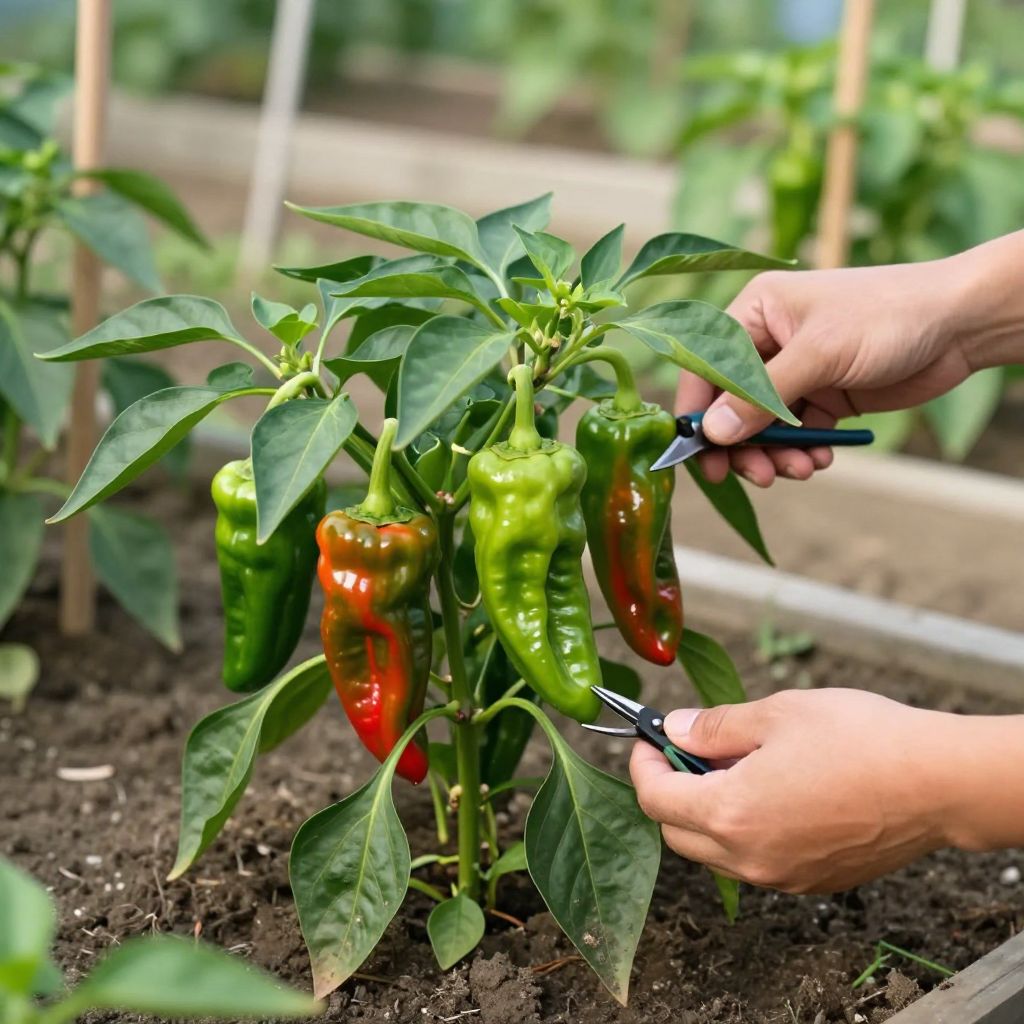
Wondering when to pick shishito peppers so they taste best and keep producing? The short answer is to harvest them when the pods are 2 to 4 inches long, bright green, and still firm, before they start turning red. Picking regularly encourages more flowers and more peppers.
Timing matters because shishitos can be eaten at several stages, but flavor and texture change quickly as the pods mature. If you wait too long, they become thicker, less tender, and more likely to develop heat.
When To Pick Shishito Peppers?
Pick shishito peppers when they are glossy, slender, and about 2 to 4 inches long, usually while still green and before the seeds fully harden. Harvesting at this stage gives you the mildest flavor and the most tender texture. If left on the plant, they can turn red and become stronger tasting.
How to Tell Shishito Peppers Are Ready
Shishito peppers are one of the easiest peppers to judge by eye. You do not need to wait for a color change if you want the classic mild, snappy harvest.
Signs a pepper is ready
- Size: Most are ready at 2 to 4 inches long.
- Color: Bright green is the usual harvest stage.
- Texture: The pod feels firm and smooth, not soft or wrinkled.
- Shape: The pepper is still thin and slightly wrinkled, not swollen.
- Stem: The stem looks healthy and green, not dry or brown.
If you gently squeeze a pod and it feels thick and heavily seeded, it is probably past the most tender stage. That does not mean it is unusable, but it may be less delicate than a younger pepper.
What happens if you wait too long?
As shishitos mature, the walls thicken and the seeds become more noticeable. The flavor can deepen, and some peppers may turn red as they fully ripen. Red shishitos are still edible, but they are usually less crisp and more intense than green ones.
Seasonal Timing: When to Harvest During the Growing Season
Shishito peppers are warm-season plants, so harvest timing depends on your local weather and how quickly the plant matures. In many gardens, the first usable pods appear several weeks after transplanting, then production continues through warm weather until nights cool down.
Early season
Once the plants are established and flowering, check them every few days. Young plants may set only a few pods at first, but frequent picking helps the plant keep producing.
Midseason
This is usually the best harvest window. Plants often produce steadily, and pods can be picked at the ideal green stage before they get oversized.
Late season
As temperatures drop, growth slows and pods may take longer to size up. If frost is approaching, harvest any remaining peppers, even if they are smaller than usual. You can also pick some slightly immature pods rather than risk losing them to cold.
How Often Should You Pick Shishito Peppers?
Check plants every 2 to 3 days during peak production, and more often in hot weather when peppers can size up quickly. Regular harvesting is one of the best ways to keep the plant flowering and setting new fruit.
Leaving too many mature pods on the plant can signal it to slow down. If your goal is a long harvest, do not let every pepper fully ripen before picking.
How to Harvest Shishito Peppers Without Damaging the Plant
Use clean scissors, pruners, or garden snips to cut the stem just above the pepper. You can also twist gently, but cutting is safer because it avoids tearing branches.
- Inspect the plant and choose pods at the right size.
- Hold the stem, not the pepper body.
- Cut the stem about 1/4 inch above the fruit.
- Place peppers in a shallow basket or bowl to avoid bruising.
- Keep checking the plant every few days for new pods.
Avoid pulling peppers off by force. Shishito stems can snap, and damaged branches reduce future yields.
Growing Conditions That Affect Harvest Timing
Healthy plants reach harvest stage faster and produce more usable peppers. If pods are slow to size up, the issue is often growing conditions rather than the calendar.
Sunlight
Shishito peppers do best in full sun, which generally means at least 6 to 8 hours of direct light. Less sun can lead to slower growth and fewer peppers.
Soil
Use well-drained soil enriched with compost. Heavy, soggy soil can stunt roots and delay fruiting. A loose, fertile bed helps plants establish quickly and set pods evenly.
Watering
Keep soil evenly moist, especially while plants are flowering and fruiting. Irregular watering can cause stress, slower pod development, or blossom drop. Water at the base of the plant rather than soaking the leaves whenever possible.
Temperature
Shishito peppers prefer warm conditions. Cool nights can slow ripening, while extreme heat may reduce flowering. If your weather swings a lot, expect harvest timing to vary from week to week.
Should You Pick Shishito Peppers Green or Red?
Most gardeners pick shishitos green because that is when they are mildest and most tender. Green pods are the standard harvest stage for everyday use and for encouraging continued production.
If you leave some pods on the plant until they turn red, you can compare flavor and decide what you prefer. Just know that the plant may produce fewer new peppers if many fruits are left to fully mature at once.
Green vs. red harvest
- Green: Tender, mild, classic shishito flavor.
- Red: More mature, often stronger in flavor, less crisp.
- Best for continuous harvest: Pick green and often.
Common Mistakes When Harvesting Shishito Peppers
Most harvesting problems come from waiting too long or picking too aggressively. A few simple habits can improve both flavor and yield.
- Waiting for every pepper to turn red: This can reduce ongoing production.
- Letting pods get oversized: Larger peppers are often tougher and more seeded.
- Pulling instead of cutting: This can damage branches.
- Harvesting too infrequently: The plant may slow down if mature pods stay on it.
- Ignoring plant stress: Heat, drought, or poor soil can delay harvest readiness.
Troubleshooting: Why Your Shishito Peppers Are Slow to Mature
If your peppers are staying small or taking too long to ripen, the plant may need better growing conditions rather than more time alone.
Possible causes
- Not enough sun: Move containers or improve garden placement next season.
- Cool weather: Growth slows naturally in chilly periods.
- Overfertilizing with nitrogen: This can push leafy growth instead of fruit.
- Poor pollination or flower drop: Stress can reduce fruit set.
- Inconsistent watering: Dry spells followed by heavy watering can stall plants.
If the plant looks healthy but pods are late, be patient and keep harvesting any usable peppers. In many climates, shishitos produce in waves rather than all at once.
Storage After Picking
Freshly picked shishito peppers keep best when handled gently. Store them unwashed in a breathable bag or container in the refrigerator crisper drawer. Use them within about a week for the best texture and flavor.
If you harvest more than you can use quickly, sorting them by size can help. Use the smallest, most tender peppers first, and save larger ones for later use or for trying at a more mature stage.
Can You Pick Shishito Peppers Small?
Yes, you can pick them a little small if you want especially tender pods. Very small peppers may not have developed much flavor yet, so most gardeners aim for the 2 to 4 inch range. That size usually gives the best balance of tenderness and taste.
If a plant is loaded with fruit, harvesting some smaller pods can also relieve stress and encourage the next flush of flowers. This is especially useful in warm weather when production is fast.
Conclusion: The Best Time to Harvest
The best time to pick shishito peppers is when they are green, firm, and about 2 to 4 inches long. Harvest often, cut rather than pull, and keep the plant well-watered and in full sun for the longest picking season. Check your plants every few days so you catch pods at their peak.
If you want to improve your pepper harvest next season, you may also enjoy reading about growing peppers in containers and how to harvest peppers for the best flavor.