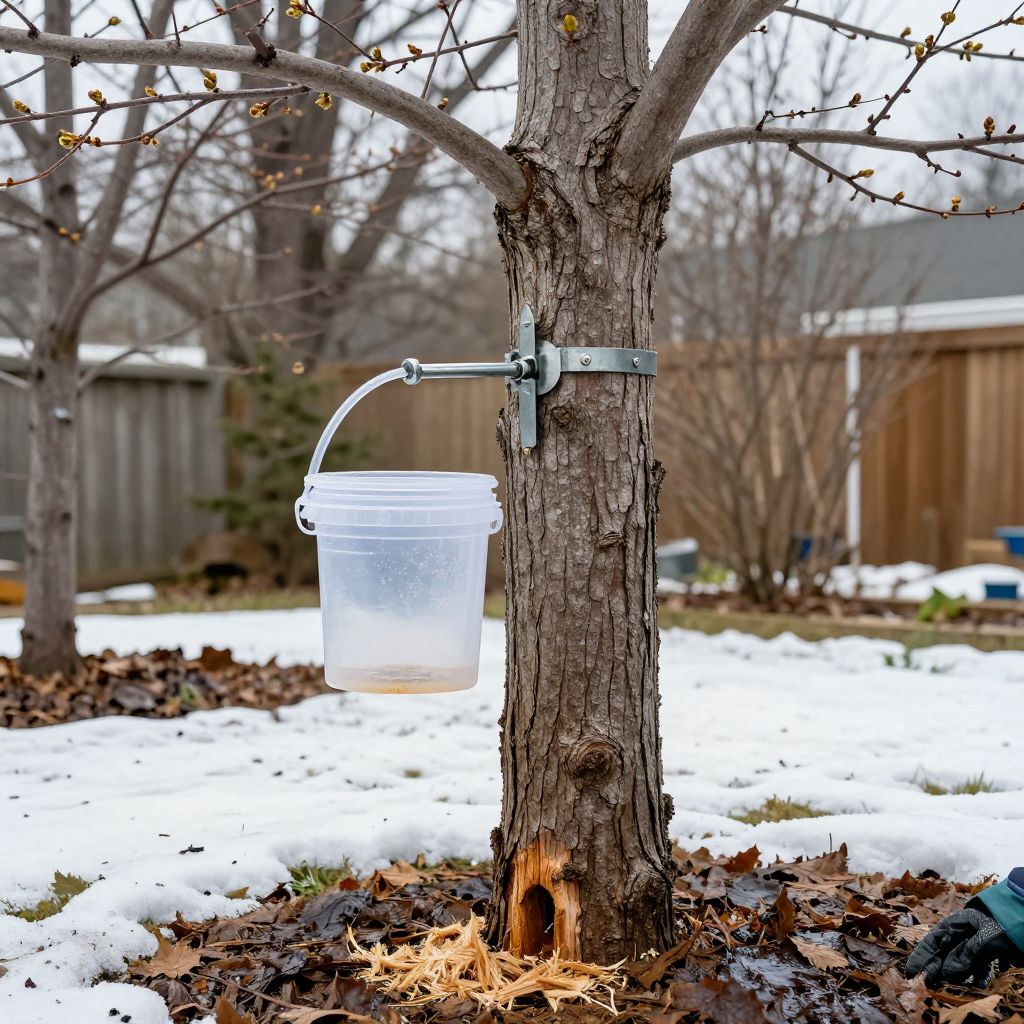
Wondering when to tap maple trees so you get good sap without stressing the tree? Timing matters: tap too early and the sap may be slow or frozen; tap too late and the run can taper off quickly. The best window depends on your climate, but the basic rule is simple.
Tap when daytime temperatures rise above freezing and nights still dip below 32°F (0°C). That freeze-thaw pattern is what drives sap flow in sugar maple, red maple, and other syrup-producing maples.
When to tap maple trees?
The best time to tap maple trees is late winter to early spring, during a stretch of freezing nights and thawing days. In most regions, that means the sap season begins when daytime highs are above freezing and nighttime lows still fall below 32°F (0°C). Watch your local weather, not the calendar.
How maple sap flow works
Maple sap moves most strongly during repeated freeze-thaw cycles. When temperatures drop below freezing, pressure changes inside the tree help draw water upward; when temperatures warm, sap flows more freely out of a tap hole.
This is why a warm spell in midwinter can start the season, and why a sudden hard freeze or extended warm weather can slow it down. You are not looking for one exact date—you are looking for the right weather pattern.
Signs the season is starting
- Several nights below freezing
- Daytime temperatures climbing above 32°F (0°C)
- Buds still tight and not swelling much yet
- Snow still on the ground or soil still cold in many areas
Which maple trees can be tapped?
Sugar maple (Acer saccharum) is the classic syrup tree, but red maple (Acer rubrum) and silver maple (Acer saccharinum) are also tapped in many places. Other maple species may produce sap, but sugar content and flavor can vary.
For home gardeners, the most important point is tree health. Tap only mature, vigorous trees with a trunk large enough to handle a tap hole safely.
Tree size matters
- Use a tree at least 10 inches in diameter at breast height for one tap.
- Larger trees may support more taps, but follow local guidance and avoid over-tapping.
- Do not tap young, weak, recently transplanted, or damaged trees.
How to know if your local timing is right
Because climate varies so much, the safest approach is to use your local weather pattern instead of a fixed date. In colder northern areas, tapping may begin in late winter. In milder regions, it may start earlier or be shorter and less reliable.
If you are unsure, check the forecast for at least a week. You want a pattern of freezing nights and thawing days, not just one warm afternoon.
Quick timing checklist
- Confirm the tree is mature and healthy.
- Watch for freeze-thaw cycles.
- Wait until buds are still closed or only slightly swelling.
- Tap before leaf-out and before buds open fully.
- Stop collecting when sap turns cloudy, bitter, or the buds open noticeably.
How to tap maple trees correctly
Use a clean drill bit and a proper spout or spile. Drill into sound wood, usually about 1.5 to 2 inches deep depending on your tap size and tree diameter, and angle the hole slightly upward so sap can flow out.
Keep the process sanitary and gentle. A neat tap hole in a healthy tree is far better than a large or sloppy hole that invites decay.
Basic tapping steps
- Choose a healthy trunk section with no visible rot or major wound.
- Drill a clean hole at a slight upward angle.
- Remove wood shavings from the hole.
- Insert the spile gently; do not force it.
- Hang or connect your collection container securely.
- Check the setup regularly during the run.
Common tapping mistakes to avoid
- Tapping too early, before freeze-thaw cycles begin
- Tapping too late, after buds have opened
- Using a tree that is too small or unhealthy
- Drilling too deep or making extra holes
- Leaving old tap holes unconsidered when choosing a new spot
How long the sap season lasts
Maple sap season is usually short, often lasting a few weeks, though the exact length depends on weather. A sudden warm stretch can end the run quickly, while cool conditions can extend it.
Do not expect the same timing every year. One season may begin in late winter; another may start earlier or later depending on local temperatures and snow cover.
What affects sap quality and yield?
Several factors influence how much sap you collect and how good it is for syrup making. Weather is the biggest factor, but tree species, tree health, and tap placement also matter.
- Weather: Freeze-thaw cycles drive flow.
- Tree species: Sugar maples usually have higher sugar content.
- Tree vigor: Healthy trees recover better and often flow more reliably.
- Tap timing: Early or late tapping can reduce yield.
- Sanitation: Clean tools help reduce contamination.
How to care for tapped maple trees
After tapping, the tree needs very little extra care beyond avoiding further stress. Do not fertilize heavily or prune aggressively during the sap season unless there is a clear need. Let the tree focus on normal seasonal recovery.
If the tree is growing in compacted soil or a dry site, give it good general care during the growing season: mulch lightly over the root zone, avoid trunk contact with mulch, and water during prolonged drought when the ground is not frozen.
Good maintenance habits
- Keep lawn mowers and string trimmers away from the trunk
- Mulch 2 to 4 inches deep, but not against the bark
- Water young or stressed trees during dry spells in the growing season
- Prune only broken, dead, or crossing branches when appropriate for your climate and tree condition
When to stop collecting sap
Stop collecting when the sap quality declines. Common signs include a cloudy appearance, a sour or bitter taste, or buds that are opening quickly. Once leaf-out begins, the sap often becomes less desirable for syrup making.
Ending the season promptly helps you avoid wasting time on poor-quality sap and keeps you focused on the best part of the run.
Troubleshooting common sap problems
Little or no sap is coming out
This usually means the weather is not right yet, the tree is too small or stressed, or the tap hole was drilled poorly. Check the forecast first, then inspect the setup for leaks or blockage.
Sap flow suddenly slowed
A warm spell, a hard freeze, or changing barometric conditions can all slow flow. That is normal. If the tree is still in good condition and the season is not over, flow may resume when temperatures shift again.
Sap tastes off
Cloudy, sour, or bitter sap is a sign to stop collecting from that tap. Clean equipment, cool storage, and prompt processing help, but weather and tree stage still control quality.
Practical seasonal checklist for home gardeners
- Watch for late-winter freeze-thaw cycles.
- Tap only mature, healthy maples.
- Use clean tools and a properly sized tap hole.
- Collect sap during the brief window before bud break.
- Stop when sap quality drops or buds open.
Conclusion
If you are asking when to tap maple trees, the answer is to watch the weather: tap during late winter or early spring when nights freeze and days thaw. That timing gives you the best chance of steady sap flow and good-quality sap. Check your trees now, monitor the forecast, and be ready when the freeze-thaw pattern begins.
For more seasonal tree care guidance, you may also want to read about how to prune trees safely and mulching around trees for healthier roots.