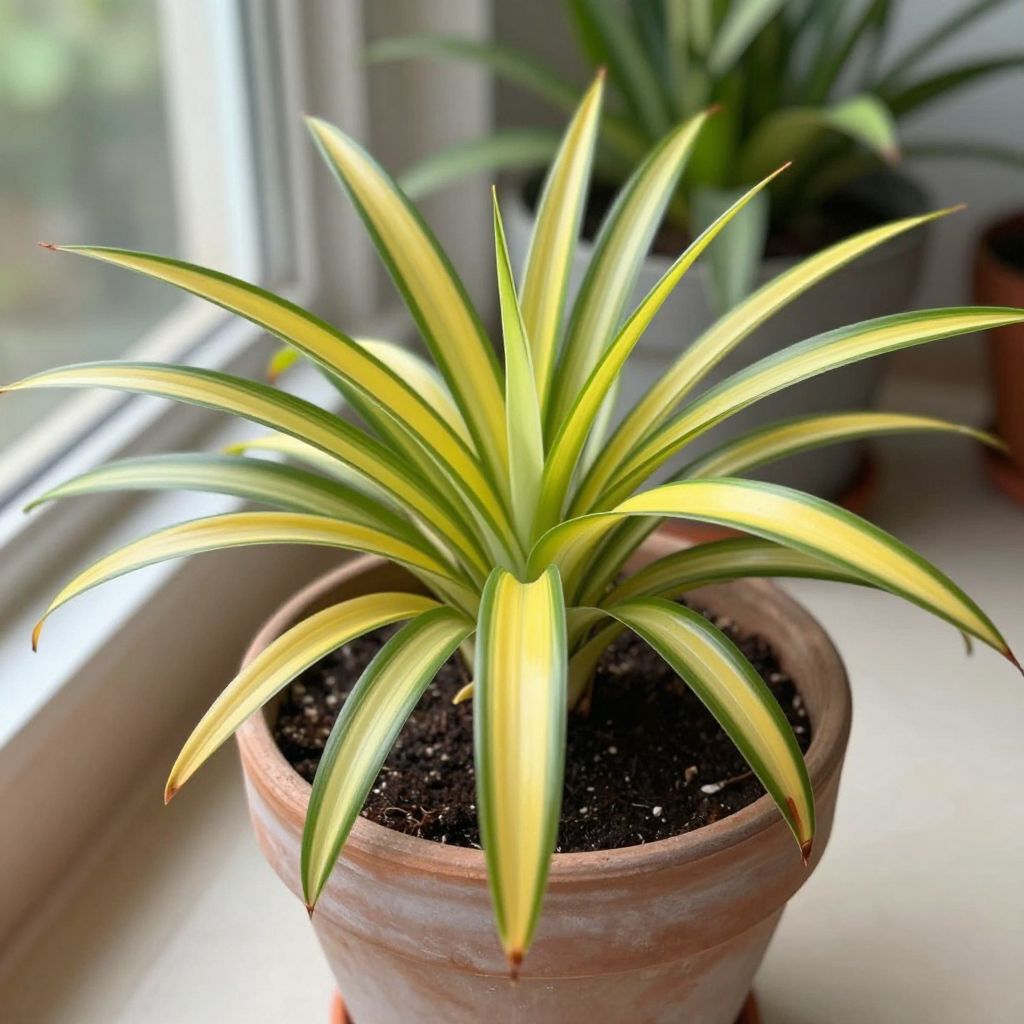
Why is my spider plant turning yellow? In most cases, it’s a sign that something in the plant’s care is off—usually watering, light, or root health. Spider plants are forgiving, but they respond quickly to stress by fading from healthy green to pale yellow.
The good news is that yellow leaves are often reversible if you catch the problem early. With a few checks, you can usually identify the cause, correct it, and help your spider plant grow back stronger.
Why is my spider plant turning yellow?
Spider plants (Chlorophytum comosum) usually turn yellow because of overwatering, poor drainage, too much direct sun, mineral buildup, low light, root congestion, or cold stress. Start by checking the soil moisture and pot drainage first, then look at light, roots, and fertilizer use to narrow down the cause.
Common causes of yellow spider plant leaves
1. Overwatering is the most common problem
Spider plants like evenly moist soil, but they do not want to sit in wet potting mix. If the roots stay soggy, they can’t get enough oxygen, and the leaves often turn yellow before drooping or browning.
Check the soil with your finger. If the top 1 to 2 inches feel wet and the pot stays heavy for days, you may be watering too often.
- Let the top inch or two of soil dry before watering again.
- Make sure excess water can drain freely from the pot.
- Empty saucers after watering so the plant is not standing in runoff.
Important: Yellowing from overwatering often starts on older leaves, but in severe cases the whole plant can look washed out and limp.
2. Poor drainage can mimic overwatering
Even if you water carefully, a pot without drainage holes or a dense, compacted mix can trap moisture around the roots. That creates the same yellowing problem as overwatering.
If your spider plant is in a decorative cachepot, nursery pot, or container without holes, move it into a pot with drainage. Use a light, well-draining indoor potting mix rather than heavy garden soil.
3. Too much direct sunlight can bleach the leaves
Spider plants prefer bright, indirect light. Strong direct sun, especially through a hot south- or west-facing window, can fade the foliage and leave it yellowed or scorched.
If the plant sits in intense sun, move it back a few feet from the window or filter the light with a sheer curtain. A little morning sun is usually fine, but harsh afternoon sun often causes trouble indoors.
4. Low light can weaken the plant over time
While too much sun can bleach leaves, too little light can also cause pale, weak growth. In low light, spider plants may become stretched, dull, and more prone to yellowing older leaves.
Look for a spot with bright, indirect light for most of the day. If the plant is far from a window, gradually move it to a brighter location rather than shifting it suddenly into strong sun.
5. Fluoride, salts, and fertilizer buildup can stress the plant
Spider plants can be sensitive to minerals in tap water, especially fluoride, and to excess fertilizer salts in the potting mix. This can cause leaf tip burn, browning, and sometimes yellowing of the foliage.
If you suspect buildup, flush the pot thoroughly with clean water until it runs freely from the drainage holes. Then let the pot drain completely. If your tap water is heavily treated, try filtered, distilled, or rainwater for a while.
- Use fertilizer sparingly during active growth.
- Avoid feeding a stressed plant until it starts recovering.
- Rinse the pot occasionally if you fertilize regularly.
6. Root congestion can cause older leaves to yellow
Spider plants grow fast and often become rootbound in containers. When roots fill the pot, the plant may dry out unevenly, absorb nutrients poorly, and start yellowing older leaves.
Check the drainage holes. If roots are circling densely, pushing the plant upward, or growing out the bottom, it may be time to repot. Move it into a container just one size larger with fresh potting mix.
7. Cold drafts or temperature swings can trigger yellowing
Spider plants dislike cold windows, drafty hallways, and sudden temperature changes. Exposure to chilly air can cause stress that shows up as yellowing, especially in winter.
Keep the plant away from cold glass, heating vents, and exterior doors. Spider plants generally do best in normal indoor room temperatures rather than extremes.
8. Natural aging is normal on older leaves
Not every yellow leaf means a serious problem. It is normal for older outer leaves to fade and die as the plant grows, especially if the center of the plant looks healthy and new growth is coming in green.
If only a few lower leaves are yellowing occasionally, and the rest of the plant looks vigorous, you may simply be seeing normal leaf turnover. Remove those leaves cleanly so the plant looks tidy.
How to diagnose the problem step by step
- Check the soil. Feel the top 1 to 2 inches. If it is wet, pause watering.
- Inspect the pot. Make sure it has drainage holes and is not sitting in water.
- Look at the light. Decide whether the plant is getting harsh direct sun or too little light.
- Examine the roots. If the plant is crowded or the soil smells sour, repot it.
- Review recent care. Think about fertilizer, water quality, temperature swings, and any recent move.
This simple check usually reveals the cause faster than guessing. Spider plants often show more than one stress at once, so you may need to correct two issues, not just one.
How to fix a yellowing spider plant
Adjust watering
Water only when the top layer of soil starts to dry. When you do water, soak the mix thoroughly until excess drains out, then discard the runoff.
Do not keep the soil constantly damp. Spider plants recover better from slight drying than from chronically wet roots.
Improve drainage and soil
If the potting mix stays wet too long, repot into a fresh, airy blend made for houseplants. A mix that drains well helps oxygen reach the roots and reduces the risk of rot.
Choose a pot with drainage holes and avoid oversized containers, which can hold excess moisture around a small root system.
Move the plant to better light
Place the spider plant in bright, indirect light. If the leaves are bleached or pale from direct sun, move it farther from the window. If it is in a dim corner, gradually increase the light level.
Rotate the pot every week or two so growth stays even and the plant does not lean toward the light source.
Flush salts if needed
If fertilizer or tap water minerals may be involved, flush the pot with plenty of water and let it drain fully. Then reduce feeding and consider switching to gentler water.
Do not fertilize a plant that is already stressed from yellowing leaves until you see new healthy growth.
Repot if the plant is rootbound
When roots are crowded, repot into a slightly larger container with fresh mix. If the plant is very congested, you can also divide it into smaller plants during repotting.
After repotting, keep the plant evenly moist for a short recovery period, but never soggy.
What to do with yellow leaves
Yellow leaves will not turn green again, so it is best to remove them once you’ve addressed the cause. Use clean scissors or pruners and cut the leaf at the base.
- Remove fully yellow or badly damaged leaves.
- Trim brown tips if the rest of the leaf is healthy.
- Clean tools before and after pruning if disease is suspected.
If many leaves are yellowing at once, focus on correcting the environment first. Pruning alone will not solve the underlying issue.
Could pests or disease be involved?
Spider plants are not especially prone to serious disease indoors, but stressed plants can attract pests such as spider mites, aphids, or mealybugs. These usually cause additional signs like sticky residue, fine webbing, distorted growth, or speckled leaves.
If you see pests, isolate the plant and inspect the undersides of leaves and the crown. Wipe visible insects away and treat promptly with a method suitable for houseplants. Yellowing caused by pests often improves only after the infestation is controlled.
How to keep spider plants healthy long term
- Use a pot with drainage holes.
- Water when the top inch or two of soil dries.
- Keep the plant in bright, indirect light.
- Repot when roots become crowded.
- Use a light potting mix that drains well.
- Avoid overfeeding and flush salts occasionally if needed.
- Protect the plant from cold drafts and hot sun.
Healthy spider plants usually produce firm green leaves and, in good conditions, small plantlets on long stems. If yours is yellowing, the plant is telling you that one part of its care needs adjusting.
For more help with indoor plant care, you may also want to read indoor plant care basics and how to repot houseplants.