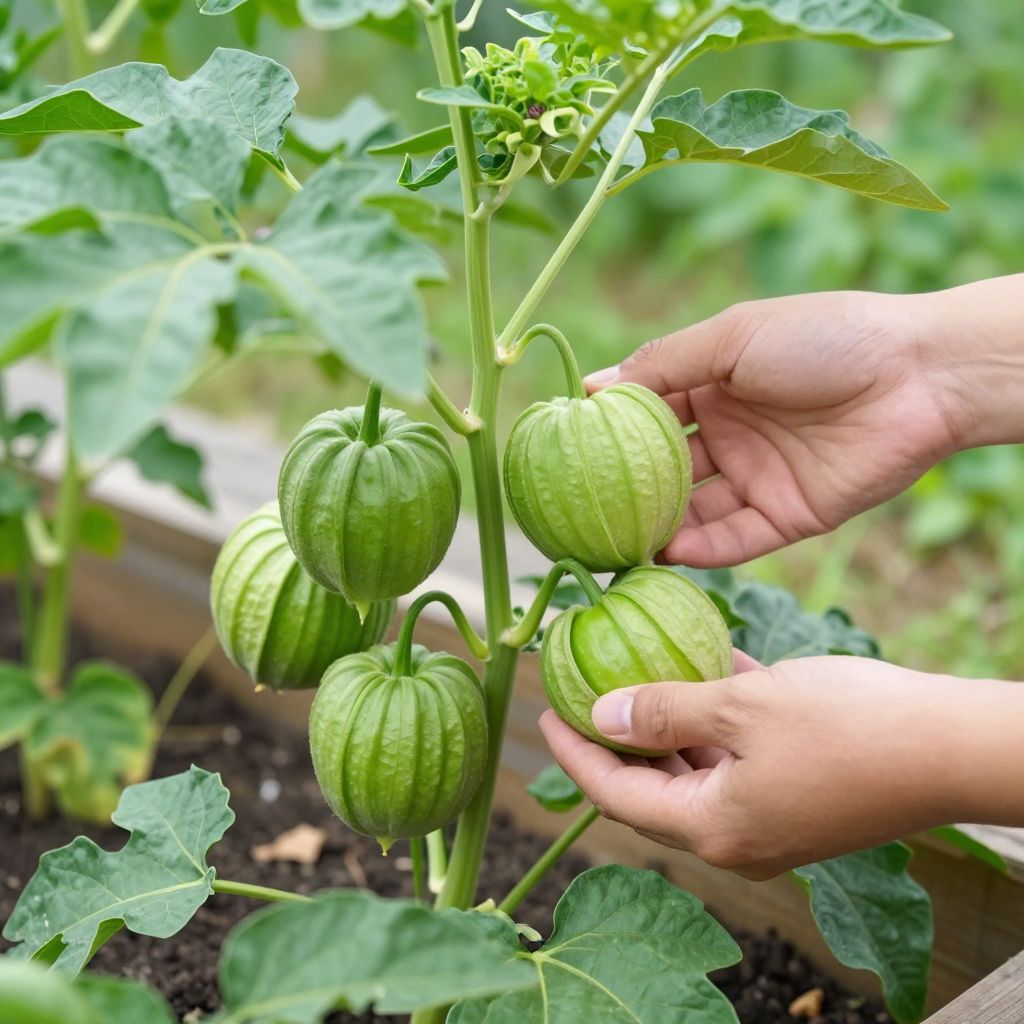
Wondering when to pick tomatillos so they’re flavorful, not underripe or overmature? The right harvest stage matters more than the calendar, because tomatillos ripen by plant age, weather, and variety. You want firm fruits that have filled their husks, but before they become soft or overly yellow.
With a few simple checks, you can harvest at the best stage for salsa, roasting, or fresh use. Knowing what to look for also helps you avoid common mistakes like waiting too long, picking too early, or confusing tomatillos with unripe husk cherries.
When to pick tomatillos?
Pick tomatillos when the paper-like husk has split or loosened and the fruit fills the husk, usually while the fruit is still firm and green. Most are ready about 70 to 100 days after transplanting, but the best signal is the fruit itself: full-sized, firm, and easy to twist off the stem.
How to tell tomatillos are ready
Tomatillos do not ripen like tomatoes. Instead of waiting for a deep color change, watch for size, husk condition, and firmness. A ripe tomatillo is usually bright green, firm to the touch, and nearly bursting from its husk.
Signs your tomatillos are ready to harvest
- The husk is dry, papery, or splitting open.
- The fruit fills the husk and may press against it.
- The skin feels firm, not soft or mushy.
- The fruit comes off with a gentle twist or snip.
- The color is usually green, though some varieties may turn yellow, purple, or pale as they mature.
Signs you picked too early
- The fruit is small and hard.
- The husk still fits tightly around the fruit.
- The flavor is sharp and underdeveloped.
- The skin feels sticky and the fruit seems to stop growing after harvest.
Signs you waited too long
- The fruit turns soft or begins to yellow heavily.
- The husk dries completely and the fruit may drop from the plant.
- The flavor can become less bright and the texture less crisp.
- Overripe fruit may split or attract pests.
Seasonal timing: what to expect during the harvest window
Tomatillos are warm-season crops, so harvest timing depends on when they were planted and how much heat they received. In many gardens, the first usable fruits appear in mid to late summer and continue until frost. Cooler weather slows ripening, while hot, sunny conditions speed it up.
How climate affects harvest timing
- Cool summers: Plants may grow well but ripen slowly.
- Hot summers: Fruits can size up quickly, but you may need to harvest more often.
- Short seasons: Start plants indoors or use transplants to get a longer harvest window.
- Long seasons: Plants may keep producing until the first frost if they stay healthy.
If you are unsure whether your plant is on schedule, compare the fruit stage rather than the date alone. A healthy tomatillo plant can carry both immature and harvest-ready fruits at the same time, especially after a strong flush of growth.
How to harvest tomatillos the right way
Harvesting is simple, but a careful approach helps protect the plant and encourages more production. Use clean hands or snips, and avoid yanking hard on the fruit.
- Check the fruit size and husk condition.
- Hold the stem or fruit gently.
- Twist the fruit until it releases, or cut it with clean pruners or scissors.
- Place harvested tomatillos in a basket or bowl so they do not bruise.
- Remove any loose husks before storage or washing.
Should you harvest tomatillos with the husk on?
Yes, you can harvest them with the husk attached. The husk helps protect the fruit during picking and short-term handling. Remove it before washing or storing if it is dry, loose, or dirty.
What happens if you leave tomatillos on the plant too long?
Tomatillos can stay on the plant for a while, but quality usually declines once they become overmature. The fruit may yellow, soften, or split, and some will drop to the ground. If birds, insects, or wet weather are a problem, frequent picking is better than waiting for every fruit to look perfect.
Why frequent harvesting helps
- Encourages the plant to keep producing.
- Reduces the chance of fruit cracking or rotting.
- Makes it easier to catch the crop at peak firmness.
- Helps you notice pest or disease problems early.
Growing conditions that affect harvest quality
Good growing conditions make it easier to know when to pick tomatillos because the fruit develops evenly and reaches usable size faster. Poor conditions can delay ripening or cause weak, misshapen fruit that is harder to judge.
Sunlight
Tomatillos do best in full sun, with at least 6 to 8 hours of direct light. In partial shade, plants may still grow, but fruiting can be slower and harvests may be smaller.
Soil and drainage
Use fertile, well-drained soil enriched with compost. Tomatillos dislike soggy roots, and poor drainage can reduce vigor and fruit quality. If your soil stays wet after rain, consider raised beds or mounded rows.
Watering
Keep the soil evenly moist, especially while plants are flowering and setting fruit. Irregular watering can stress plants and affect fruit development. Avoid soaking the foliage late in the day if disease is common in your garden.
Mulch
A layer of organic mulch can help conserve moisture, moderate soil temperature, and reduce weeds. Keep mulch a little away from the stems so the base of the plant stays dry.
Pruning, support, and plant care for better harvests
Tomatillos are often sprawling and benefit from support. Staking or caging keeps the fruit off the ground, improves airflow, and makes it easier to see when fruits are ready.
Simple maintenance tasks
- Use a tomato cage or sturdy stake early, before the plant gets too large.
- Remove broken, diseased, or ground-touching stems if needed.
- Keep weeds down so plants get more light and airflow.
- Check the undersides of leaves for pests while you inspect fruit.
You do not need heavy pruning to know when to pick tomatillos. In fact, too much pruning can reduce the plant’s ability to produce fruit. Focus on support, airflow, and basic cleanup instead.
Common pests and problems that affect harvest timing
Several garden issues can interfere with ripening or make fruit harder to harvest cleanly. Catching them early helps you decide whether to pick now, wait a little longer, or remove damaged fruit.
Pests to watch for
- Aphids: Can cluster on new growth and weaken plants.
- Flea beetles: May chew small holes in leaves, especially on young plants.
- Caterpillars: Can damage foliage and fruit.
- Stink bugs and other sucking insects: May affect fruit quality.
Diseases and stress
- Blight and leaf spots: Can reduce plant vigor and slow fruiting.
- Blossom drop: Often linked to temperature swings, poor pollination, or stress.
- Cracked or split fruit: May happen after uneven watering or if fruit is left too long.
If disease pressure is high, harvest sound fruit promptly rather than waiting for every fruit to size up. Healthy fruit can often be picked a little early and finished at the ideal stage on the counter for a short time, though tomatillos are best harvested close to peak firmness.
Can you ripen tomatillos after picking?
Tomatillos are best harvested when mature and firm, because they do not improve much after picking. If a fruit is nearly ready but just a bit small, it may hold for a short time indoors and slightly soften, but it will not develop the same way a tomato does. For best flavor, leave immature fruit on the plant until the husk loosens and the fruit fills out.
Storing tomatillos after harvest
Freshly picked tomatillos keep best when handled gently and stored cool and dry. Remove loose husks, brush off debris, and refrigerate if you will not use them soon.
- Store unwashed fruit in a breathable bag or container in the refrigerator.
- Keep them dry to reduce mold.
- Check stored fruit regularly and remove any that soften or spoil.
If you have a lot of ripe fruit at once, harvest often and store only sound, firm tomatillos. This is especially helpful after warm weather or before a storm, when fruit can split or drop quickly.
Quick harvest checklist
- The fruit fills the husk.
- The husk is splitting, drying, or loosening.
- The fruit is firm and bright.
- The stem releases easily with a twist or snip.
- You plan to harvest before overripe fruit softens or drops.
Conclusion
When to pick tomatillos comes down to the fruit, not just the calendar: harvest when the husk splits or loosens, the fruit fills out, and the skin is firm. Check plants every few days during peak season, and pick promptly to keep the crop productive and flavorful.
For more harvest timing help, you may also want to read when to harvest tomatillos and when to pick tomatoes.