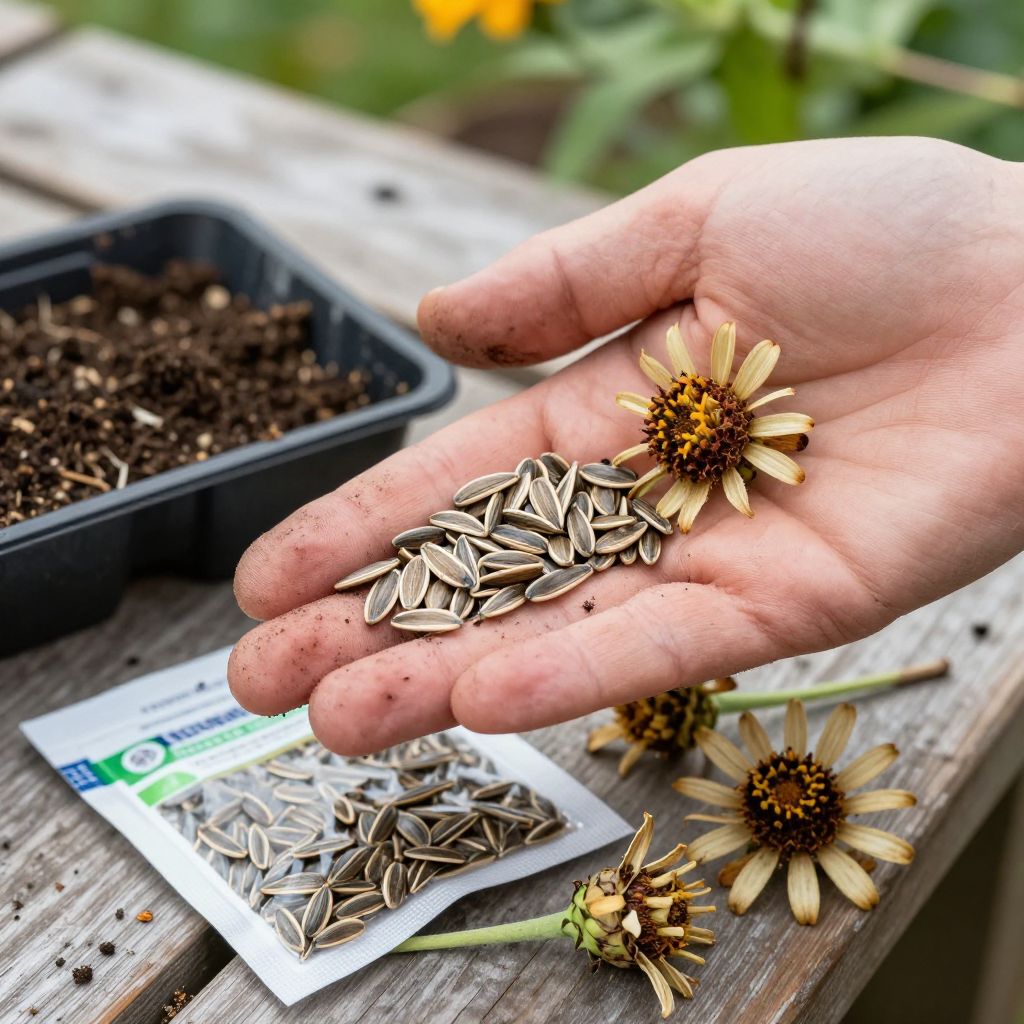
What do zinnia seeds look like? If you’ve saved seed from spent blooms or bought a packet and want to know what to expect, zinnia seeds are usually easy to recognize once you know the shape. They are typically narrow, pointed, and somewhat arrowhead-like, with a dry, papery shell that feels light and firm.
The challenge is that zinnia seed heads contain a mix of seed types, and some look more like dried petals or chaff than viable seed. Knowing how to spot the best seeds, how to collect them, and how to store them properly can make a big difference in germination.
What do zinnia seeds look like?
Zinnia seeds are usually flat to slightly plump, elongated, and tapered at one end, often with a pale tan, gray, or brown color. Some are smooth and narrow, while others may look slightly curved or have a small pointed “spine” at the tip. They are much larger than many annual flower seeds, which makes them fairly easy to handle.
How to identify zinnia seeds in the seed head
Zinnia flowers produce seeds in the center of the bloom after the petals dry and fade. The seed head contains different shapes, so not everything you pull apart will be a true seed. The most useful seeds are the firm, dry, pointed ones that come from the outer ring of the flower head.
What you may see when you open a dried zinnia flower
- True seeds: narrow, dry, pointed, and usually tan to brown.
- Chaff: light, flaky plant material that breaks apart easily.
- Immature seeds: pale, soft, or thin seeds that may not germinate well.
- Spent flower parts: dried petals and central disk tissue that are not seeds.
Good signs of viable zinnia seed
- It feels dry and firm, not soft or rubbery.
- It has a full shape rather than being shriveled.
- It is darker and more mature than the pale debris around it.
- It separates cleanly from the flower head without crumbling.
How to collect zinnia seeds correctly
If you want seeds for next season, let the flower heads dry on the plant as long as weather allows. A mature seed head will look faded, papery, and brown. Harvest only when the head is fully dry, because seeds taken too early are often immature and weak.
- Choose a healthy, fully opened zinnia bloom that has finished flowering.
- Wait until the petals are dry and the center is brown and brittle.
- Snip the flower head with clean scissors or pruners.
- Bring it indoors and let it dry for several more days if needed.
- Gently break apart the seed head over a tray or paper towel.
- Separate the plump, pointed seeds from the chaff.
Tip: If you are saving seed from multiple plants, label them as you harvest. Zinnias can cross-pollinate, so seed from mixed plantings may not grow exactly like the parent flower.
How to tell if zinnia seeds are worth planting
Not every seed you find in a zinnia head will germinate well. The best way to judge quality is by appearance, dryness, and maturity. If the seed is full-sized, firm, and clearly formed, it has a better chance of sprouting than thin, pale, or damaged seed.
Discard seeds that look like this
- Very pale or translucent seeds
- Seeds that feel soft, hollow, or papery
- Seeds with mold, dark spots, or obvious damage
- Crushed or broken seed pieces
If you are unsure, you can do a simple germination test before planting a large batch. Place a few seeds between damp paper towels, keep them warm, and check for sprouting over several days. This is especially helpful with older saved seed.
What zinnia seeds look like compared with other flower seeds
Zinnia seeds are easier to handle than many annual flower seeds because they are relatively large and visible. They are not round like marigold seed, and they are not tiny like petunia seed. Their pointed, arrow-like shape is one of the quickest clues that you are looking at zinnia seed.
Common comparison points
- Zinnia: narrow, pointed, tan to brown, dry and firm.
- Marigold: long and slender, often darker and more needle-like.
- Sunflower: much larger, thicker, and shell-like.
- Cosmos: more elongated and often darker, with a different overall shape.
If you are sorting mixed seed from a flower garden, look for the zinnia’s flatter, more arrowhead-shaped form. That shape is a reliable clue, especially when the seed is fully mature.
When and where to plant zinnia seeds
Zinnias are warm-season annuals, so seed should be planted when the soil is warm and frost risk has passed in your area. They germinate best in full sun and in soil that drains well. Cool, wet soil can slow sprouting and increase rot.
Best growing conditions for strong germination
- Sunlight: at least 6 to 8 hours of direct sun daily.
- Soil: loose, fertile, and well-drained.
- Moisture: evenly moist, not soggy.
- Temperature: warm conditions help seeds sprout faster.
In cooler climates, many gardeners start zinnia seeds outdoors only after the soil has warmed. In warmer regions, you may be able to sow earlier in spring, but avoid planting into cold, wet ground. If you are unsure, wait until conditions feel comfortably warm for tender annuals.
How to plant zinnia seeds for the best results
Zinnia seeds are straightforward to sow, whether in garden beds or containers. Because they are fairly large, you can place them accurately and thin seedlings later if needed. Good spacing and airflow matter, especially in humid weather.
- Prepare a bed or pot with loose, well-drained soil.
- Sow seeds about 1/4 inch deep.
- Space them according to the mature plant size on the packet or label.
- Water gently so the soil settles without washing seeds away.
- Keep the soil lightly moist until seedlings emerge.
Do not bury zinnia seeds too deeply. Shallow planting helps them emerge more easily, especially in heavier soil. If you are sowing in containers, use a quality potting mix rather than garden soil, which can compact and hold too much water.
Common problems when saving or planting zinnia seed
Most zinnia seed problems come from harvesting too early, storing seed badly, or planting in poor conditions. A little attention to dryness and timing usually solves the issue.
Problem: seeds do not germinate
- Seed may be immature or too old.
- Soil may be too cold.
- Seed may have been planted too deep.
- Excess moisture may have caused rot.
Problem: seedlings collapse or fail after sprouting
- Overwatering can encourage damping-off disease.
- Poor air circulation can weaken young plants.
- Heavy soil may stay wet too long.
Problem: flowers look different from the parent plant
- Zinnias can cross-pollinate with nearby plants.
- Seed from hybrid varieties may not come true.
- Mixed seed sources can produce varied flower forms and colors.
If you want predictable results, save seed from open-pollinated plants and keep different varieties separated when possible. That will not guarantee identical offspring, but it improves your chances of getting similar flowers.
Storing zinnia seeds so they stay viable
Once you have cleaned the seed, store it in a cool, dry place. Moisture is the biggest threat to saved seed, so make sure the seeds are fully dry before packing them away. A paper envelope inside a sealed container works well for many home gardeners.
Simple storage checklist
- Dry seeds thoroughly before storing.
- Use paper envelopes or small labeled packets.
- Keep them away from heat, humidity, and sunlight.
- Store in a dry indoor location, not a damp shed or garage.
- Label with the variety and harvest year.
If you are saving seed for more than one season, check it before planting time with a small germination test. That is the easiest way to avoid wasting bed space on weak seed.
Useful tools for collecting and handling zinnia seeds
You do not need special equipment, but a few simple tools make the job cleaner and easier. Clean tools also help reduce disease spread when you are cutting flower heads or handling plants after rain.
- Small pruners or scissors
- Paper bags or envelopes
- Labels and a marker
- A tray, plate, or paper towel for cleaning seed
- Fine mesh strainer, if you want to separate chaff from seed
Keep your tools dry and clean, especially if you are harvesting from multiple plants. That helps prevent spreading disease from one flower head to another.
Final tips for gardeners saving zinnia seed
The easiest way to remember what zinnia seeds look like is to look for dry, pointed, tan-to-brown seeds from a fully faded flower head. Harvest them only when mature, store them dry, and sow them in warm, well-drained soil for the best chance of success.
If you want to go a step further, read more about how to spot good zinnia seeds and whether zinnias come back every year before planning next season’s flower bed.