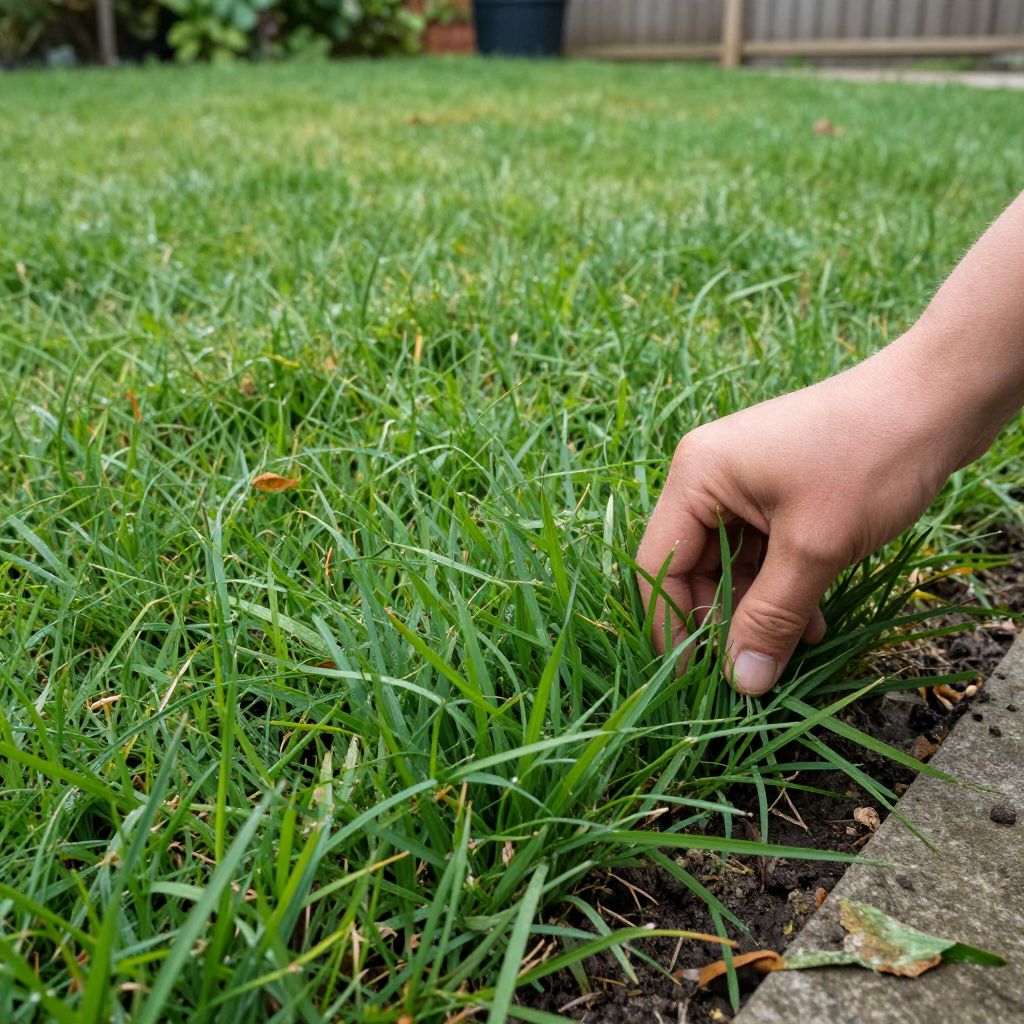
What kind of grass is this? If you’re staring at a patch of lawn, a roadside tuft, or a mystery clump in a garden bed, the answer usually comes from the plant’s growth habit, leaf shape, seed head, and where it’s growing. You do not always need the exact species to make a useful decision, but you do need to know whether it’s a turf grass, a weed grass, or a grass-like plant.
With a few simple observations, you can narrow it down and decide whether to keep it, manage it, or remove it. This guide will help you identify common grass types and show you what to do next based on what you find.
What kind of grass is this?
Most mystery grasses can be grouped by appearance and behavior: fine-bladed lawn grasses, coarse clumping grasses, spreading weeds, or grass-like sedges and rushes. Look at blade width, growth pattern, seed heads, and whether the plant spreads by runners or forms a clump. Those clues are usually enough to identify it well enough for care or control.
Start with the easiest identification clues
Before you pull anything up, examine the plant closely. A hand lens is helpful, but your eyes and fingers are often enough.
1. Check the leaves
- Blade width: Fine blades usually suggest turf grass; broad, coarse blades may indicate a weed grass.
- Texture: Some grasses feel soft and thin, while others feel stiff or rough.
- Color: Bright green, blue-green, or dull green can help narrow the type.
- Midrib: Some grasses have a noticeable central vein or fold.
2. Look at the growth habit
- Clumping grasses grow from a central crown and make tufts.
- Spreading grasses send out runners above or below the soil.
- Annual grasses often appear quickly, flower, set seed, and die in a single season.
- Perennial grasses return year after year and may be harder to remove.
3. Inspect the seed head
Seed heads are one of the best identification tools. They may look like spikes, open sprays, fingers, or bottlebrushes. If the plant is flowering, take a photo of the seed head from the side and from above.
4. Note where it is growing
A grass in a shaded, wet area is not likely to be the same as one thriving in a dry, sunny lawn edge. Soil moisture, foot traffic, mowing height, and shade all influence which grasses dominate.
Common grass types you may be seeing
These are some of the most common possibilities in home landscapes. Exact identification still depends on your region, but these descriptions can help you narrow things down.
Turf grasses
- Kentucky bluegrass is usually fine-textured and forms a dense lawn in cooler climates.
- Perennial ryegrass has narrow, shiny blades and often establishes quickly.
- Tall fescue has wider blades and a coarser look, with good tolerance for heat and drought once established.
- Bermudagrass spreads aggressively in warm climates and has fine blades with runners.
- Zoysiagrass forms a dense mat and feels stiff or bristly underfoot.
Common grassy weeds
- Crabgrass is low-growing, spreads outward, and often appears in thin turf during warm weather.
- Goosegrass forms a flattened rosette and tolerates compacted soil.
- Foxtail has a distinctive bristly seed head that resembles a fox’s tail.
- Annual bluegrass can look like a lawn grass but often shows up in patches and seeds heavily.
Grass-like lookalikes
- Sedges are not true grasses and often have triangular stems.
- Rushes usually grow in wet soil and have stiff, round stems.
How to tell grass from sedge or weeds
If you are unsure whether the plant is a true grass, check the stem. True grasses usually have round or slightly flattened stems with nodes. Sedges often have a triangular stem, which you may feel if you roll it between your fingers. This matters because sedges often need different control methods than lawn grasses.
A simple field test
- Pinch the stem near the base.
- Roll it gently between your fingers.
- If it feels triangular or three-sided, it may be a sedge.
- If it feels round and jointed, it is more likely a true grass.
What to do after you identify it
Once you know what you’re dealing with, your next step depends on whether you want to keep the grass, improve it, or remove it. Good identification saves time and prevents unnecessary treatments.
If it is a desirable lawn grass
- Mow at the correct height for the species when possible.
- Water deeply but only when the soil begins to dry, rather than giving frequent shallow watering.
- Aerate compacted soil if the lawn is thinning.
- Topdress with a thin layer of compost if the soil is poor and the lawn can tolerate it.
- Overseed thin areas with the same type of grass, not a random mix.
If it is a grassy weed
- Pull small patches by hand when the soil is moist and roots come out cleanly.
- Use a sharp hand weeder for deep-rooted clumps.
- Improve lawn density so weeds have less room to establish.
- Remove seed heads before they mature if the infestation is light.
If it is spreading aggressively
Some grasses spread by stolons or rhizomes and can invade beds, paths, and borders. Edging, regular inspection, and prompt removal of creeping runners help prevent takeover. In beds, a physical barrier or mulch can reduce spread, but persistent grasses may still return from underground pieces.
Growing conditions that affect grass appearance
Grass looks different depending on climate, soil, and care. A plant that seems unhealthy may simply be poorly matched to the site.
Sunlight
Many turf grasses prefer full sun, but some tolerate partial shade better than others. If a lawn thins under trees, the issue may be too much shade rather than disease. In shady areas, choose species suited to lower light or reduce competition from tree roots and overhanging branches where appropriate.
Soil and drainage
Grass generally grows best in soil that drains well but still holds some moisture. Waterlogged soil can encourage shallow roots, moss, sedges, and disease. Very sandy soil may dry too quickly, while heavy clay can compact and suffocate roots.
- Improve clay with organic matter over time, not by mixing in a little compost once and expecting a full fix.
- Level low spots that collect water if drainage is poor.
- Avoid working wet soil, which increases compaction.
Compaction and traffic
Foot traffic, pets, and equipment can thin grass and encourage weeds. If the grass is sparse in paths or play areas, compaction may be the real problem. Aeration and traffic management often help more than extra fertilizer.
Practical troubleshooting for common grass problems
Many people ask “what kind of grass is this” because the plant looks wrong. Sometimes the issue is not identity alone, but stress or damage.
Thin, patchy growth
- Possible causes: shade, compaction, poor soil, drought, or mowing too short.
- Fix: raise mowing height, improve watering habits, and overseed with the right species for your area.
Yellowing
- Possible causes: nutrient imbalance, poor drainage, overwatering, or disease.
- Fix: check soil moisture first, then consider a soil test before adding fertilizer.
Brown patches
- Possible causes: heat stress, pet urine, fungal disease, insects, or drought.
- Fix: inspect roots and crowns, look for insect activity, and avoid guessing with treatments.
Weedy seed heads in a lawn
- Possible causes: stressed turf, low mowing, or a grass species that naturally flowers more visibly.
- Fix: mow regularly, reduce stress, and fill thin spots so weeds cannot dominate.
How to collect a sample for better identification
If you still cannot tell what the grass is, collect a small sample and compare it with local extension photos or nursery references. A clear sample makes identification much easier.
- Dig up a small clump with roots attached.
- Include leaves, stems, and any seed head if present.
- Take photos in good light from several angles.
- Note whether the site is sunny, shady, wet, dry, or compacted.
- Compare the sample with local regional guides, since grass species vary widely by climate.
Common mistakes to avoid
- Do not assume all grassy plants are lawn grass. Sedges and rushes need different management.
- Do not scalp the lawn to “see what comes back.” Cutting too short weakens turf and invites weeds.
- Do not overwater thin grass. Too much water can worsen shallow roots and disease.
- Do not apply herbicide blindly. Some products harm desirable turf or fail on the wrong weed type.
- Do not ignore the site conditions. The same grass can look healthy in one place and fail in another.
When to leave it alone and when to act
If the grass is healthy, fits the site, and serves your landscape goal, you may only need routine mowing and basic care. If it is invading beds, outcompeting lawn grass, or showing signs of stress, act early. Small problems are much easier to fix than established patches.
Conclusion: identify first, then manage
The best answer to “what kind of grass is this” comes from observing the blade, stem, seed head, and growth habit, then matching those clues to your site conditions. Once you know whether it is turf, weed, or a lookalike, you can choose the right care or control method with confidence. If you want to keep improving your yard, it also helps to learn about how to identify trees in the landscape and basic lawn equipment care such as choosing the right oil for a lawn mower.