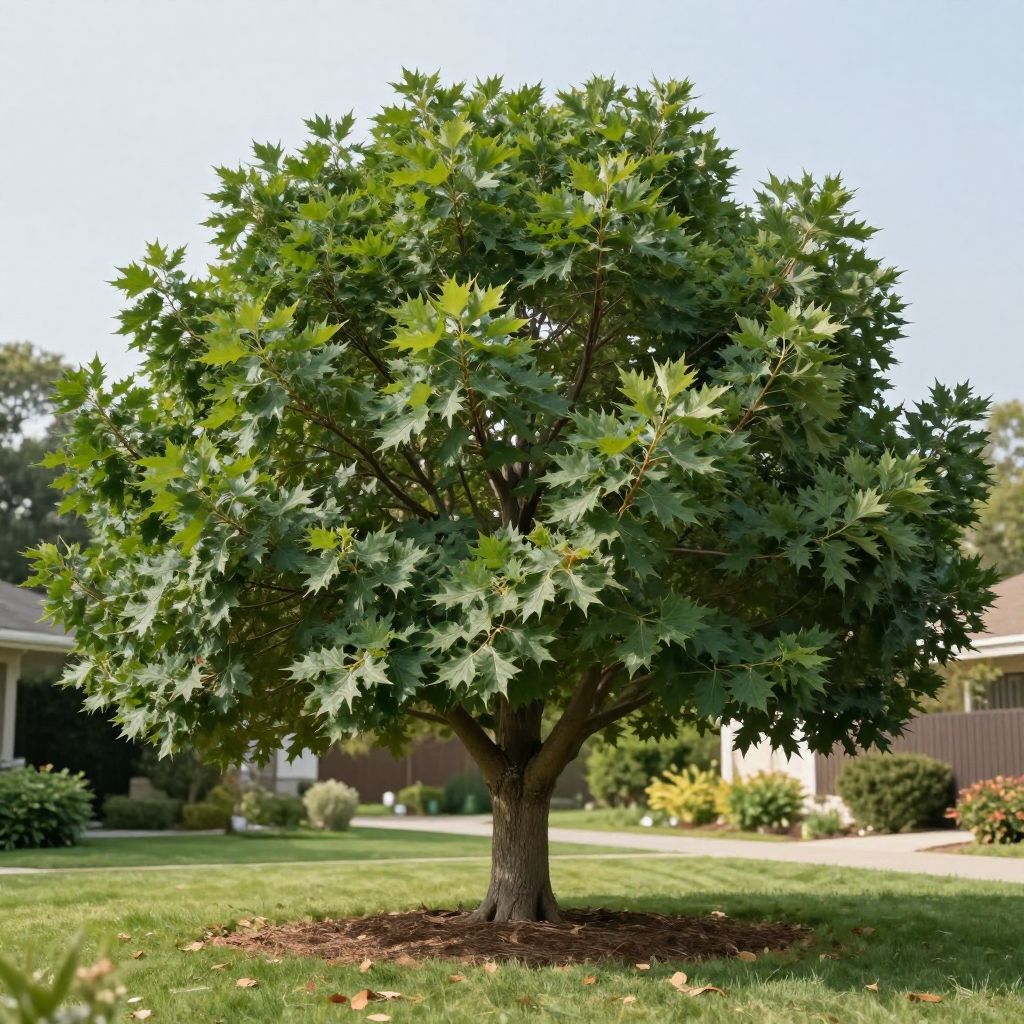
If you’re asking, “What does an elm tree look like?” the short answer is that elms are tall, broad-canopied shade trees with rough bark, oval-to-elliptic leaves, and a graceful vase-like or arching form. They’re often recognized by their asymmetrical leaf bases and serrated edges, though the exact look varies by species and age.
Knowing how to identify an elm helps you choose the right tree for your landscape, spot disease problems early, and care for it properly. Below you’ll find the key visual traits, how to tell elms apart from similar trees, and practical growing and maintenance tips for home gardens.
What does an elm tree look like?
An elm tree usually has a tall trunk, spreading branches, and a rounded or vase-shaped canopy that provides deep shade. Its leaves are simple, serrated, and often uneven at the base, while the bark becomes ridged or furrowed with age. Young elms are more upright; mature trees look broader and more graceful.
How to identify an elm tree in the garden
Leaf shape and arrangement
Elm leaves are one of the easiest clues. They are typically oval to egg-shaped, with a pointed tip and clearly toothed edges.
- Alternate leaf arrangement: leaves grow one at a time along the twig, not in pairs.
- Uneven leaf base: one side of the leaf base is often slightly lower than the other.
- Veins: many straight, parallel veins run from the midrib to the edge.
- Texture: leaves may feel rough or sandpapery on some species, smoother on others.
In spring and summer, a healthy elm canopy looks dense and leafy. In autumn, the foliage usually turns yellow, sometimes with muted gold or yellow-brown tones depending on the species and weather.
Bark and trunk
Young elm bark is often relatively smooth, but older trees develop deep ridges and furrows. The bark may look gray-brown, with a rugged, scaly texture as the tree matures.
If you’re trying to identify a mature elm, bark alone is not enough, but it is useful when combined with the leaf shape and overall branch structure.
Branch structure and overall form
One of the most recognizable features of an elm is its silhouette. Many elms develop a wide, vase-like shape with branches that rise and then arch outward.
- Young trees: more upright and narrow.
- Mature trees: broad, spreading, and often arching.
- Canopy: dense enough to create substantial shade.
Some species grow more upright than others, so the tree’s shape can vary with age, pruning, and growing conditions. Trees in open sunlight often develop a fuller crown than those crowded by other plants.
Flowers, seeds, and seasonal clues
Elms produce small, inconspicuous flowers in early spring, often before or as leaves emerge. These are not showy, so most gardeners identify the tree by foliage and form instead.
After flowering, elms produce flat, papery seeds called samaras. They are small, round to oval, and often appear in clusters. Depending on the species, these may form in spring or early summer.
Common elm species and how they differ
Several elm species are grown in gardens and landscapes, and their appearance can vary. If you know the species, identification becomes much easier.
American elm (Ulmus americana)
American elm is famous for its classic vase shape and graceful arching branches. It can become a large shade tree with a high, broad canopy when grown in open space.
English elm (Ulmus procera)
English elm often has a strong, upright trunk and a dense crown. It may look more formal and columnar when young, then broaden with age.
Chinese elm (Ulmus parvifolia)
Chinese elm is often used in landscaping because it is adaptable and attractive. It usually has smaller leaves than many other elms and a mottled, exfoliating bark that can be especially ornamental on mature trees.
Slippery elm (Ulmus rubra)
Slippery elm has rougher leaves and a more rugged appearance. Its bark is often thick and deeply furrowed as the tree ages.
If you’re unsure which elm you have, compare leaf size, bark texture, and the tree’s overall shape rather than relying on one feature alone.
Where elms grow best
Elms are generally outdoor landscape trees that prefer full sun to light shade. They perform best in well-drained soil with enough space for their roots and canopy to expand.
- Sunlight: full sun encourages stronger growth and a fuller crown.
- Soil: adaptable, but best in moist, well-drained soil.
- Drainage: avoid waterlogged sites, which stress roots.
- Space: allow room for mature height and spread.
Because elms can become large, they are best planted where their roots and branches won’t conflict with buildings, sidewalks, or overhead wires. Always check the mature size of the specific species before planting.
How to plant and establish an elm tree
If you’re planting a young elm, focus on root health and steady establishment rather than fast top growth. The first one to three years are especially important.
- Choose a site with room for the mature canopy and root spread.
- Dig a hole only as deep as the root ball and about 2 to 3 times as wide.
- Set the tree so the root flare sits at or slightly above soil level.
- Backfill with the original soil unless your site is extremely poor.
- Water thoroughly to settle the soil around the roots.
- Mulch with 2 to 4 inches of organic mulch, keeping it away from the trunk.
Avoid burying the trunk flare. Planting too deeply is a common mistake that can lead to poor growth and root stress.
Watering during establishment
Newly planted elms need regular moisture, but not soggy soil. Water deeply when the top few inches of soil begin to dry, adjusting for rainfall, heat, and soil type.
Sandy soils dry faster and may need more frequent watering than clay soils. Once established, many elms become more tolerant of dry periods, but they still perform best with consistent moisture during prolonged heat or drought.
Pruning and maintenance
Pruning helps maintain structure, remove dead wood, and reduce storm damage. For young trees, the goal is to develop a strong framework of branches with good spacing.
Basic pruning tips
- Remove dead, damaged, or crossing branches first.
- Keep a strong central leader if the species naturally forms one.
- Reduce crowded limbs to improve airflow and light penetration.
- Make clean cuts just outside the branch collar.
For larger elms, major pruning is best done by a qualified arborist, especially if the tree is tall or near structures. Avoid heavy topping, which weakens the tree and can lead to weak regrowth.
When to prune
Light pruning can often be done when the tree is dormant or when growth is less active, but the best timing depends on your climate and the tree’s condition. In areas where disease pressure is high, local guidance may matter more than the calendar.
Common pests and diseases that affect elm trees
Elms are valued shade trees, but they can be vulnerable to certain problems. Early identification matters because some issues spread quickly.
Elm leaf beetles
These pests chew leaves and can cause browning or skeletonized foliage. Severe infestations may weaken the tree over time.
Japanese beetles
In some regions, beetles feed on elm leaves during summer. Damage often looks like ragged holes or partial leaf loss.
Dutch elm disease
This serious disease is one of the most important threats to elms. It often causes wilting, yellowing, and branch dieback, sometimes beginning on one side of the tree.
If you suspect Dutch elm disease, act quickly. Remove affected wood according to local recommendations and contact a certified arborist or extension service for diagnosis and next steps.
Elm yellows and cankers
Other diseases may cause leaf yellowing, thinning canopies, or bark damage. Because symptoms can overlap, proper diagnosis is important before treatment.
How to tell an elm from similar trees
Several trees can look somewhat like elms at first glance. A few quick comparisons can help.
- Versus maple: maple leaves are usually lobed, while elm leaves are not.
- Versus ash: ash has compound leaves made of multiple leaflets.
- Versus beech: beech leaves are smoother-edged and more oval, with straighter veins and less serration.
- Versus hackberry: hackberry has more obvious warty bark and different leaf texture.
When in doubt, look at the whole tree: leaf arrangement, bark, branching pattern, and seed type together give a much better answer than one feature alone.
Propagation and new growth
Home gardeners usually grow elms from nursery stock rather than from seed, because seedlings can vary and take a long time to mature. If you’re starting a tree, a healthy young nursery plant is the most reliable choice.
Some elms can be propagated from seed or cuttings, but success depends on species, timing, and local conditions. For most gardeners, proper planting and aftercare are more practical than propagation from scratch.
Landscape uses for elm trees
Elms are excellent shade and street trees when planted in the right place. Their broad canopies can cool patios, lawns, and driveways, while their elegant form adds structure to larger gardens.
- Use them as specimen trees in open lawns.
- Plant them along streets or driveways where space allows.
- Place them where summer shade is welcome but roots won’t conflict with hardscape.
Because many elms become large, they are not ideal for small yards unless you choose a smaller species or cultivar suited to limited space.
Practical mistakes to avoid
- Planting too close to buildings, fences, or utility lines.
- Overwatering in heavy soil with poor drainage.
- Mulching against the trunk.
- Ignoring early signs of disease or dieback.
- Severe topping or poor pruning cuts.
Good tree care is mostly about consistency: the right site, proper planting depth, enough water during establishment, and regular inspection for pests or disease.
Conclusion
So, what does an elm tree look like? Look for a tall shade tree with serrated, asymmetrical leaves, roughening bark, and a broad vase-like or arching form. If you spot those traits together, you’re probably looking at an elm.
For the best results, match the tree to a spacious site, keep the root flare visible, and monitor it each season for stress or disease. If you’d like to compare elm traits with other landscape trees, related tree identification and pruning guides can help you narrow it down further.
Leave a Reply