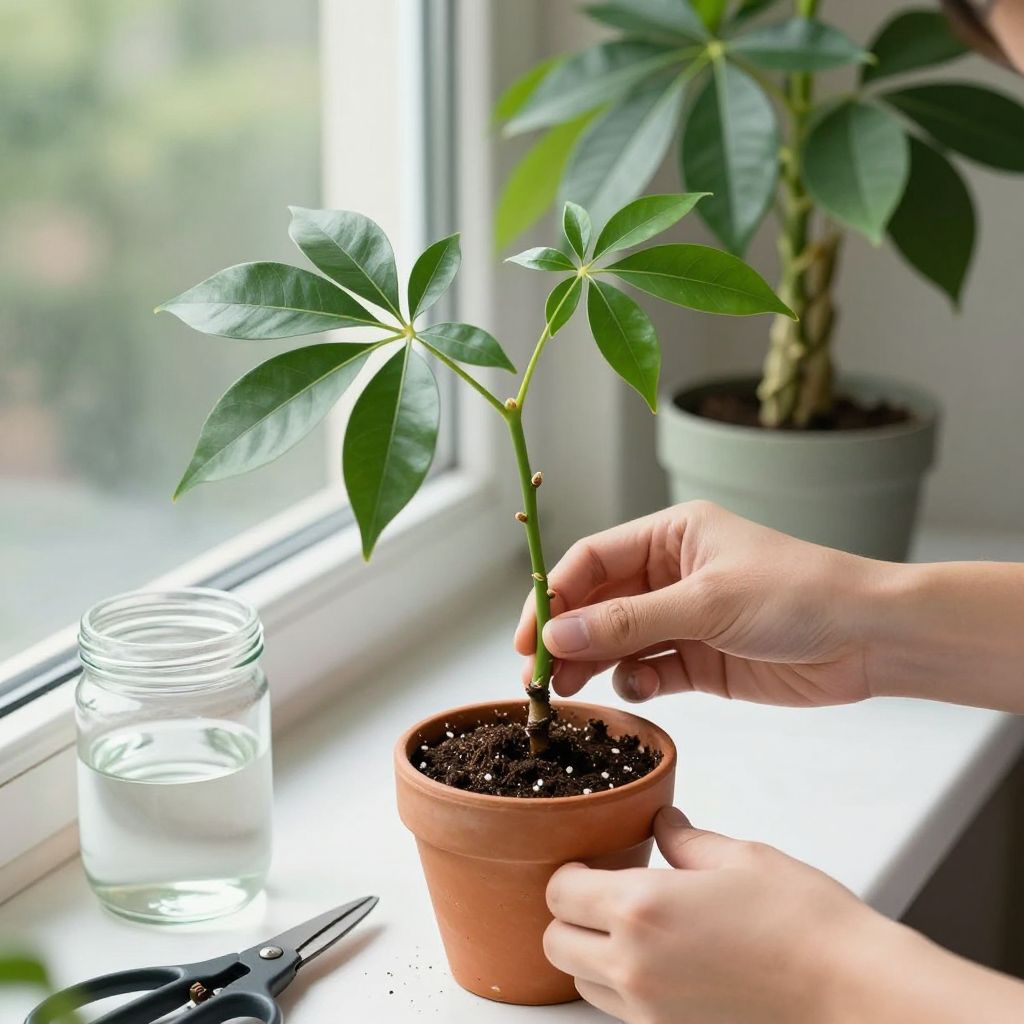
Can you propagate a money tree? Yes—you usually can, and the most reliable method is stem cuttings from a healthy Pachira aquatica. With the right cutting, clean tools, and warm, bright conditions, you can root a new plant at home and keep the parent plant looking tidy at the same time.
Money trees are forgiving houseplants, but propagation works best when you match the plant’s natural growth habits. The key is choosing healthy stems, avoiding excess moisture, and giving the cutting time to root before potting it up.
Can you propagate a money tree?
Yes, a money tree is commonly propagated from stem cuttings, and that is the most practical method for home gardeners. You can also try air layering on larger stems, but seed propagation is slow and less common indoors. Success depends on taking a healthy cutting and keeping it warm, bright, and lightly moist.
How to propagate a money tree from stem cuttings
Stem cuttings are the easiest way to make a new money tree. Choose a healthy, non-flowering stem with several leaves, then cut just below a node, where roots are most likely to form.
What you need
- Sharp, clean pruners or scissors
- A small pot with drainage holes
- Light, airy potting mix
- Optional: rooting hormone
- A clear plastic bag or humidity dome, if your home is dry
Step-by-step cutting method
- Pick a healthy stem tip or side shoot with at least 2 to 4 leaves.
- Make a clean cut just below a node.
- Remove the lower leaves so at least one node will be below the soil line or in water.
- If the cutting is large, reduce the leaf area by trimming some leaves in half to slow moisture loss.
- Let the cut end dry for a short time if the stem is very soft or wet.
- Place the cutting in water or directly into a moist propagation mix.
Important: do not use a soggy medium. Money tree cuttings rot easily if the base stays wet and airless.
Water propagation vs. soil propagation
Both methods can work, but they suit different gardeners. Water propagation lets you watch root growth, while soil propagation often produces roots that adapt better to potting later.
Water propagation
Put the cutting in a glass of clean water with at least one node submerged. Change the water every few days, or sooner if it becomes cloudy.
- Best for beginners who want to monitor progress
- Keep the water level just high enough to cover the node
- Move to soil when roots are several inches long and branching
Soil propagation
Use a loose mix that drains well, such as indoor potting mix blended with perlite or fine orchid bark. Insert the cutting so one node is below the surface, then water lightly.
- Best if your home is warm and consistently humid
- Less transplant shock than moving from water to soil
- Needs careful watering to avoid rot
Best conditions for rooting a money tree cutting
Money tree cuttings root best in bright, indirect light and warm temperatures. Aim for a spot that stays comfortably warm and out of direct sun, which can scorch tender leaves and dry the cutting too quickly.
Light
Place the cutting near a bright window with filtered light. A north- or east-facing window is often ideal indoors, while a sheer curtain can soften stronger light from a south- or west-facing window.
Temperature and humidity
Warmth helps rooting, and moderate humidity reduces stress on the cutting. If your home is dry, a loose plastic cover can help, but leave some airflow to prevent mold.
- Keep the cutting away from cold drafts and heating vents
- Remove any cover briefly each day for fresh air
- Watch for condensation that is heavy enough to drip, which can encourage rot
How long does it take for a money tree to root?
Rooting time varies with temperature, light, cutting size, and whether you use water or soil. Some cuttings root in a few weeks, while others take longer, especially if conditions are cool or the cutting is large and leafy.
Be patient and avoid pulling the cutting up to check for roots. If you are using water, you’ll often see roots before you see new top growth. In soil, gentle resistance when you tug very lightly can suggest roots are forming, but wait for clear signs of growth before repotting.
How to pot up a rooted money tree cutting
Once roots are established, move the new plant into a small pot with drainage holes. Money trees prefer being slightly snug in their pots, so do not rush into an oversized container.
- Choose a pot only slightly larger than the root system.
- Use a well-draining indoor potting mix.
- Set the plant at the same depth it was growing before.
- Water thoroughly, then let excess drain away.
- Keep it in bright, indirect light while it adjusts.
Tip: a pot that is too large holds extra moisture and raises the risk of root rot.
Can you propagate a braided money tree?
Yes, but braided money trees are usually propagated from individual stems, not from the braid itself as a single unit. If you want to keep the braided look, take cuttings from healthy side shoots or top growth rather than disturbing the main trunk structure.
If your plant has several stems in one pot, you can sometimes separate them carefully during repotting, but only if the roots are distinct enough to divide without severe damage. For most home gardeners, stem cuttings are safer and easier than division.
Common propagation problems and how to fix them
Cutting turns black or mushy
This usually means rot. Remove the damaged section, recut into healthy tissue, and restart with a cleaner tool and a lighter watering approach.
Leaves wilt or drop
Some leaf drop is normal after cutting, but severe wilting often points to low humidity, too much sun, or a cutting that lost too much moisture. Reduce leaf area and keep the plant in gentler light.
No roots after several weeks
The cutting may be too cold, too dark, or taken from weak growth. Try again with a fresh stem from a vigorous plant and place it in brighter indirect light.
Mold on the soil surface
That usually means too much moisture and too little airflow. Let the mix dry slightly, remove any plastic cover for longer periods, and improve ventilation.
How to care for a young money tree
Newly rooted money trees need gentle care while they establish. Treat them like a tender indoor plant rather than a fully mature specimen.
- Water when the top layer of mix begins to dry, not on a fixed schedule
- Keep in bright, indirect light
- Avoid fertilizing immediately after rooting
- Rotate the pot occasionally for even growth
- Pinch or prune lightly only after the plant is actively growing
Once the plant settles in, you can begin light feeding during the active growing season if your indoor conditions support regular growth. Use a balanced houseplant fertilizer according to the label, and avoid overfeeding, which can stress roots and cause weak growth.
Pruning tips for better shape and future cuttings
Pruning helps keep a money tree compact and can provide material for propagation. Remove leggy growth above a node to encourage branching and preserve a tidy shape.
- Use clean, sharp tools
- Take cuttings from healthy, vigorous stems
- Do not remove too much foliage at once
- Prune after the plant is actively growing, not when it is stressed
Pruning is especially useful if your money tree has grown unevenly toward the light. A balanced canopy produces better-looking plants and gives you better cutting material later.
Indoor vs. outdoor growing considerations
Money trees are most often grown indoors, where you can control light and temperature. In warmer climates, they may be grown outdoors in sheltered locations, but propagation still works best in a protected, warm setting.
If you move a rooted cutting outdoors, harden it off gradually by introducing it to brighter light over several days. Protect it from harsh midday sun, heavy rain, and cold nights.
Quick checklist for success
- Take a healthy cutting with at least one node
- Use clean, sharp tools
- Root in water or a well-draining mix
- Keep it warm and in bright, indirect light
- Prevent soggy conditions
- Pot up only after roots are well formed
Conclusion
So, can you propagate a money tree? Absolutely—and stem cuttings give you the best chance of success at home. Start with a healthy stem, keep conditions warm and bright, and be patient while roots develop. If you already have a mature plant, take one careful cutting this season and give it the best possible start.
If you want to expand your indoor plant care skills, you may also enjoy reading about general indoor houseplant care and how to propagate common houseplants.
Leave a Reply