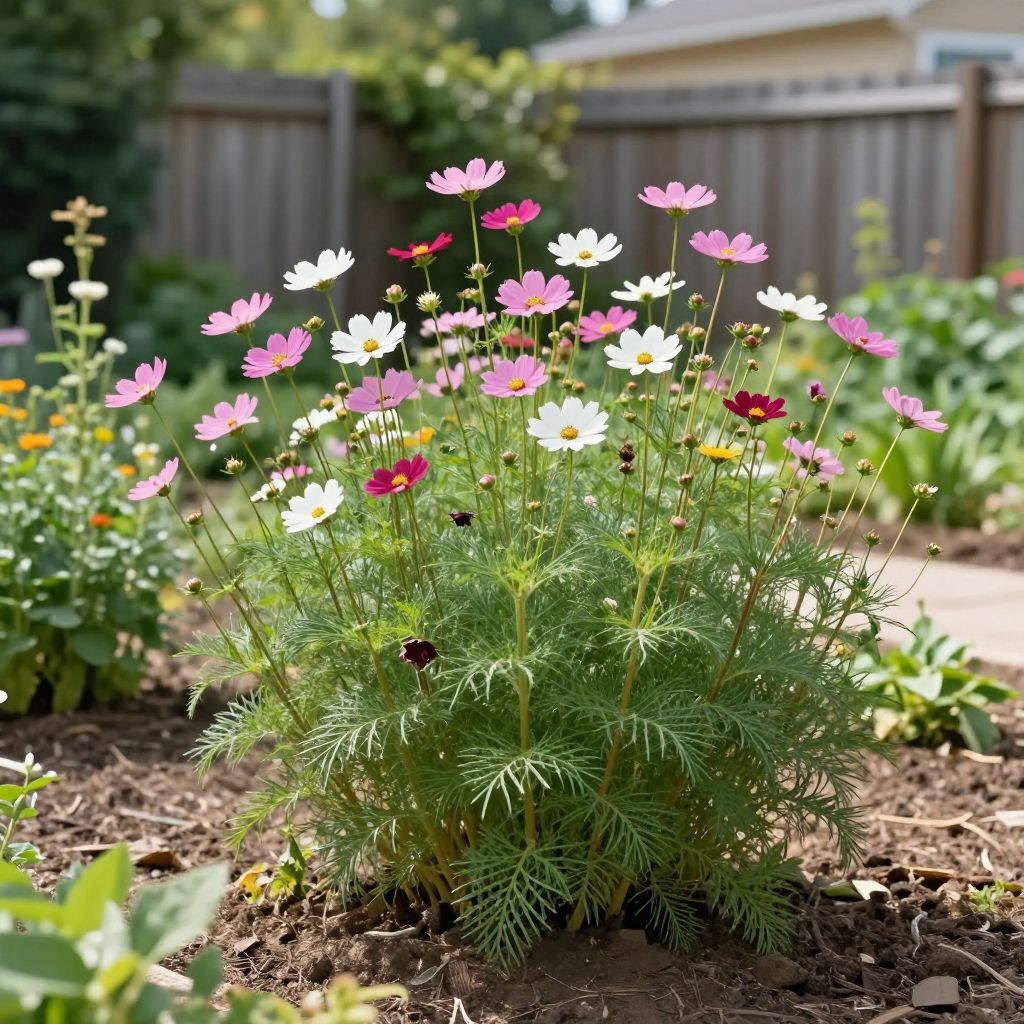
Are cosmos deer resistant? If you love the airy flowers of cosmos but live where deer browse through the garden, that’s an important question. The short answer is that cosmos are often treated as deer resistant, not deer proof.
Deer may usually pass them by, especially when other tastier plants are available, but hungry deer can still nibble young cosmos, buds, or tender growth. Your results depend on local deer pressure, weather, and what else is growing nearby.
Are Cosmos Deer Resistant?
Cosmos are generally considered deer resistant because their foliage is light, airy, and not especially appealing compared with many ornamentals. However, deer do sometimes browse cosmos, especially when plants are young, drought-stressed, or the garden is under heavy deer pressure. Treat them as a lower-risk choice, not a guaranteed safe plant.
Why Deer Usually Leave Cosmos Alone
Cosmos have a few traits that make them less attractive to deer than many common bedding plants:
- Feathery foliage that is less tender than lush, broad leaves.
- A somewhat airy, lightly textured plant form that deer often skip when other food is available.
- Flowers that are not strongly scented or especially rich in the way deer often prefer.
That said, deer feeding habits change with season and food availability. In spring, when new growth is soft, or in late summer when natural forage is scarce, even deer-resistant plants can be sampled.
When Cosmos Get Damaged by Deer
Young plants are most vulnerable
Freshly planted cosmos can be clipped back before they establish. Deer often prefer the newest, most tender growth, so seedlings and young transplants are at greater risk than mature plants.
High deer pressure changes the odds
If deer routinely feed in your yard, “resistant” plants may still be eaten. In those gardens, cosmos may need protection just like more vulnerable annuals.
Dry weather can make plants more tempting
Stressed plants often become easier targets. If cosmos are wilting from heat, drought, or poor soil, deer may notice them more readily.
How to Grow Cosmos So They Recover Better From Browsing
Healthy cosmos are more likely to bounce back if deer sample them. Good growing conditions also help plants fill out quickly, which can reduce visible damage.
Choose the right site
- Plant cosmos in full sun for the best flowering and sturdier growth.
- Use a spot with well-drained soil; cosmos dislike soggy roots.
- Give them room for air movement to reduce disease and weak, stretched stems.
Prepare the soil lightly
Cosmos do best in average soil and often flower better when the soil is not overly rich. Too much compost or fertilizer can produce tall, floppy plants with fewer blooms.
If your soil is very poor, mix in a modest amount of compost to improve structure. Aim for loose, crumbly soil rather than heavy, wet, or overfed ground.
Water wisely
Water new plants regularly until they establish, then water only when the top few inches of soil dry out. Overwatering can weaken roots and encourage leaf disease, while underwatering can slow growth and make plants less resilient.
Pinch and deadhead for fuller plants
Pinching young cosmos can encourage branching, which gives you a bushier plant that can recover more quickly if deer nip the tips. Remove spent flowers to keep blooms coming and to prevent the plant from putting energy into seed too early.
Best Ways to Protect Cosmos From Deer
If deer are common in your area, combine several strategies. No single method works perfectly on its own.
- Plant cosmos near the house or in visible areas where deer are less likely to linger.
- Use temporary fencing around young plants until they are established.
- Mix cosmos with less palatable plants so the bed is less attractive overall.
- Apply deer deterrents according to label directions, especially after rain or new growth.
- Rotate protection methods if deer become used to one approach.
Physical barriers are usually the most reliable option. A fence that deer cannot easily step over or push through is more dependable than scent-based deterrents alone.
What to avoid
- Do not assume one deer-resistant plant will protect an entire bed.
- Do not overfertilize in hopes of “outgrowing” deer damage; soft growth can be more tempting.
- Do not wait until deer have already found the planting before adding protection.
Common Cosmos Problems That Can Look Like Deer Damage
Sometimes gardeners blame deer when another issue is really the cause. Cosmos can be affected by pests, weather, or poor growing conditions that create ragged foliage or missing flowers.
Insect feeding
Caterpillars, grasshoppers, and other chewing pests can leave holes or stripped leaves. Check the undersides of leaves and the stems for signs of insects before assuming deer are responsible.
Wind and storm breakage
Cosmos have slender stems that can snap or flop in strong wind, especially when plants are tall and heavily flowered. Broken stems may look like browsing from a distance.
Slugs and snails on young plants
In damp conditions, these pests can chew seedlings and lower leaves. If damage is low to the ground and occurs overnight, slugs may be the culprit.
Nutrient imbalance
Excess nitrogen can create lush foliage with weak stems, while poor soil can leave plants stunted. Either problem can make cosmos look more damaged than they really are.
How to Tell If Deer Are Eating Your Cosmos
Look for clues rather than guessing. Deer browsing often leaves a clean, angled break on stems or a “snipped” look on tender growth. You may also notice tracks, hoof prints, or damage on other nearby plants with similar height.
- Deer damage is often higher off the ground and uneven across the plant.
- Rabbit damage is usually lower and more uniform.
- Insect damage often leaves holes, skeletonized leaves, or frass.
If the damage is concentrated on the newest tips, deer are a likely suspect. If leaves are riddled with holes throughout, look more closely for insects.
Cosmos Care Tips for Deer-Prone Gardens
Start with strong transplants or direct sow carefully
Cosmos are easy to grow from seed, but in deer country, larger transplants can be easier to protect than tiny seedlings. If you direct sow, consider temporary protection until the plants are a few inches tall and growing steadily.
Support tall varieties if needed
Some cosmos grow quite tall and may benefit from staking or light support, especially in windy sites. Upright, supported plants are less likely to break if deer brush past them or if you need to cover them with netting or fencing.
Keep beds tidy but not overworked
Remove weeds and spent blooms, but avoid constant disturbance around the roots. A stable planting bed helps cosmos establish faster and recover better from minor browsing.
Good Companion Plants for a Deer-Prone Cosmos Bed
If you want a border that is less appealing to deer overall, pair cosmos with other plants that tend to be less preferred in many gardens. Choose plants that suit your climate, soil, and sun exposure.
- Herbs with strong scent, such as rosemary or lavender, where climate allows
- Ornamental grasses
- Salvia
- Yarrow
- Coreopsis
Even so, no companion planting strategy replaces fencing if deer are persistent.
Seasonal Tips for Better Results
In spring, protect young cosmos first, because that is when deer may sample fresh growth. In summer, keep plants watered during dry spells so they do not become stressed and more appealing. In fall, remove tired plants and clean up the bed to reduce pest and disease problems for the next season.
If you garden in a mild climate, cosmos may bloom for a long season. In cooler regions, they may decline once nights turn cold, so focus on getting the most from the main growing window rather than trying to keep them perfect all year.
Conclusion: Should You Plant Cosmos If Deer Visit?
Yes, you can still grow cosmos in a deer-prone garden. They are one of the better annual flower choices for mixed borders, but they are not immune to browsing. For the best outcome, plant them in full sun, keep them healthy, and protect young plants with fencing or deterrents if deer pressure is high.
If you want to reduce damage further, it can also help to learn what attracts deer to a garden so you can avoid creating a buffet around your cosmos bed.