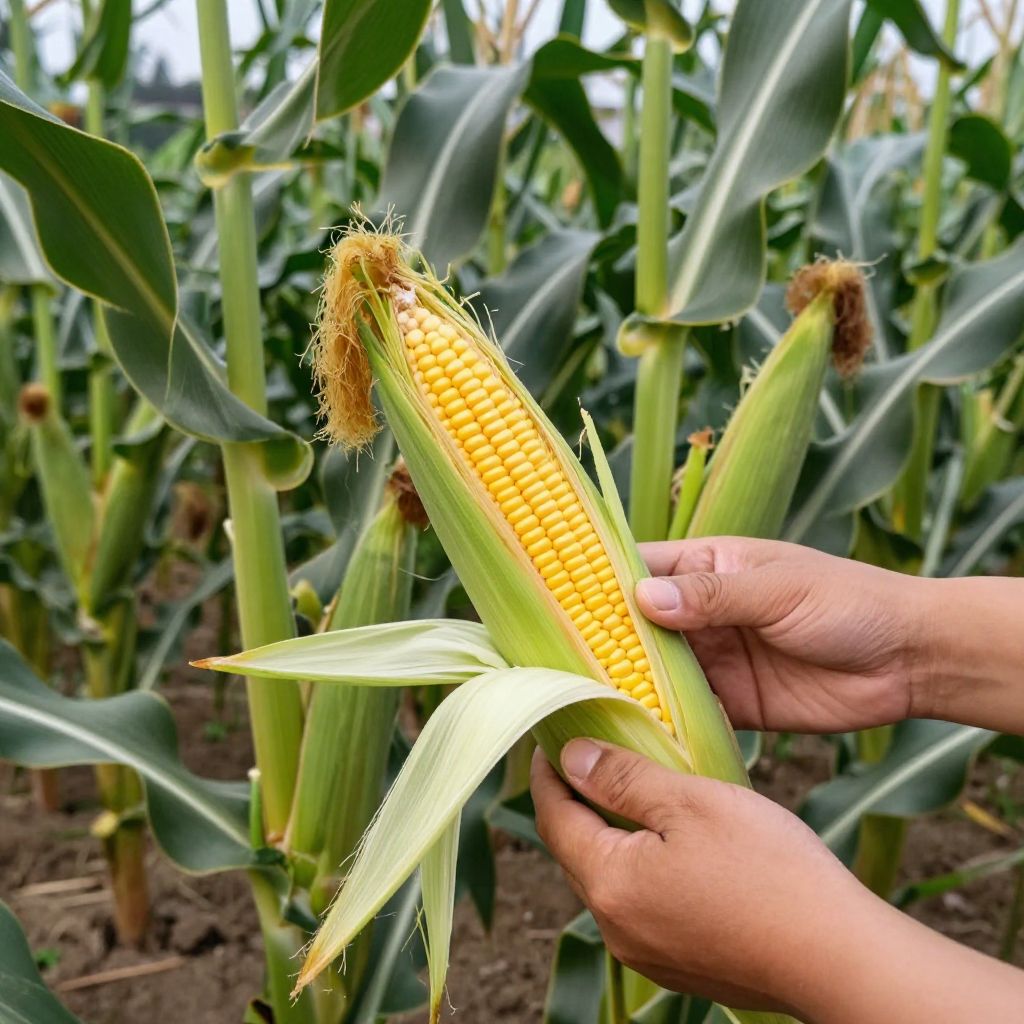
Wondering when is corn ready to pick? Sweet corn can go from perfectly tender to starchy surprisingly fast, so timing matters. The good news is that you do not need special tools to tell—just a few reliable signs on the ear and the plant.
With a little practice, you can harvest corn at peak sweetness and avoid the disappointment of underfilled or overmature ears. Here’s how to read the clues, how seasonal timing affects ripening, and what to do if your corn is not quite ready yet.
When is corn ready to pick?
Corn is ready to pick when the silks have turned brown and dry, the ear feels full from tip to base, and a squeezed kernel releases a milky liquid. Sweet corn is usually harvested about 18–24 days after silking, but weather, variety, and growing conditions can shift that window by several days.
How to tell if corn is ready to harvest
The best time to pick corn is based on the ear itself, not just the calendar. Look for several signs together rather than relying on one clue alone.
1. Check the silks
- Ready ears usually have silks that are brown, dry, and papery.
- Fresh silks are greenish and moist; that usually means the ear is still developing.
- If the silks are blackened but still damp, wait a little longer and check again.
2. Feel the ear through the husk
- A ripe ear should feel plump and firm all the way to the tip.
- If the tip feels narrow or loose, the kernels may not be fully filled in yet.
- Uneven filling can happen if pollination was poor or the plant was stressed by heat or drought.
3. Open a small section to inspect kernels
Gently peel back a corner of the husk and press a kernel with your thumbnail. If a milky juice comes out, the corn is at the sweet stage. If the juice is watery, it is too early. If it is thick, doughy, or pasty, the ear is already moving past peak tenderness.
4. Watch the ear position
Many ears begin to angle downward as they mature, though this is not a perfect rule. Use it as a supporting clue, not the only one.
Seasonal timing: how long corn takes to ripen
Corn maturity depends on the variety and growing conditions. Most sweet corn varieties need roughly 60–100 days from planting to harvest, but the more useful marker is days after silking. Once tassels and silks appear, harvest often follows in about 3 weeks.
What affects ripening speed?
- Temperature: Warm weather speeds development; cool spells slow it down.
- Sunlight: Full sun helps plants fill ears well.
- Water supply: Drought stress can reduce kernel fill and sweetness.
- Variety: Early, midseason, and late sweet corn mature at different rates.
- Soil fertility: Poor soil can lead to weak plants and small ears.
If your season is short, choose early-maturing varieties suited to your climate. If your summers are long and hot, succession planting can stretch the harvest window so you do not end up with all the corn ready at once.
How to harvest corn the right way
Pick corn in the cool part of the day if possible, especially early morning. Sweetness is best preserved when ears are harvested promptly and kept cool.
- Hold the ear with one hand.
- Grasp the ear firmly and twist downward.
- Snap it from the stalk with a quick motion.
- Place ears in shade or move them indoors right away.
If the ear resists, it may not be ready yet. Forcing it can damage the plant and still leave you with immature kernels.
Why speed matters after picking
Sweet corn begins converting sugars to starch soon after harvest. That means the flavor is best when you cook or chill it soon after picking. If you cannot use it immediately, refrigerate the ears with the husks on until you are ready.
Growing conditions that help corn ripen well
Healthy plants produce better ears, and better ears are easier to judge at harvest. Corn is a heavy feeder and a sun-loving crop, so good preparation matters from the start.
Sunlight and spacing
- Grow corn in full sun for the best ear development.
- Plant in blocks rather than a single long row when possible, because corn pollinates by wind.
- Good spacing helps air move through the patch and reduces disease pressure.
Soil and compost
Corn grows best in fertile, well-drained soil enriched with compost before planting. Soil that stays soggy can slow root growth and reduce plant vigor, while very sandy soil may dry out too quickly and stress the crop.
Watering
Consistent moisture is especially important from tasseling through ear fill. If the soil dries out during this stage, kernels may not fill properly, and ears can end up smaller or patchy. Deep, even watering is better than frequent shallow sprinkling.
Common problems that affect harvest timing
1. Ears look full but kernels are not sweet yet
This often means the ears are still a little young. Wait another day or two and recheck the silk color and kernel juice. Sweet corn can change quickly in warm weather.
2. Ears are small or poorly filled
Poor pollination is a common cause. Corn needs pollen from the tassels to reach the silks, so isolated plants or sparse rows may produce incomplete ears. Heat stress, drought, or nutrient shortages can also reduce fill.
3. Corn is tough or starchy
This usually means you waited too long. Once the kernels become doughy, sweetness drops and texture turns firmer. Harvest a little earlier next time and check ears daily as they approach maturity.
4. Birds or pests damage the ears
Birds, raccoons, and some insects can ruin a crop just as it ripens. If wildlife is a problem in your area, consider using physical barriers such as netting or other garden protection before the ears are ready.
Practical mistakes to avoid
- Do not judge readiness by ear size alone. Some varieties naturally produce smaller ears.
- Do not wait for the husks to dry out completely; by then the kernels are usually past peak sweetness.
- Do not harvest too early just because the silks are brown.
- Do not let the patch dry out during pollination and ear fill.
- Do not plant corn in a thin single row if you can avoid it; pollination is often better in blocks.
Quick checklist before you pick
- Silks are brown and dry.
- Ear feels full from base to tip.
- Kernel juice is milky, not watery or doughy.
- Plant has reached the expected maturity window for the variety.
- You are ready to use or chill the ears soon after harvest.
What to do if your corn is not ready yet
If the ears are still immature, leave them on the plant and check again in a day or two. Keep the soil evenly moist, remove competing weeds, and watch for pests or signs of stress. In many cases, a little patience is all that is needed.
If you are growing corn for the first time, make a note of the planting date, variety, and the day silks first appear. That simple record will help you predict harvest timing much more accurately next season.
For more seasonal vegetable-growing guidance, you may also want to read about how to grow sweet corn successfully and harvesting vegetables at peak flavor.