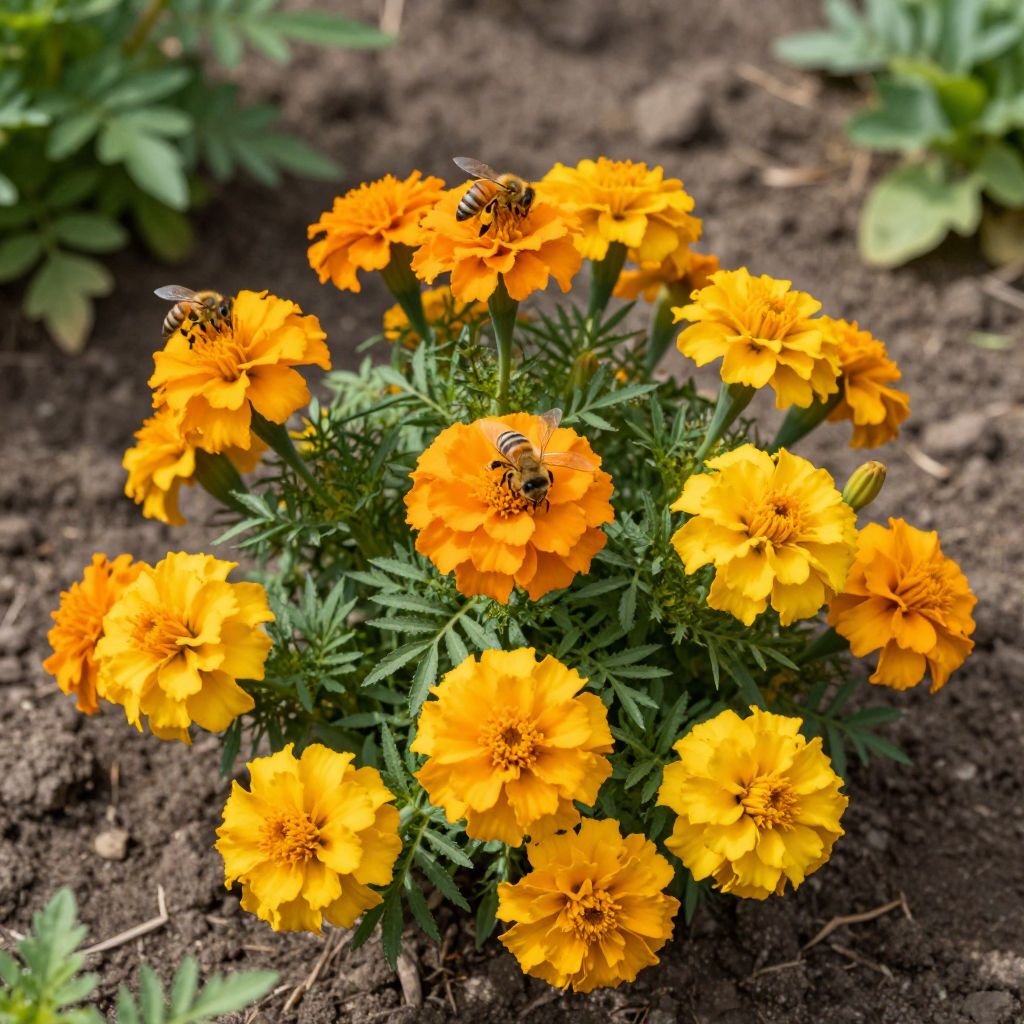
Do bees like marigolds? Yes—bees will visit marigolds, especially when the flowers are open, plentiful, and grown in a sunny spot. That said, marigolds are usually better as a supporting nectar and pollen plant than as a top-tier bee magnet. They can still help feed pollinators in a mixed flower bed or vegetable garden.
If you want to attract more bees, marigolds are a useful piece of the puzzle, not the whole solution. The best results come when you grow them alongside other nectar-rich flowers and avoid practices that reduce bloom quality, such as too much shade, overwatering, or heavy deadheading at the wrong time.
Do Bees Like Marigolds?
Bees do like marigolds, but the level of interest depends on the type of marigold, the weather, and what else is blooming nearby. Open, single-flowered marigolds are usually more attractive to bees than tightly doubled blooms because the nectar and pollen are easier to reach.
In general, marigolds can support bees in a garden, but they are not usually as irresistible as lavender, borage, thyme, salvia, or many native wildflowers. Think of marigolds as a reliable, easy-to-grow pollinator-friendly annual that adds color, helps fill gaps, and can draw in some bee activity during the growing season.
Why bees visit marigolds
- Nectar and pollen: Bees forage for both, and marigolds can offer a useful source when flowers are open.
- Bright color: Yellow and orange blooms are easy for bees to notice in the garden.
- Long bloom period: With regular deadheading, marigolds can flower for weeks or months.
- Easy access: Single blooms are simpler for bees to land on and feed from.
When marigolds are less attractive
- Very double or ruffled blooms may hide the flower center.
- Plants grown in deep shade often bloom less and produce fewer visits.
- Heat stress, drought stress, or overcrowding can reduce flower quality.
- If more rewarding flowers are nearby, bees may prefer those first.
Which Marigolds Are Best for Bees?
Not all marigolds are equally useful to pollinators. If your goal is to support bees, choose marigolds with simpler flower forms and plant them in generous clumps so bees can forage efficiently.
Good choices for pollinator gardens
- French marigolds (Tagetes patula) often bloom heavily and are compact enough for borders and containers.
- Signet marigolds (Tagetes tenuifolia) have smaller, lighter blooms and can be especially useful in mixed plantings.
- Mexican marigolds (Tagetes erecta) can produce large, showy flowers, though very full forms may be less accessible to bees.
For bee value, look for varieties described as single, open, or simple-flowered. If a marigold looks heavily layered and decorative, it may still be beautiful, but bees may have a harder time using it.
How to Grow Marigolds for Better Bee Visits
Healthy marigolds produce more flowers, and more flowers mean more opportunities for bees. The goal is not just to keep the plants alive, but to keep them blooming steadily in good light and well-drained soil.
Sunlight
Marigolds flower best in full sun. Aim for at least 6 hours of direct sunlight a day, though they can tolerate a little light shade in hot climates. In too much shade, plants often become leggy and bloom less, which reduces bee activity.
Soil and drainage
Marigolds prefer average garden soil that drains well. Rich, soggy soil can lead to lush foliage and fewer flowers, while waterlogged conditions can encourage root problems. If your soil is heavy clay, mix in compost to improve structure, and consider raised beds or containers if drainage is poor.
Compost and feeding
A modest layer of compost worked into the soil before planting is usually enough. Avoid overfeeding with high-nitrogen fertilizer, because too much nitrogen pushes leafy growth at the expense of blooms. For bee-friendly planting, flower production matters more than oversized foliage.
Watering
Water marigolds deeply when the top inch or two of soil dries out, especially while young plants are establishing. Once established, they handle short dry spells fairly well, but consistent moisture helps keep flowers coming. Try to water at the base of the plant rather than soaking the blooms, which can reduce flower quality.
Planting Marigolds for a Pollinator-Friendly Bed
Marigolds are easy to plant from seed or transplants, and both methods can work well. If you want the quickest bloom display, nursery plants are convenient. If you want more plants for less money, sowing seed is often the better choice.
Simple planting steps
- Choose a sunny site with well-drained soil.
- Loosen the soil and mix in a small amount of compost if needed.
- Plant marigolds at the spacing recommended for the variety so air can move between plants.
- Water after planting to settle the soil around the roots.
- Mulch lightly to help hold moisture, but keep mulch away from the stems.
For containers, use a pot with drainage holes and a quality potting mix. Container-grown marigolds can be excellent on patios, balconies, and near vegetable beds where you want bees to notice them.
Best placement for bees
- Plant marigolds in clusters rather than single scattered plants.
- Place them near vegetables that benefit from pollination, such as squash, cucumbers, or melons.
- Mix them with other bee-friendly flowers to keep pollinators moving through the garden.
- Choose a sheltered spot if your area gets strong wind, which can reduce bee foraging.
How to Keep Marigolds Blooming Longer
The longer marigolds bloom, the more useful they are to bees. A few simple maintenance habits can extend the flowering season and keep the plants looking tidy.
Deadheading
Remove spent flowers regularly to encourage more buds. This is one of the easiest ways to keep marigolds producing new blooms. If you want some flowers to set seed for saving or self-sowing, leave a few blooms in place near the end of the season.
Pinching and pruning
Young marigolds can be lightly pinched back to encourage bushier growth. Bushier plants usually produce more flowers, which means more bee visits. If a plant becomes lanky, trim it lightly to shape it, but avoid cutting it back so hard that you remove most of the buds.
Spacing and airflow
Good spacing helps reduce disease and keeps blooms accessible. Crowded plants may develop more foliage disease and fewer open flowers. Better airflow also makes the bed easier for bees to navigate.
Common Problems That Reduce Bee Interest
Sometimes marigolds are planted with high hopes but do not attract many bees. Usually, the issue is not the flowers themselves but growing conditions or flower form.
Too much shade
If marigolds stretch toward the light and bloom poorly, move them to a sunnier location next season. More sun usually means more flowers and more bee activity.
Overwatering
Wet soil can weaken roots and reduce blooming. Let the soil dry slightly between waterings, especially in containers that stay damp longer than garden beds.
Dense, double blooms
Some ornamental marigolds are less useful to bees because the flower center is difficult to access. If pollinator support is your goal, choose simpler blooms next time.
Pest damage
Marigolds can sometimes be bothered by aphids, spider mites, slugs, or caterpillars. Light infestations usually do not ruin the plant, but severe damage can reduce blooming. Check the undersides of leaves and new growth regularly.
Diseases
Powdery mildew, root rot, and leaf spots may appear in damp or crowded conditions. Remove badly affected leaves, improve airflow, and avoid overhead watering late in the day. If a plant is severely diseased, replace it rather than trying to nurse it through a poor season.
How Marigolds Fit Into a Bee-Friendly Garden
Marigolds are helpful, but bees do best in gardens with a range of flowering plants that bloom at different times. A mixed planting gives bees more reliable food from spring through fall.
Pair marigolds with other bee-friendly plants
- Herbs such as basil, thyme, oregano, and mint when allowed to flower
- Annuals like zinnias, cosmos, and sunflowers
- Perennials and natives suited to your region
- Flowering vegetables and herbs left to bolt in moderation
Try to avoid using insecticides on open flowers, especially during the day when bees are active. Even products labeled for garden use can harm pollinators if sprayed directly on blooms or used carelessly.
Propagation and Seasonal Care
Marigolds are usually grown as annuals in many climates, so they are replanted each year. They are easy to start from seed, and that makes them a practical choice if you want a lot of bee-friendly flowers without much expense.
Starting from seed
Sow seed according to your local season and frost risk. In warm regions, marigolds can often be direct-sown outdoors once the soil is warm enough. In cooler climates, many gardeners start them indoors a few weeks before transplanting. Always harden off indoor seedlings before moving them outside.
End-of-season care
As the season cools, flower production usually slows. Leave healthy plants in place while they are still blooming, because late-season flowers can still feed bees. Once frost or cold weather finishes the plants, remove them and clear away diseased material to keep the bed clean for the next planting.
Quick Answer: Are Marigolds Worth Planting for Bees?
Yes, especially if you want an easy, colorful annual that can contribute to a pollinator-friendly garden. Marigolds are not the strongest bee plant available, but they are useful, reliable, and simple to grow. Their value increases when you choose open-flowered types, give them full sun, and plant them in groups.
If you want to build a stronger bee garden, combine marigolds with other nectar-rich flowers and keep the plants healthy with good drainage, moderate watering, and regular deadheading. For more ideas on creating a productive pollinator bed, you may also enjoy reading about pollinator garden basics and annual flowers that attract bees.