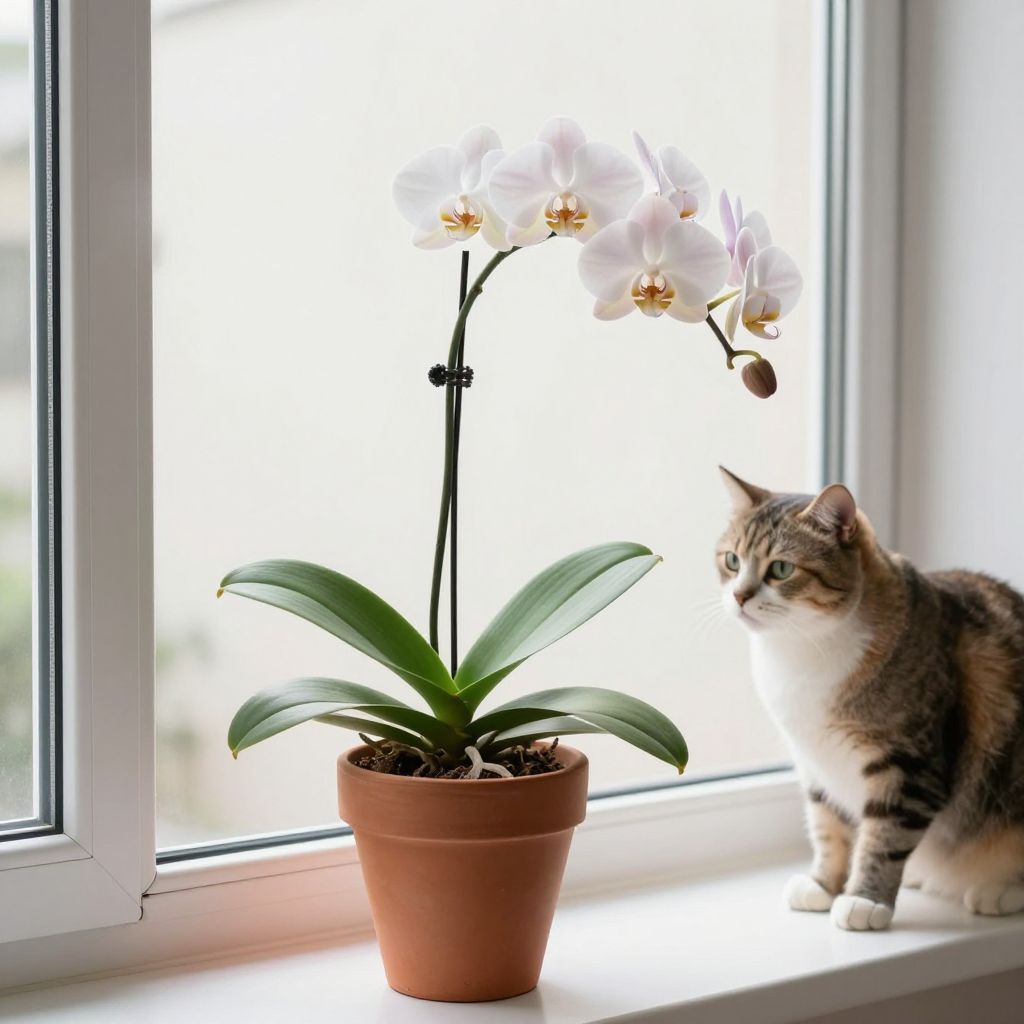
Are orchids cat safe? In most cases, yes. The common orchids sold as houseplants, especially Phalaenopsis moth orchids, are generally considered non-toxic to cats, so a curious nibble is unlikely to cause poisoning.
That said, “safe” does not mean “good to eat.” Orchids can still upset your cat’s stomach if chewed, and pesticides, fertilizers, or decorative materials on the plant may be a bigger risk than the orchid itself.
Are orchids cat safe?
Yes, most commonly grown orchids are considered cat safe, including popular indoor types such as Phalaenopsis, Cattleya, and Oncidium. They are not known to be toxic to cats, but chewing leaves, roots, or flowers can still cause mild mouth irritation or digestive upset.
Which orchid types are usually safe around cats?
Most orchids grown as houseplants are regarded as non-toxic. The safest approach is to identify your plant if possible, because “orchid” covers a very large family with many species and hybrids.
Common cat-safe orchid houseplants
- Phalaenopsis (moth orchid)
- Cattleya
- Oncidium types
- Dendrobium hybrids commonly sold for homes
- Miltonia and related houseplant orchids
If you are unsure what you have, check the plant tag or ask the nursery. When in doubt, treat the orchid as non-toxic but still keep it out of reach if your cat likes to chew plants.
Why “non-toxic” still deserves caution
A cat-safe plant can still cause problems if it is damaged or treated improperly. A cat may vomit after chewing any plant material, and some orchids are grown with stakes, clips, moss, or decorative stones that can be hazardous if swallowed.
- Broken flower spikes can poke a mouth or eye.
- Plastic clips and wire supports can be a choking risk.
- Fungicides, insecticides, and leaf shine products may be harmful.
- Standing water in saucers can attract drinking and contamination.
What happens if a cat eats an orchid?
In many cases, nothing serious happens beyond mild stomach upset. Watch for drooling, gagging, vomiting, or reduced appetite. If your cat ate a large amount, chewed a treated plant, or seems unwell, contact your veterinarian for advice.
Signs to watch for after chewing
- Drooling or lip smacking
- Vomiting or soft stool
- Temporary loss of appetite
- Pawing at the mouth
- Unusual lethargy
These symptoms can happen with many plant nibbles, not just orchids. If your cat has trouble breathing, repeated vomiting, swelling, or seems distressed, seek veterinary care promptly.
How to grow orchids safely in a cat household
Growing orchids with cats is easiest when you combine plant care with pet-proof placement. Orchids do best with bright, indirect light, airy roots, and careful watering, so choose a location that works for both the plant and your cat’s habits.
Best placement indoors
Set orchids on a high shelf, plant stand, or bright windowsill that your cat cannot easily reach. Avoid spots where a jumping cat can knock the pot over, especially with tall flower spikes.
- Use stable, heavy pots to reduce tipping.
- Keep orchids away from dangling leaves or curtains that invite climbing.
- Do not place them next to cat food or water bowls, which can encourage interest.
Light, temperature, and air movement
Most house orchids prefer bright, filtered light rather than harsh direct sun. A bright east window or a lightly shaded south or west window often works well, depending on your climate and season.
Good air movement helps prevent fungal problems, but avoid cold drafts from open windows or heat blasts from radiators. Orchids generally like the same comfortable indoor temperatures many cats enjoy, which makes them a practical shared-houseplant choice.
Watering without creating cat hazards
Water orchids only when the potting mix is approaching dryness, not on a fixed calendar. The exact timing depends on pot size, mix, humidity, light, and season.
- Check the potting medium with your finger or a wooden skewer.
- Water thoroughly, then let excess drain completely.
- Empty saucers so your cat cannot drink fertilizer residue.
- Never let orchids sit in standing water.
Most orchids are grown in bark or a bark-based mix, not regular garden soil. This fast-draining medium is important for root health and also helps prevent soggy conditions that can attract gnats or mold.
Fertilizer and sprays
Use orchid fertilizer carefully and keep it away from pets. Even if the orchid itself is non-toxic, concentrated plant food and spray products can be harmful if licked from leaves or paws.
- Apply fertilizer only as directed on the product label.
- Let leaves dry before allowing pets near the plant.
- Store all garden chemicals in closed cabinets.
- Avoid leaf shine products, which can irritate pets and block leaf pores.
How to keep cats from chewing orchids
Most cats ignore orchids once they lose novelty, but some are persistent plant chewers. The goal is to redirect the behavior rather than simply punish it.
Practical prevention methods
- Place orchids in rooms your cat visits less often.
- Use plant shelves or hanging displays out of reach.
- Provide cat grass or safe chew alternatives nearby.
- Use physical barriers such as decorative plant cages or clear covers for young plants.
- Trim dead flowers and loose leaves promptly so they do not tempt play.
Some gardeners use deterrent sprays, but test carefully and avoid anything that may damage orchid leaves. If you do use a deterrent, choose a pet-safe product and follow the label exactly.
What not to do
- Do not rely on toxic houseplants as “cat deterrents” near orchids.
- Do not use essential oils around pets.
- Do not allow orchids to sit where cats can knock them into water bowls or litter areas.
- Do not assume all decorative orchids are untreated.
Orchid care basics that also help pet safety
Healthy orchids are less likely to shed damaged leaves or attract pests, so good care supports both the plant and a safer home environment. Keep the plant clean, upright, and well ventilated.
Potting mix and repotting
Use a chunky orchid mix made for epiphytic orchids, usually bark-based with added perlite, charcoal, or sphagnum depending on the plant and your watering habits. Repot when the mix breaks down, roots outgrow the pot, or the plant becomes unstable.
Repotting is also a good time to remove broken stakes, tired clips, and any moldy material that could interest a cat. Choose a pot with plenty of drainage holes.
Pruning and cleanup
Remove spent blooms and dead spikes with clean scissors or pruners. Keeping the plant tidy reduces mess on the floor and lowers the chance that your cat will bat at falling petals or dried stems.
- Cut dead flower spikes back cleanly when appropriate for the orchid type.
- Remove yellowing leaves only when they come away easily or are clearly declining.
- Pick up fallen blooms before pets play with them.
Common orchid problems in homes with cats
Many orchid issues in pet homes are not caused by the cat itself, but by the way the plant is protected or placed. A few simple adjustments can solve most problems.
Broken spikes and knocked pots
If your cat jumps onto a shelf, a lightweight orchid pot can tip easily. Use a heavier cachepot or place the orchid inside a stable decorative container with drainage kept separate from standing water.
Root rot from overwatering
Trying to “save” an orchid by watering too often can lead to root rot. This weakens the plant, causes yellow leaves, and may create a damp mess that attracts pets.
Healthy orchid roots are usually firm and green or silvery, depending on moisture level. Mushy, brown roots should be trimmed during repotting.
Pests
Mealybugs, scale, and fungus gnats can appear on indoor orchids. If you need to treat pests, choose a pet-safe approach and keep cats away until all surfaces are dry and the product label says it is safe.
- Isolate the plant from other houseplants if pests appear.
- Wipe visible mealybugs off with a damp cotton swab.
- Improve airflow and avoid overwatering to discourage gnats.
- Use any pesticide only as a last resort and only according to the label.
Can orchids be grown outdoors with cats around?
In mild climates, some orchids can be grown outdoors in shaded, sheltered spots, but outdoor pet safety becomes harder to control. Cats may dig, chew, or brush against the plant, and weather can damage blooms or pots.
If you grow orchids outside, keep them in a protected area with filtered light, good drainage, and limited pet access. Bring tender orchids indoors before temperatures drop below what the plant can tolerate in your region.
When to call the vet
Most orchid nibbles are minor, but do not wait if your cat seems ill. Contact your veterinarian if your cat has repeated vomiting, swelling, trouble breathing, a painful mouth, or you suspect the plant was treated with chemicals.
If possible, take a photo of the orchid and note any products used on it. That information helps your vet decide whether the issue is likely plant-related or chemical-related.
Bottom line for cat owners
Orchids are generally cat safe, which makes them one of the better flowering houseplants for pet-friendly homes. The bigger risks are not the orchid itself, but chewing, tipping, and exposure to fertilizers or sprays.
Choose a stable pot, keep the plant out of reach when possible, and water only as needed. If you want to keep learning about indoor plant care, a good next step is reading more about orchid watering and repotting basics and pet-safe houseplant placement.