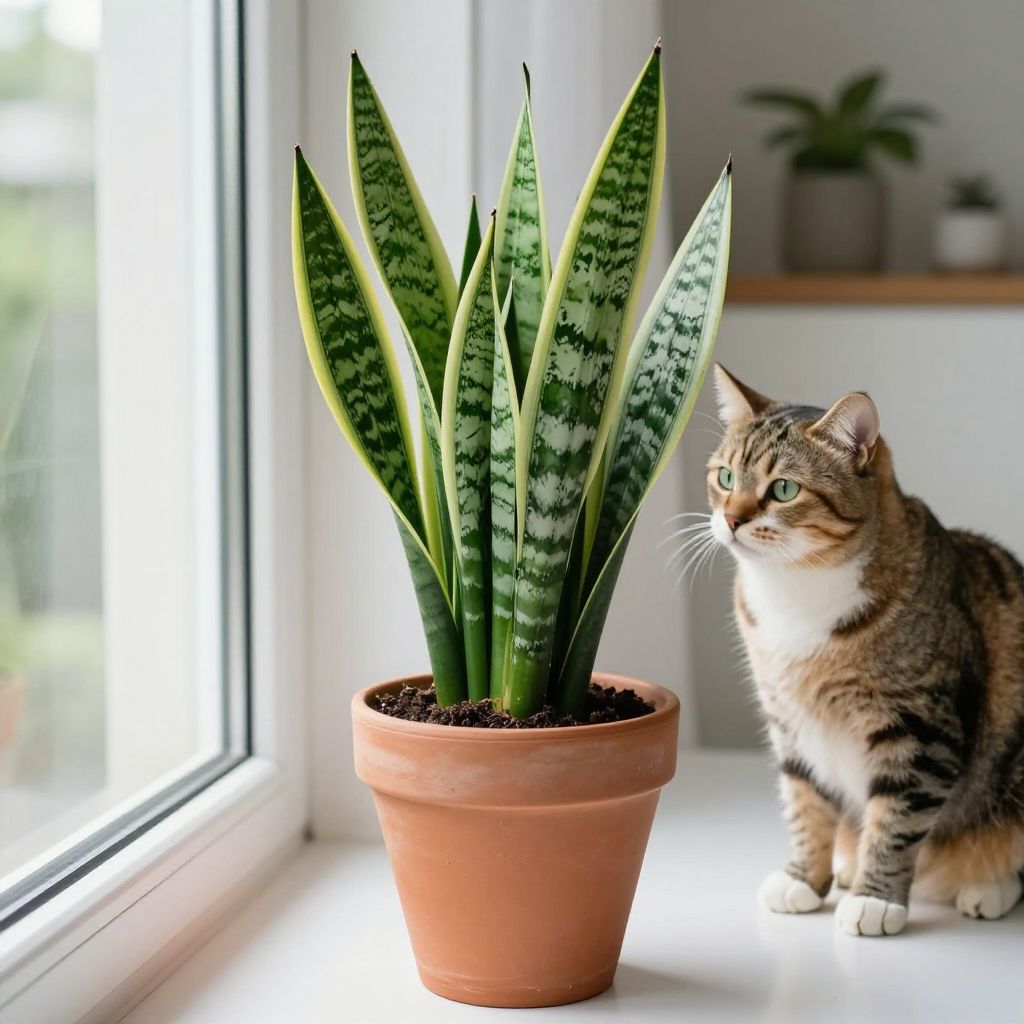
Are snake plants safe for cats? If you grow Sansevieria (now often sold as Dracaena trifasciata) indoors, this is an important question before placing one near a pet’s favorite windowsill. Snake plants are popular because they tolerate low light and irregular watering, but they are not cat-safe.
If your cat chews the leaves, the plant can cause drooling, vomiting, and stomach upset. The good news is that you can still enjoy snake plants by placing them well out of reach, choosing safer plants for pet areas, and giving the plant the right care so it stays healthy and less tempting to nibble.
Are snake plants safe for cats?
No. Snake plants are considered toxic to cats if eaten. The plant contains compounds called saponins, which can irritate a cat’s digestive system and lead to mild to moderate illness. While snake plants are usually not life-threatening in small nibbles, you should treat them as a pet hazard and keep them away from curious cats.
What happens if a cat eats snake plant leaves?
Most cats that chew snake plant leaves develop digestive upset rather than severe poisoning, but symptoms can still be unpleasant. Watch for drooling, nausea, vomiting, diarrhea, reduced appetite, and lethargy. Some cats may also paw at the mouth because the leaf texture and compounds can irritate the mouth and throat.
When to call a vet
- Your cat has repeated vomiting or diarrhea.
- There is swelling, trouble swallowing, or excessive drooling.
- Your cat seems weak, unsteady, or unusually quiet.
- You saw a large amount of plant material eaten.
- Your cat is very young, elderly, or has another health condition.
If you suspect your cat has eaten snake plant, contact your veterinarian or a pet poison helpline right away for advice. Bring a photo of the plant if you can.
How to keep snake plants and cats in the same home
The safest approach is to place snake plants where your cat cannot reach them. Cats are excellent climbers, so “high shelf” is not always enough. Think in terms of access, not just height.
Practical placement ideas
- Use a room your cat cannot enter.
- Hang the plant in a sturdy basket well above jumping range.
- Place it behind a closed door or inside a plant cabinet.
- Avoid windowsills, side tables, and low stands if your cat jumps there.
Training and deterrents
- Offer legal chew options, such as cat grass, to redirect nibbling.
- Use physical barriers rather than relying only on sprays.
- Keep the plant stable so it cannot tip if bumped.
- Clean fallen leaves promptly, since curious cats may investigate them.
Important: deterrent sprays may help, but they are not a complete solution. If your cat is determined, separation is safer than trying to “train” the plant to be ignored.
Snake plant care basics so the plant stays healthy
Healthy snake plants are easier to manage indoors, but good care does not make them safe to eat. It does help reduce leaf damage, rot, and the messy decline that can attract pets to chew or play with the plant.
Light
Snake plants adapt to low light, but they grow best in bright, indirect light. Too little light slows growth and can make the plant weak and floppy. Too much direct sun can scorch the leaves, especially if the plant is moved suddenly from shade to a hot window.
Watering
Let the potting mix dry out between waterings. Snake plants store water in their leaves and roots, so they are far more likely to suffer from overwatering than underwatering. In practice, the right timing depends on your room temperature, pot size, light level, and season.
A simple check is to insert a finger a few inches into the soil. If it still feels damp, wait. In cooler months or low light, the plant usually needs less water than during active growth.
Soil and drainage
Use a fast-draining potting mix, ideally one made for succulents or amended with coarse material such as perlite. A pot with drainage holes is essential. Standing water in a saucer can cause root rot, which is one of the most common snake plant problems.
- Choose a pot only slightly larger than the root ball.
- Make sure excess water can escape freely.
- Empty saucers after watering.
- Repot only when the plant becomes crowded or unstable.
Temperature and humidity
Snake plants prefer normal indoor temperatures and do not need high humidity. Keep them away from cold drafts, frosty windows, and heating vents. Sudden temperature swings can stress the plant and slow growth.
Growing snake plants indoors with pets in mind
If you want to keep snake plants in a pet home, think like a plant designer and a cat owner at the same time. The goal is to place the plant where it gets enough light and your cat cannot reach it.
- Pick a location with bright, indirect light if possible.
- Use a heavy pot so the plant is harder to knock over.
- Keep cords, plant stakes, and decorative moss out of reach if your cat tends to chew.
- Inspect the leaves regularly for bite marks, bruising, or rot.
- Move the plant if your cat starts jumping to reach it.
If your cat is especially persistent, it may be better to replace the snake plant in shared spaces with a pet-safer houseplant rather than constantly fighting access.
Common snake plant problems and what they mean
Knowing the difference between plant stress and pet damage helps you respond quickly. Some problems are caused by care mistakes, while others are caused by cat behavior.
Yellowing or soft leaves
This often points to overwatering or poor drainage. Check the roots and soil. If the mix stays wet for too long, repot into a drier, faster-draining blend and reduce watering frequency.
Brown tips or crispy edges
These can come from inconsistent watering, salt buildup from tap water or fertilizer, or too much direct sun. Trim damaged tips if needed, but focus on improving the growing conditions.
Chewed or bent leaves
If your cat has been nibbling, remove severely damaged leaves with clean scissors. Then move the plant out of reach and address the reason your cat is interested, whether that is boredom, access, or a nearby tempting perch.
Mealybugs and scale
Snake plants can occasionally get houseplant pests, especially in warm indoor conditions. Look for cottony clusters, sticky residue, or small shell-like bumps on leaves and stems. Wipe minor infestations with a cotton swab dipped in rubbing alcohol, and isolate the plant if needed.
How to prune, divide, and propagate safely
Pruning snake plants is simple, but if you have cats, keep cut leaves and trimmings off the floor. Freshly cut pieces can still attract attention.
Pruning
Remove damaged, rotten, or badly chewed leaves at the base with clean, sharp pruners. Avoid cutting healthy leaves in the middle unless you are removing a section for a specific reason, since the cut edge will not heal like a normal leaf tip.
Division
Division is the easiest way to propagate snake plants. When the plant becomes crowded, remove it from the pot and separate the rhizomes into sections, making sure each section has roots and at least one healthy growth point. Replant in fresh, well-draining mix.
Leaf cuttings
Leaf cuttings can work, but they are slower and less predictable than division. If you try them, keep the cut pieces away from pets while they dry and root. Use clean tools and avoid letting cats play with the cut leaves.
Outdoor growing: should snake plants be planted outside?
In warm climates, snake plants can be grown outdoors in containers or sheltered beds, but pet safety still matters. Outdoors, cats may encounter the plant while exploring patios, balconies, or garden rooms. If your cat has outdoor access, choose a location they cannot reach or skip the plant entirely in shared spaces.
Outdoor snake plants need excellent drainage, protection from cold, and some shelter from harsh sun. In wetter climates, they are often best kept in pots so you can move them if heavy rain or cold weather arrives.
Best practices for cat owners who love snake plants
- Assume the plant is toxic and plan placement accordingly.
- Do not rely on “pet-safe” labeling without checking the exact species.
- Keep the pot stable and the floor clear of fallen leaves.
- Offer cat-friendly alternatives if your cat likes to chew plants.
- Choose low-maintenance care so the plant stays healthy and less messy.
Conclusion: enjoy snake plants, but keep them out of paw’s reach
Snake plants are attractive, forgiving houseplants, but they are not safe for cats to eat. If you want to keep one, place it where your cat cannot reach it, give it bright indirect light and fast-draining soil, and water only when the mix is dry. If you are unsure about other houseplants, you may also want to read about are orchids cat safe and are snake plants succulents for more indoor plant guidance.