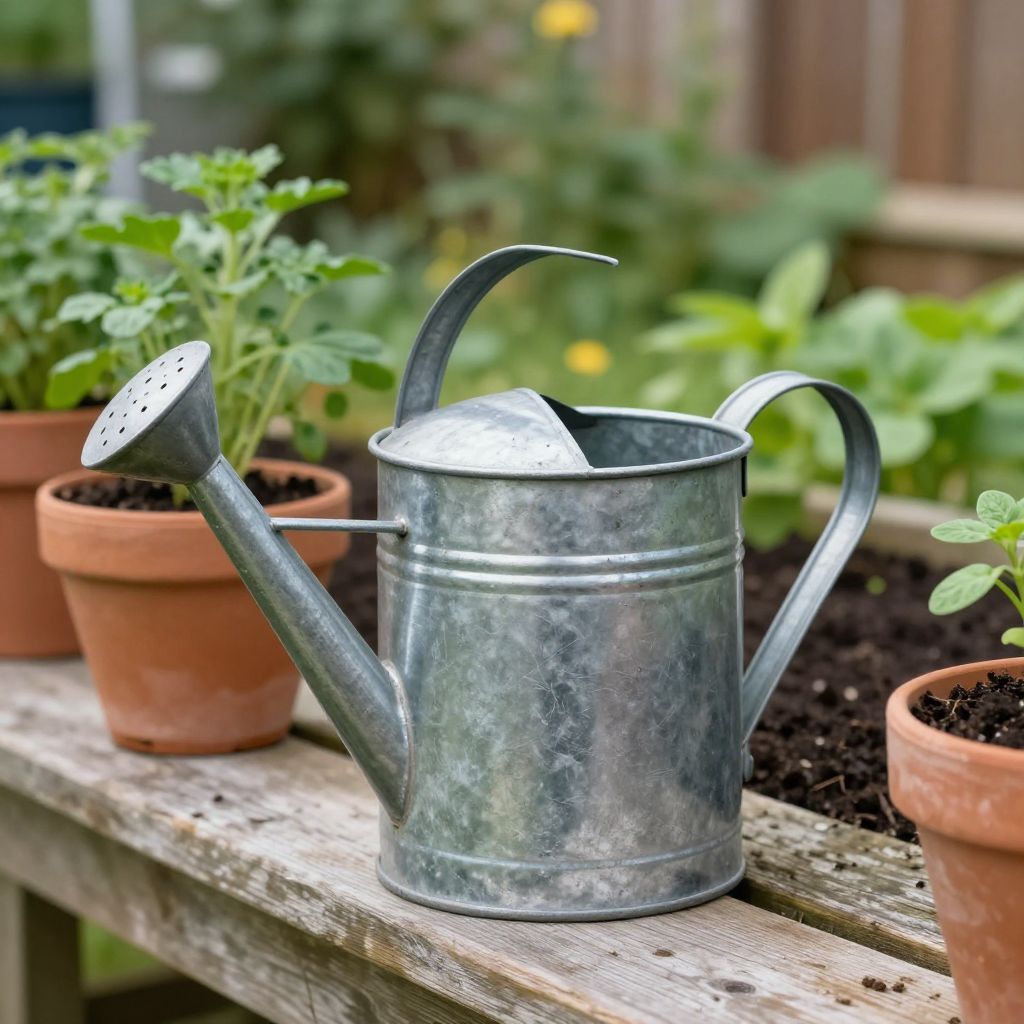
Looking for a vintage galvanized watering can that actually helps your plants, not just your décor? The right can is practical, durable, and easy to use when you match its size, spout, and condition to the plants you grow.
Whether you use one in the garden, greenhouse, or on a windowsill, a well-chosen galvanized can can make watering more controlled and less wasteful. The key is knowing how to inspect it, clean it, and use it without causing rust, leaks, or overwatering.
What is a vintage galvanized watering can, and how should you use it?
A vintage galvanized watering can is a metal watering can coated with zinc to slow rusting. It works best for targeted watering of pots, seedlings, hanging baskets, and garden beds. Choose a sound can with a secure handle, intact seams, and a spout that delivers water gently enough for the plants you’re watering.
Why gardeners still love galvanized watering cans
Galvanized cans remain popular because they are sturdy, stable, and often easier to control than flimsy plastic versions. Their weight can be an advantage outdoors in breezy conditions, and the narrow spout helps direct water right to the root zone.
They also fit well into practical garden routines. A good can lets you water slowly so moisture soaks into the soil instead of running off the surface.
Best uses in the garden
- Seedlings and young transplants: gentle watering reduces soil disturbance.
- Container plants: easy to aim water where pots dry fastest.
- Houseplants and indoor herbs: controlled watering helps avoid soggy pots.
- Small beds and raised beds: useful when a hose is too strong or impractical.
How to choose a good vintage galvanized watering can
Not every old can is worth using. Before you buy or reuse one, check whether it still holds water, pours smoothly, and is comfortable to carry when full.
What to inspect first
- Seams and joints: look for splits, pinholes, or loose soldering.
- Bottom and base: rust here can lead to leaks and weak structure.
- Handle: make sure it feels secure and doesn’t wobble.
- Spout: check for dents that can cause uneven pouring.
- Rose or sprinkler head: if included, confirm the holes are open and not clogged.
Size matters
Smaller cans are easier to manage for indoor plants and seedlings. Larger cans hold more water, but they become heavy quickly, especially when filled to the top. If you have wrist, shoulder, or back concerns, choose a size you can lift comfortably when full.
Practical rule: a can that feels charming in the store may be tiring once it is full of water. Test the weight before you commit.
How to clean and restore a vintage galvanized watering can
Before using an old can on plants, clean it thoroughly. Dirt, algae, old fertilizer residue, and rust flakes can clog the spout or end up in the soil.
Step-by-step cleaning
- Empty the can completely.
- Rinse it with clean water to remove loose debris.
- Wash the inside and outside with mild soap and a soft brush.
- Rinse well so no soap remains inside.
- Dry it fully in the shade or in a well-ventilated spot.
- Check for leaks by filling it and watching for drips at the seams.
If rust is light, scrub it gently with a non-abrasive pad. Avoid aggressive sanding unless you are repairing the can, because you can remove more of the protective coating.
When to repair or retire it
- Repair if the leak is small and the can is otherwise solid.
- Retire from watering edible plants if the inside coating is badly degraded or flaking.
- Use for décor only if the can is structurally weak but still attractive.
If you plan to use an older metal can for herbs or vegetables, make sure the interior is clean and stable. When in doubt, use it for ornamentals and choose a newer food-safe watering container for edibles.
How to water plants properly with a galvanized watering can
The can itself does not determine plant health; the way you water does. Aim for even moisture at the root zone, not a quick splash over the leaves and surface.
Good watering technique
- Water slowly so moisture can soak in.
- Direct water at the soil, not the foliage, when possible.
- Pause if water starts pooling on top of the soil.
- For seedlings, use a rose attachment or a gentle pour.
- For established plants, water deeply enough to moisten the root area.
Soil type affects how much water you need. Sandy soil drains quickly and may need more frequent watering, while clay soil holds water longer and can become waterlogged if you overdo it.
Indoor vs. outdoor watering
Indoors: use a smaller can so you can control spills around pots, saucers, and furniture. Water until a little drains from the pot, then empty the saucer after a few minutes if needed.
Outdoors: a larger can may be useful for beds, but avoid soaking the same spot repeatedly. Water around the base of the plant and let the soil absorb it before adding more.
How to use a watering can for different plant types
Plants do not all want the same amount of water. Match your method to the plant’s growth stage and container size.
Seedlings and young plants
Use a fine rose or a very gentle pour. Newly germinated seedlings have shallow roots and can be displaced by a strong stream.
Potted herbs and houseplants
Water until the root ball is evenly moistened. Herbs such as basil like consistent moisture, while many houseplants prefer the top layer of soil to dry slightly between waterings.
Vegetable beds and ornamentals
Water at the base of the plant, especially during dry spells. Tomatoes, peppers, and many flowering annuals do better with steady moisture than with repeated cycles of drought and flooding.
Succulents and drought-tolerant plants
These need less frequent watering and excellent drainage. A vintage galvanized watering can is fine to use, but apply water sparingly and only when the potting mix has dried appropriately for that plant.
Drainage, soil, and compost: why they matter even with a watering can
A good watering can helps, but poor soil will still cause problems. If water sits on the surface or drains too fast, adjust the potting mix or bed soil rather than simply changing how you pour.
In containers
- Use pots with drainage holes.
- Choose a quality potting mix, not garden soil.
- Add compost where appropriate for outdoor containers or beds.
- Check that saucers do not hold standing water for long periods.
In garden beds
Organic matter improves moisture retention and drainage at the same time. Well-finished compost helps soil hold water more evenly, which makes watering with a can more effective.
If your soil crusts over after watering, gently loosen the surface with a hand fork or cultivate lightly around established plants, taking care not to damage roots.
Common problems with vintage galvanized watering cans
Old metal cans are useful, but they come with a few predictable issues. Most are easy to solve if you catch them early.
Rust
Light rust is common and not always a dealbreaker. Dry the can after each use and store it out of the rain. If rust is extensive inside the can, consider replacing it for edible crops.
Leaks
Small leaks usually come from seams or the bottom. Test the can with plain water before using it on plants. If it leaks badly, it may still be useful for dry storage or décor.
Clogged rose head
Mineral deposits and debris can block the holes. Soak the head in warm water, then clear the openings with a soft brush or a fine pin. Rinse thoroughly before use.
Uneven pouring
Dents in the spout or a bent handle can affect balance. If the can tips awkwardly, it may be easier to use for smaller tasks or decorative watering rather than daily watering.
How to store and maintain it for long life
Good storage matters as much as cleaning. A galvanized can lasts longer when it stays dry between uses and is protected from constant weather exposure.
Simple maintenance routine
- Empty the can after each watering session.
- Rinse out fertilizer residue if you used liquid feed.
- Dry the can upside down or on its side.
- Store it under cover, not in standing water or wet grass.
- Inspect seams and the spout at the start of each season.
If you keep the can outdoors as part of your garden design, place it where rainwater will not collect inside. Standing water speeds rust and can attract mosquitoes.
Using a vintage galvanized watering can as part of garden design
Beyond function, these cans can add character to a potting bench, patio, or cottage-style border. Just make sure decorative placement does not interfere with maintenance.
You can set one beside a bench for quick access, tuck one among potted herbs, or use a pair as accents near a shed entrance. If you use it decoratively, keep the working can separate from the display can so one stays clean and ready.
Practical mistakes to avoid
- Using a rusty, dirty can without cleaning it first.
- Overfilling a large can and straining your wrist or shoulder.
- Watering too quickly so the soil runs off instead of absorbing moisture.
- Leaving water inside the can between uses.
- Using a damaged can on delicate seedlings.
- Assuming every plant needs the same watering frequency.
Conclusion
A vintage galvanized watering can can be both useful and beautiful if you choose one in good condition, clean it well, and match its size to your plants. Focus on gentle, targeted watering and proper storage, and it will serve you far better than a purely decorative piece.
For more practical garden care, you may also want to read about how to water container plants correctly and choosing the right potting mix for healthy roots.