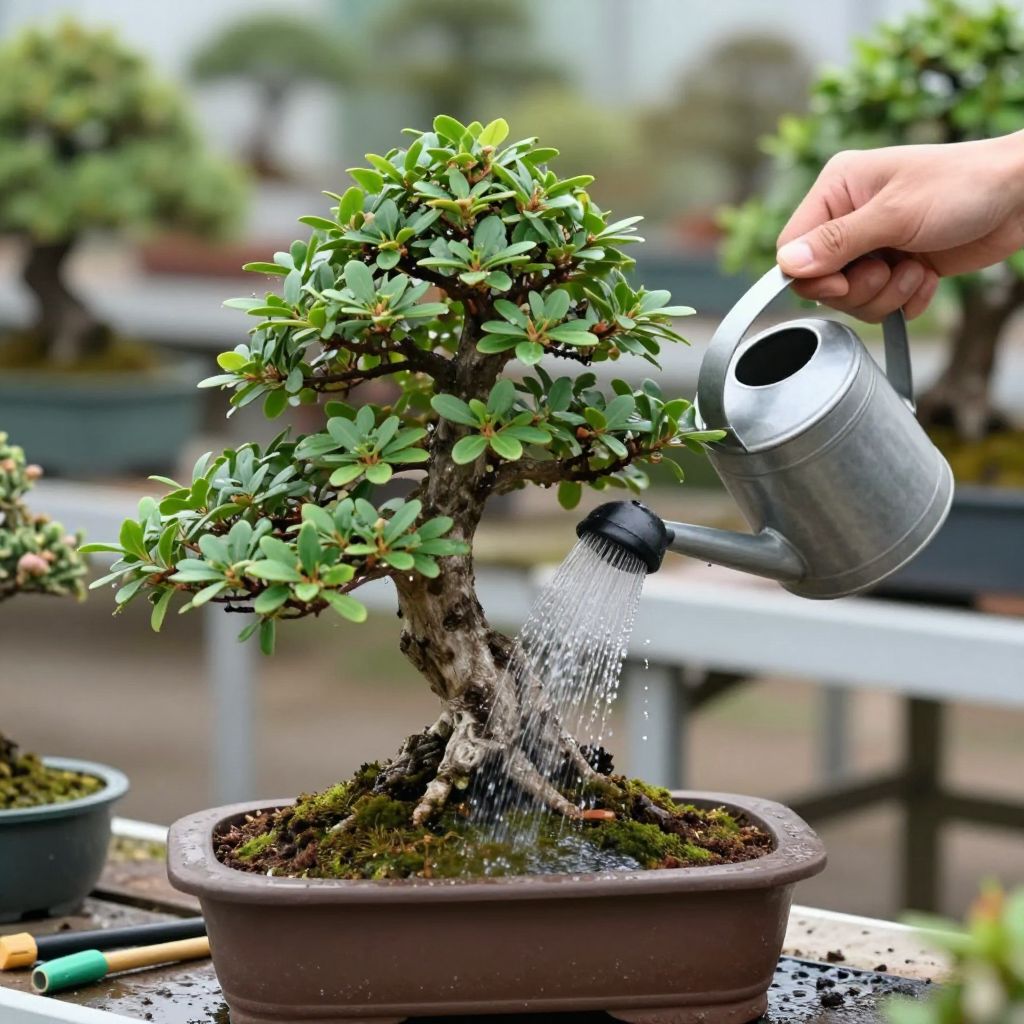
If you’re trying to water a bonsai without washing soil out of the pot or flooding the roots, the right bonsai watering can makes a big difference. Bonsai need gentle, even watering, and the spout design matters as much as your technique.
Used well, a bonsai watering can helps you moisten the full root ball without disturbing the tree’s surface soil, moss, or fine feeder roots. The goal is steady saturation with excellent drainage, not a fixed schedule or a heavy pour.
What is a bonsai watering can?
A bonsai watering can is a small watering can with a fine rose or narrow spout that delivers water softly and evenly. It helps you water the soil surface without creating channels, compacting the mix, or exposing roots. For most bonsai, that gentle flow is far better than a strong stream from a hose or large can.
Why a bonsai watering can matters
Bonsai are grown in shallow containers with limited soil volume, so they dry out faster than many other potted plants. At the same time, they can be damaged by overwatering if the mix stays soggy. A bonsai watering can helps you control both problems by applying water slowly enough for the soil to absorb it.
The main benefits
- Gentle watering: protects fine roots and keeps the soil surface intact.
- Better coverage: helps water reach all parts of the root ball evenly.
- Less runoff: reduces water escaping too quickly from dry, repellent soil.
- Cleaner display: preserves moss, top dressing, and the tree’s styling work.
How do you use a bonsai watering can correctly?
Water slowly from a low height, moving the rose or spout across the whole soil surface until water drains freely from the bottom. Repeat if needed after a short pause, especially if the mix was very dry. The aim is complete wetting of the root zone, not just dampening the top layer.
Step-by-step watering method
- Check the soil with your finger or a chopstick. If the top layer is dry but the lower mix is still cool and slightly moist, wait and check again later.
- Position the can close to the pot so the water falls softly.
- Water the entire surface, not just one spot.
- Keep going until water runs from the drainage holes.
- If dry soil repels water, pause for a minute and water again.
- Empty any saucer so the pot does not sit in standing water.
How much water should you apply?
Use enough water to fully moisten the root ball and produce drainage from the base. That amount varies with pot size, soil mix, tree species, season, wind, heat, and whether the tree is indoors or outdoors. A bonsai watering can helps you apply water gradually, which is especially useful when the soil is dry and fast-draining.
What features should you look for in a bonsai watering can?
The best bonsai watering can for you depends on the size of your collection and where you keep your trees. Look for a can that gives control, comfort, and a soft flow rather than maximum capacity.
Useful features
- Fine rose: creates a rain-like spray for delicate watering.
- Removable rose: useful if you sometimes need a more direct pour.
- Narrow spout: helps you aim precisely in tight spaces.
- Lightweight body: easier to handle around shelves and benches.
- Good balance: important when watering many small pots.
- Durable material: metal or sturdy plastic can both work well if they suit your setup.
Size matters
Small cans are often best for a few bonsai or indoor trees because they are easier to control. If you maintain many trees outdoors, a larger can may save trips to the tap, but it should still be comfortable when full. Choose a size you can lift steadily without tipping water too quickly.
How bonsai watering differs indoors and outdoors
Indoor bonsai usually dry more slowly than outdoor trees, but they also receive less natural rain and air movement. Outdoor bonsai may need more frequent checks because sun, wind, and heat can dry the soil quickly. A bonsai watering can is useful in both settings, but your watering rhythm should match the environment.
Indoor bonsai
- Check moisture regularly, especially near heaters, vents, or sunny windows.
- Water only when the soil begins to dry, not on a fixed calendar.
- Make sure the pot drains well and never sits in runoff.
Outdoor bonsai
- Inspect more often during hot, windy, or very sunny weather.
- Water early in the day when possible so foliage and soil can dry appropriately.
- Protect trees from drying out in shallow pots during heat waves.
Soil, drainage, and why they affect watering
A bonsai watering can works best when the soil mix drains freely but still holds enough moisture for the roots. Many bonsai mixes include inorganic components such as akadama, pumice, lava rock, or similar free-draining materials. Whatever mix you use, the container must have open drainage holes.
Signs the soil is working well
- Water soaks in within seconds rather than pooling on top for a long time.
- Excess water exits through the drainage holes.
- The root ball dries gradually, not instantly and not sluggishly.
When watering problems point to soil issues
If water beads on the surface and runs off the sides, the mix may be too dry, compacted, or hydrophobic. If the pot stays wet for days, the soil may be too fine, too dense, or overwatered. In either case, the watering can is not the problem by itself; the soil structure matters too.
Common bonsai watering mistakes to avoid
Even a good bonsai watering can will not prevent problems if the technique is off. These are the most common mistakes to watch for.
- Using a strong stream: this can carve channels in the soil and expose roots.
- Watering only the center: outer roots may stay dry in shallow pots.
- Watering on a schedule without checking: weather and pot size change how quickly soil dries.
- Leaving the pot in standing water: this can reduce oxygen around the roots.
- Spraying only the foliage: leaves may look refreshed, but the root zone may still be dry.
How to tell when your bonsai needs water
There is no universal timetable. Instead, check the tree and the soil. The top layer may look dry while the lower root zone still has moisture, so use a simple test rather than guessing.
Practical moisture checks
- Finger test: touch the soil surface and feel slightly below it.
- Chopstick test: insert a wooden chopstick into the soil and check whether it comes out damp.
- Pot weight: a dry pot usually feels noticeably lighter than a freshly watered one.
As a general rule, water when the root zone is approaching dryness but before the tree wilts. Some species prefer to dry slightly between waterings, while others need more consistent moisture. Learn your tree’s habits rather than relying on one rule for every bonsai.
Seasonal watering tips
Season affects how often you use a bonsai watering can. In warm, bright weather, trees may need water more often. In cool or low-light periods, they usually need less. Adjust your routine with the season, not just the calendar.
Spring and summer
- Check moisture more frequently.
- Expect faster drying in sun and wind.
- Water thoroughly, especially after repotting once the tree is ready to resume active growth.
Autumn and winter
- Reduce watering frequency as growth slows.
- Watch carefully for cold, wet conditions that slow evaporation.
- For indoor trees, heating systems may still dry the soil quickly even in winter.
Can a bonsai watering can help with newly repotted trees?
Yes. Newly repotted bonsai often need especially careful watering because the root system has been disturbed and the fresh soil may drain differently from the old mix. A bonsai watering can lets you settle the soil gently without blasting away fine particles or exposing roots.
After repotting
- Water slowly until the new mix is evenly moistened.
- Check that the soil settles without big air pockets.
- Keep the tree in appropriate light and shelter while it recovers.
Do not over-handle the tree after watering. Let the pot drain fully, and avoid adding more water just because the surface looks dry a few minutes later. The lower layers may still be holding enough moisture.
Cleaning and maintaining your watering can
A clean bonsai watering can lasts longer and works better. Mineral deposits, algae, and soil particles can clog the rose and disrupt the gentle spray you want.
Basic care
- Rinse the can after use, especially if you collect water in it.
- Clear the rose openings if the spray becomes uneven.
- Store it empty and dry when possible.
- Check for cracks, leaks, or bent spouts that change the flow.
Choosing the right watering can for your setup
If you grow only a few small bonsai, a compact can with a fine rose is usually enough. If you maintain a larger collection, you may want two tools: one small can for precise indoor work and one larger can for benches or outdoor trees. The best choice is the one that helps you water consistently and gently.
For readers building a complete bonsai care routine, it also helps to review related guidance on drainage, pruning, and repotting so your watering matches the tree’s potting mix and growth stage. A well-chosen bonsai care guide can be a useful next read, along with practical advice on watering bonsai correctly.