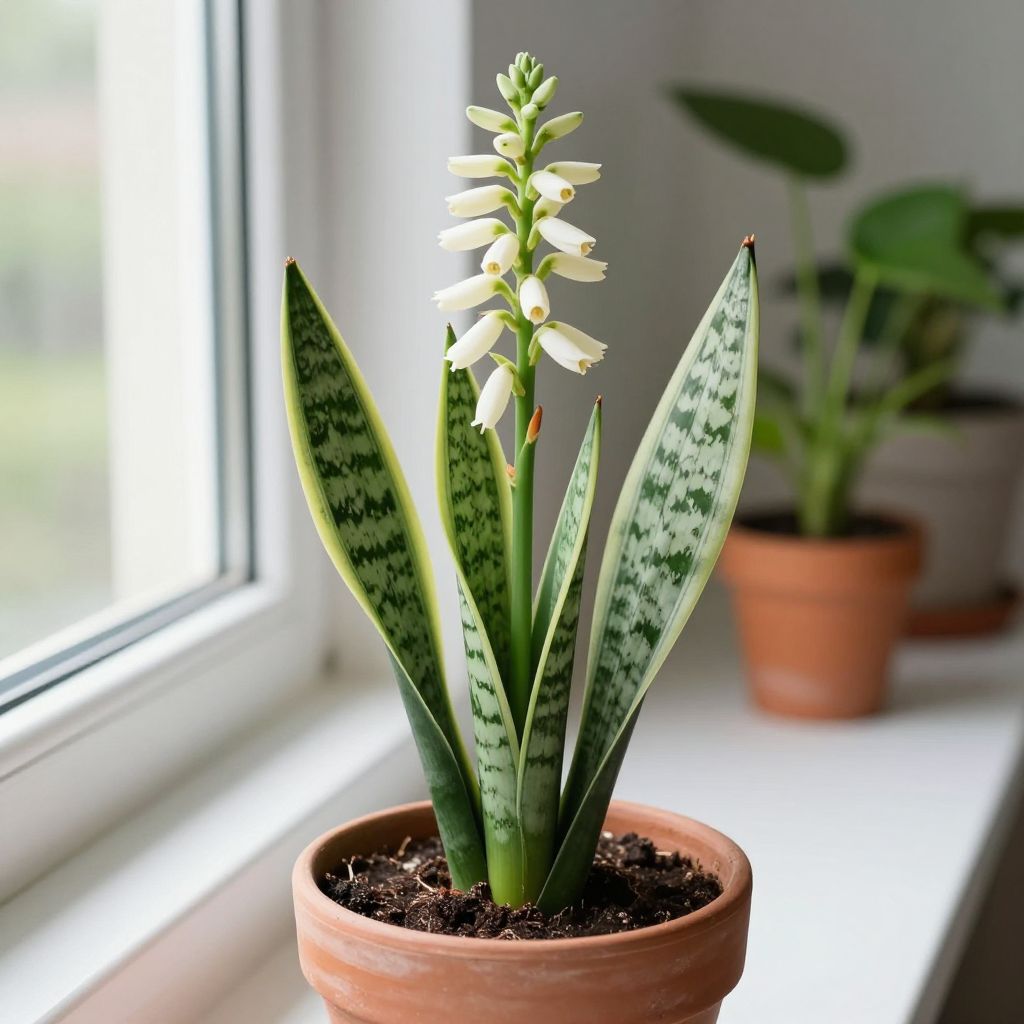
Do snake plants bloom? Yes, they can—but it’s much less common indoors than many gardeners expect. A healthy snake plant may produce a tall flower stalk with small, fragrant, greenish-white blooms, usually when it’s mature and growing under the right conditions.
Flowering is not guaranteed, and it should never be the main reason you grow Dracaena trifasciata (formerly Sansevieria trifasciata). The real goal is a strong, upright plant with good light, excellent drainage, and careful watering.
Do snake plants bloom?
Snake plants can bloom, but flowering is uncommon indoors and usually happens only when the plant is mature, slightly root-bound, and growing in bright light with proper care. The flowers appear on a tall stalk and may be lightly scented. A blooming snake plant is a sign of good growing conditions, not a requirement for health.
What snake plant flowers look like
Snake plant blooms are easy to miss if you are not watching closely. The flower stalk rises above the leaves and carries clusters of small tubular flowers, often pale green, cream, or white.
They may open in stages over several days or weeks. Some gardeners notice a sweet fragrance, especially in the evening.
Common signs your plant may bloom
- It is mature and has several established leaves or rosettes.
- The pot is a bit crowded, but the plant is still healthy.
- It receives bright, indirect light or gentle morning sun.
- Watering is consistent but not excessive.
- The plant has experienced a mild seasonal shift, such as warmer temperatures or slightly drier conditions.
Why snake plants bloom indoors and outdoors
Snake plants are more likely to bloom outdoors in warm climates, where light levels are stronger and seasonal changes are more natural. Indoors, they can still flower, but the conditions must be close to ideal.
Outdoor plants usually get more sun, better airflow, and stronger growth. Indoor plants often need a brighter window and a little patience before they flower.
Indoor growing conditions that support blooming
- Light: Bright, indirect light is best. A few hours of gentle sun can help, but harsh afternoon sun may scorch the leaves.
- Pot size: A slightly snug pot often encourages mature growth. Do not rush to repot into a much larger container.
- Drainage: Use a pot with drainage holes and a fast-draining mix.
- Watering: Let the soil dry out between waterings. Constant moisture is one of the biggest reasons snake plants fail.
- Temperature: Keep the plant in a warm, stable room away from cold drafts.
How to care for a snake plant if you want blooms
If your goal is flowering, focus on steady, low-stress care. Snake plants bloom when they are comfortable, not when they are pampered with too much water or fertilizer.
1. Give it enough light
Light is one of the most important factors. A snake plant in a dim corner may survive, but it is less likely to bloom.
Place it near an east- or west-facing window, or a bright south-facing window with filtered light if the sun is strong. If the leaves become pale, stretched, or floppy, the plant may need more light.
2. Use a fast-draining potting mix
Snake plants dislike soggy soil. A heavy mix that stays wet too long can lead to root rot and prevent flowering.
Choose a cactus or succulent potting mix, or amend regular potting soil with coarse sand, perlite, or pumice to improve drainage. The goal is a mix that dries reasonably quickly after watering.
3. Water only when the soil has dried
Overwatering is the most common mistake. Before watering, check the soil with your finger or a moisture meter. If the top several inches are dry, it is usually safe to water.
Water thoroughly, then let excess water drain away. Empty saucers so the roots do not sit in water.
4. Avoid overfertilizing
Snake plants do not need heavy feeding. Too much fertilizer can push soft growth and create a stressed plant rather than a flowering one.
If you fertilize at all, do it lightly during active growth with a balanced houseplant fertilizer diluted according to the label. Skip feeding in low-light winter conditions or when the plant is dormant.
5. Let the plant mature
Young snake plants usually do not bloom. Flowering is more common on older, established plants that have had time to build energy reserves.
If your plant is still small, focus on healthy leaf growth first. Blooms may come later, if the plant is happy enough.
Should you repot a snake plant to make it bloom?
Usually, no. Snake plants often bloom when they are slightly root-bound, so repotting too often can delay flowering. Repot only when the plant is clearly crowded, the pot is unstable, or the soil has broken down and no longer drains well.
If you do repot, choose a container only one size larger. A pot that is too large can hold excess moisture and slow the plant down.
When repotting is a good idea
- Roots are circling the pot heavily or pushing it out of shape.
- Water runs straight through because the soil has collapsed and become compacted.
- The plant has become top-heavy and needs more stability.
- You suspect root rot and need to inspect the roots.
How to tell the difference between blooms and problems
Sometimes a snake plant’s flower stalk is mistaken for a damaged leaf or pest issue. A bloom stalk is usually round, upright, and distinct from the leaves. It grows from the base of the plant and may branch with small buds.
By contrast, a stressed leaf may look bent, mushy, yellow, or scarred. If the stalk is soft, collapsing, or discolored, inspect the plant for rot or pests.
Common problems that can stop blooming
- Low light: The plant survives but grows too slowly to flower.
- Overwatering: Roots weaken, leaves yellow, and flowering becomes unlikely.
- Poor drainage: Waterlogged soil stresses the roots.
- Frequent repotting: The plant spends energy recovering instead of blooming.
- Cold damage: Cool temperatures can slow growth and damage tissue.
Practical troubleshooting for a snake plant that never blooms
If your snake plant has never flowered, that does not mean you are failing. Many healthy plants never bloom indoors, especially in lower light or in homes where conditions stay very steady year-round.
Instead of chasing flowers, look for overall vigor: firm leaves, steady new growth, and a stable root system. Those are the signs of a well-grown snake plant.
- Move the plant to brighter light gradually over one to two weeks.
- Check that the pot drains freely and the soil dries between waterings.
- Inspect the roots if the plant has been in the same mix for years.
- Stop overfeeding and avoid frequent pot changes.
- Be patient with mature plants; some bloom only after long periods of stable care.
Can you propagate a snake plant from a blooming plant?
Yes, but blooming itself is not the best propagation method. Snake plants are usually propagated by division or leaf cuttings, not from flowers. If your plant has produced offsets, division is often the fastest way to make new plants.
For best results, propagate when the plant is actively growing and healthy. A stressed, flowering plant should be left alone until it finishes blooming and settles back down.
Easy propagation options
- Division: Separate pups or clumps with roots attached.
- Leaf cuttings: Cut a healthy leaf into sections and root them in a well-draining medium.
Do snake plant flowers mean the plant is dying?
No. Flowering does not mean a snake plant is dying. In fact, it usually means the plant is mature and conditions are favorable. After blooming, the plant may continue growing normally.
That said, if flowering is accompanied by yellowing leaves, mushy bases, or a foul smell from the soil, the plant may also have a separate problem such as rot.
Simple care checklist for healthy snake plants
- Place in bright, indirect light when possible.
- Use a pot with drainage holes.
- Choose a gritty, fast-draining soil mix.
- Water only after the soil has dried well.
- Keep the plant warm and away from cold drafts.
- Repot only when necessary.
- Watch for mealybugs, scale, and root rot.
Conclusion
So, do snake plants bloom? Yes, but only under the right conditions, and often only when the plant is mature and slightly root-bound. If you want flowers, give your snake plant bright light, excellent drainage, and careful watering, then let it grow undisturbed.
For more help with houseplant care, you may also want to read related gardening guides on succulent care and common houseplant pest control.