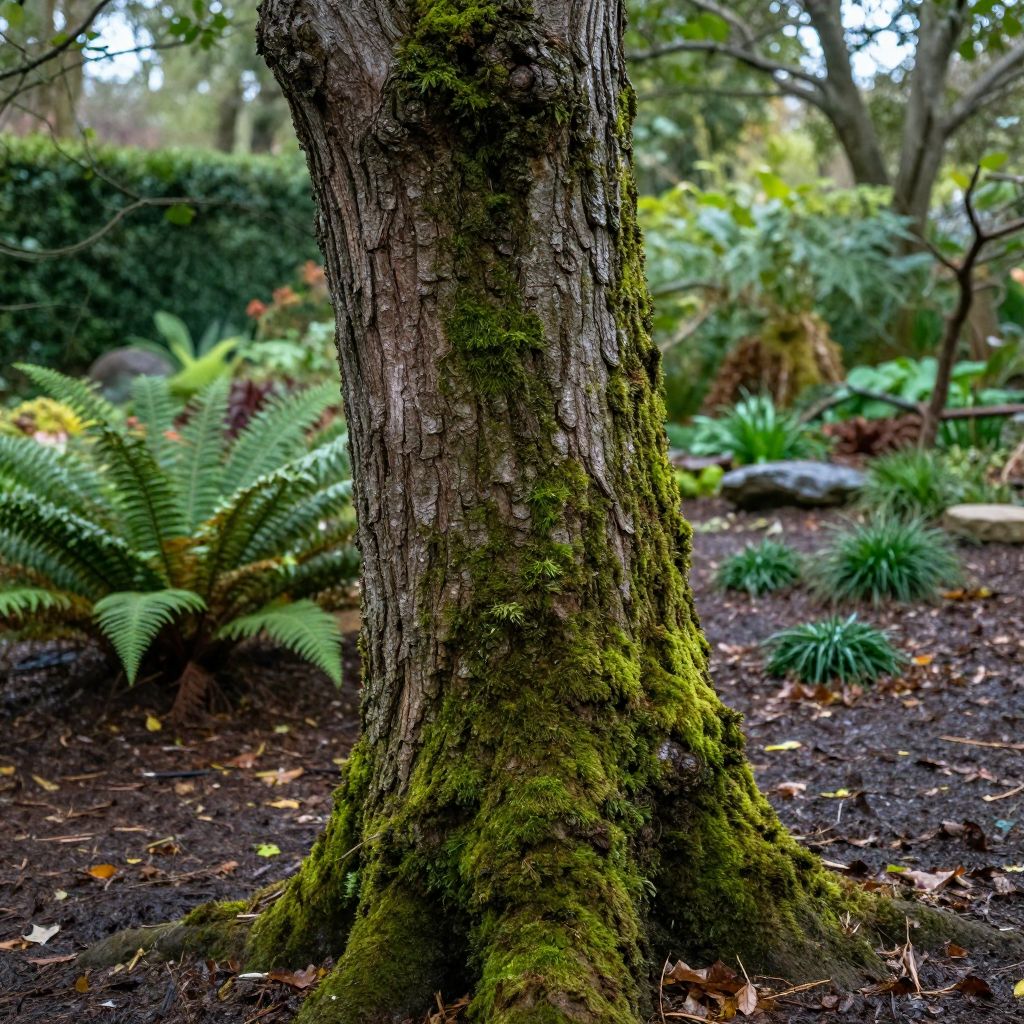
Does moss grow on the north side of trees? Often, yes—but not always. Moss usually favors the cooler, shadier, and more consistently moist side of a trunk, which is often the north side in the Northern Hemisphere.
That said, local conditions matter more than compass direction. Shade from buildings, fences, dense canopy, rainfall patterns, and bark texture can all influence where moss appears, so use moss as a clue, not a rule.
Does moss grow on the north side of trees?
Moss often grows on the north side of trees because that side usually gets less direct sun, stays damp longer, and dries out more slowly. But moss can grow on any side if the conditions are right. In shaded, humid, sheltered spots, moss may cover trunks, branches, rocks, or soil regardless of direction.
Why moss prefers one side of a tree
Mosses are non-vascular plants, which means they do not have roots like trees and shrubs. Instead, they absorb moisture and nutrients across their surfaces, so they thrive where water lingers and evaporation is low.
Common reasons moss shows up on one side
- Less direct sunlight on the north side in the Northern Hemisphere
- Higher humidity near shaded trunks and dense plantings
- Slower drying after rain, dew, or irrigation
- Protected bark on the side shielded from wind and afternoon sun
- Local obstacles like fences, walls, slopes, or nearby trees that change shade patterns
If you live in the Southern Hemisphere, the pattern can be reversed, with the south side often receiving less sun. Even then, the exact site conditions still matter more than the compass.
How reliable is moss as a direction finder?
Moss can suggest a cooler, shadier side of a tree, but it is not a dependable compass. A tree growing in an open field may show moss differently than one in a forest edge, city yard, or wet valley. Use moss as one clue among several, not as the only way to orient yourself.
What can make moss misleading?
- Heavy canopy cover that shades all sides
- Sprinklers or runoff wetting one side more than the other
- Prevailing winds drying one side faster
- Nearby structures casting uneven shade
- Tree bark that is rough, fissured, or peeling in patches
In other words, moss tells you about moisture and shade, not true north with precision.
What conditions help moss grow on trees?
Moss grows best where the bark stays damp enough for long periods and the light is gentle. It is most common on mature trees with textured bark, in wooded areas, and in climates with regular rainfall, fog, or high humidity.
Typical moss-friendly conditions
- Partial to deep shade
- Frequent dew, mist, or rain
- Cool temperatures and limited direct afternoon sun
- Low air movement or sheltered sites
- Older bark with grooves or rough surfaces
Moss is not parasitic. It does not feed on the tree the way a disease or insect pest would. It simply uses the bark as a place to anchor and grow.
Is moss harmful to trees?
Usually, moss on tree bark is harmless. Healthy trees can support moss without damage, especially when the moss is thin and patchy. Problems arise only when moss is part of a larger moisture issue, such as poor air circulation, persistent shade, or bark decline.
When to pay closer attention
- The bark is cracking, oozing, or peeling excessively
- Branches are dying back in the canopy
- The tree is in obvious decline
- Moss is accompanied by lichen, algae, or fungal growth on stressed bark
- The site stays wet for long periods and roots may be affected
If the tree looks otherwise healthy, moss is usually just a sign of the site conditions, not a disease.
Should you remove moss from tree trunks?
In most cases, you do not need to remove moss from a healthy tree. If you dislike the look, you can gently brush off loose moss from dead bark, but avoid scrubbing living bark. Harsh cleaning can injure the tree and create entry points for pests and disease.
Safe approach if you want to reduce moss
- Check whether the tree is healthy first.
- Improve light and airflow around the trunk if possible.
- Reduce excess irrigation that wets the bark.
- Prune nearby plants that crowd the tree.
- Leave the moss alone if it is thin and the tree is vigorous.
Avoid pressure washing, wire brushes, bleach, or strong chemicals. These can damage bark and do more harm than the moss itself.
How to tell moss from lichen and algae
People often confuse moss with lichen or algae. Each one behaves differently, and knowing the difference helps you understand what your tree is telling you.
Quick comparison
- Moss: soft, green, cushiony, and usually grows in small mats
- Lichen: crusty, leafy, or branching growth that can be gray, green, yellow, or orange
- Algae: slimy or film-like green coating, often on very damp bark or shaded surfaces
Moss is the most likely to appear on the north side of a tree, but all three can show up where moisture and shade are persistent.
What to do if you want less moss in the landscape
If moss is spreading on trunks, rocks, patios, or shaded soil, the long-term fix is usually to change the site conditions rather than to treat the moss directly. Moss thrives where turf struggles, so the same conditions that support moss often signal a shady, damp area in the garden.
Practical ways to discourage moss
- Increase sunlight by thinning overgrown shrubs or lower tree limbs where appropriate
- Improve drainage in soggy beds
- Redirect downspouts or runoff away from trunks and hardscape
- Reduce overwatering in shaded areas
- Rake away leaf litter that holds moisture against bark or soil
If moss is growing on the ground under trees, remember that deep shade and root competition may make lawn grass thin. In that case, a shade-tolerant groundcover or mulch bed may be a better solution than fighting the moss.
How to encourage moss intentionally
If you like the look of moss, the same conditions that create it naturally can help you encourage it in a garden setting. Moss is best used in shady, moist, low-traffic areas where it will not be trampled or dried out repeatedly.
Best practices for moss-friendly spots
- Choose a shaded area with morning light or filtered light
- Keep the surface consistently moist, not waterlogged
- Use rough stone, bark, or compacted soil as a base
- Minimize foot traffic
- Keep fallen leaves from smothering the moss
Moss is slow-growing, so patience matters. It establishes best when the site stays stable through the season.
Care tips for trees with moss on the bark
Tree care is usually more important than moss control. A well-maintained tree is less likely to develop bark stress, and the moss itself is less likely to become a concern.
Simple maintenance checklist
- Water deeply during dry spells, but avoid wetting the trunk repeatedly
- Mulch the root zone, keeping mulch a few inches away from the trunk
- Prune dead, damaged, or crossing branches when appropriate for the species and season
- Watch for signs of stress such as sparse leaves, dieback, or cracked bark
- Inspect the tree after storms for broken limbs or bark injury
Good tree care supports natural balance. Moss may remain, but it is less likely to be associated with decline if the tree is otherwise healthy.
Common mistakes to avoid
Many problems come from trying to “fix” moss without understanding why it is there. The goal should be to improve tree health and site conditions, not to strip the bark clean.
- Assuming moss means the tree is unhealthy when it may simply reflect shade and moisture
- Scrubbing bark aggressively and injuring the trunk
- Overwatering shaded areas that already stay damp
- Ignoring drainage problems around the root zone
- Using moss as a precise compass when the site may distort the pattern
Bottom line for gardeners
Does moss grow on the north side of trees? Often yes, especially in the Northern Hemisphere, because that side is usually cooler, shadier, and slower to dry. But moss follows moisture and light more than direction, so always read the whole site before making assumptions.
If you want to understand your landscape better, start by observing where shade, runoff, and humidity collect around your trees. For more practical shade-garden ideas, you may also find helpful guidance on shade-tolerant landscaping and tree care basics for healthy trunks and roots useful.