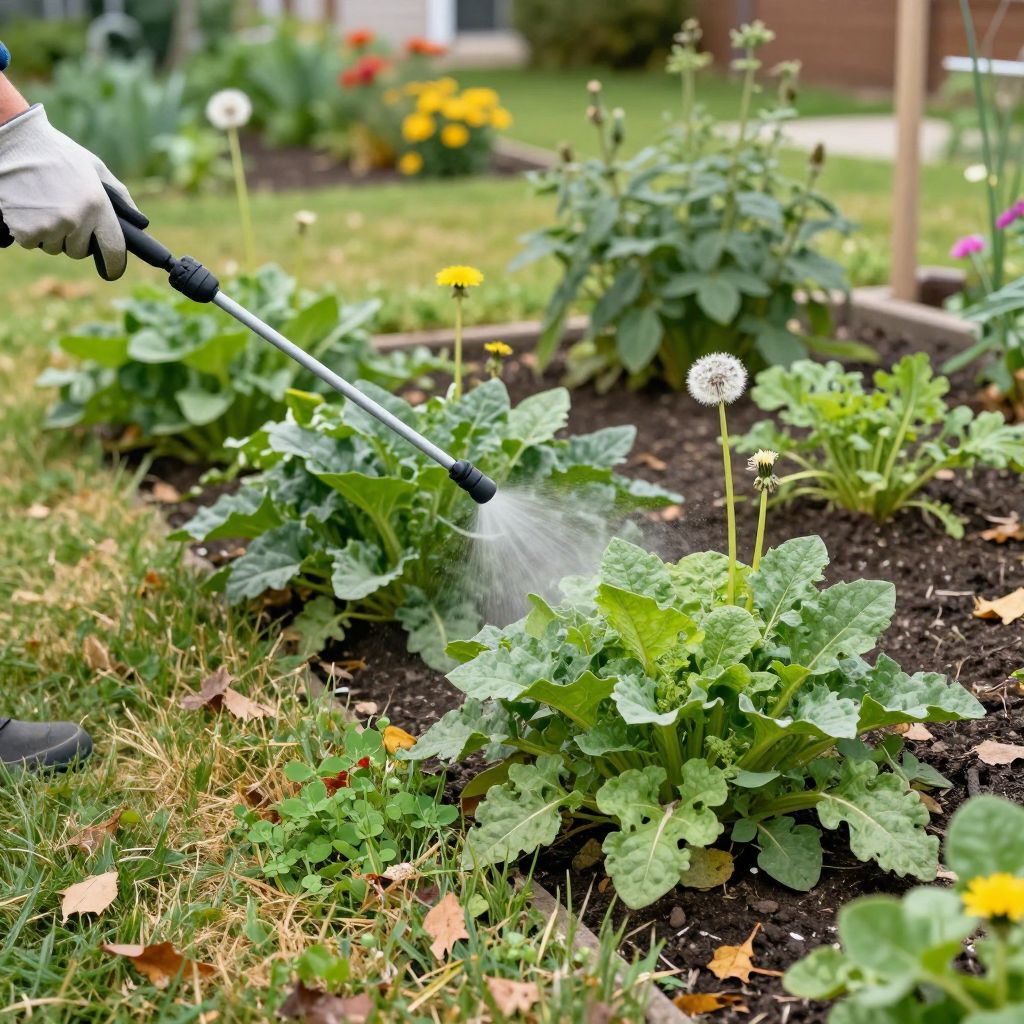
When is it too late to spray for weeds? The short answer is: it depends on the weed, the weather, and whether the herbicide can still move into the plant before cold, drought, or dormancy slows growth. In many gardens, spraying gets less effective in late fall, during heat stress, or when weeds are mature and hardening off.
If you time it well, you can still get good control late in the season. If you time it poorly, you may waste product, miss the best window, or damage nearby plants without solving the weed problem.
When is it too late to spray for weeds?
It is usually too late to spray for weeds when plants have stopped actively growing, are stressed by frost or drought, or are too large and mature for the herbicide to work well. For best results, spray when weeds are actively growing, temperatures are mild, and you have enough dry time before rain or irrigation.
What makes weed spraying work or fail?
Herbicides work best when weeds are actively moving sugars and nutrients through their leaves, stems, and roots. That is why timing matters so much: the plant must be growing enough to absorb and move the product.
Several conditions can reduce success:
- Cold weather slows plant metabolism and herbicide movement.
- Frost damage can make leaves less able to absorb spray.
- Drought stress causes weeds to conserve resources and close up.
- Mature weeds often have tougher leaves and stronger root systems.
- Rain too soon can wash off contact herbicides before they work.
In practical terms, the best spray window is usually during active growth in spring or early fall, not during the first hard frosts or deep summer stress.
Seasonal timing: spring, summer, and fall
Spring
Spring is often the easiest time to spray weeds because new growth is tender and actively moving. Annual weeds are small, and perennial weeds are pushing energy into leaves and roots.
This is a strong time for both spot-spraying and broader weed control, especially before weeds flower and set seed.
Summer
Summer can still be a good spray season, but only if weeds are not heat-stressed. Early morning or late afternoon applications are often better than spraying in the hottest part of the day.
Avoid spraying when plants are wilted, soil is bone-dry, or temperatures are extreme. Stress reduces uptake and can make results disappointing.
Fall
Early fall is often one of the best times to spray perennial weeds, because many are moving energy down into their roots for winter storage. That movement can help systemic herbicides work well.
However, late fall is often too late once growth slows, frost becomes regular, or the weed foliage starts yellowing and dying back. If the plant is no longer actively growing, the spray may do little.
Signs it is too late to spray for weeds
Use the plant itself as your guide. If weeds are showing these signs, spraying is less likely to help:
- Leaves are yellowing, browning, or collapsing after frost
- Growth has stalled for the season
- Plants are dry, dusty, or wilted from drought
- Weeds are woody, thick-stemmed, or fully mature
- Weather is consistently cool and the soil is cold
For many home gardeners, the practical cutoff is not a calendar date but a plant condition: if weeds are no longer actively growing, you are probably past the best spray window.
How to tell whether your weeds are still worth spraying
Before you spray, check the weed patch closely. A small amount of new green growth is a better sign than a large plant that looks tired or frosted.
- Look for fresh, healthy green leaves.
- Check whether stems are still flexible and growing.
- Confirm the plant has not been hit by a hard frost.
- Make sure the weather forecast gives you dry time after application.
- Identify the weed type if possible, because annual and perennial weeds respond differently.
If you are unsure, treat a small test area first rather than spraying the whole bed or lawn.
What kind of herbicide are you using?
Contact herbicides
Contact herbicides kill the parts of the plant they touch. They often work faster, but they do not move deeply into roots. That means timing still matters, and large perennial weeds may regrow.
These products are often more useful on small annual weeds than on established perennials.
Systemic herbicides
Systemic herbicides move within the plant and are generally better for perennial weeds such as dandelion, bindweed, or thistle. They need active growth to be effective, so spraying too late in the season can reduce results.
If the plant is shutting down for winter, systemic movement slows and the treatment may not reach the roots well.
Pre-emergent herbicides
Pre-emergent products are different. They are applied before weed seeds germinate, so the question is less about whether it is too late to spray existing weeds and more about whether the soil and season are right for prevention.
These products are most useful when timed ahead of germination, not after weeds are already established.
Best weather conditions for spraying weeds
Weather can make or break weed control. Even a good product may underperform if conditions are wrong.
- Choose a calm day to reduce drift onto flowers, shrubs, vegetables, or turf you want to keep.
- Spray when temperatures are moderate, not during extreme heat or cold.
- Make sure rain is not expected soon after application.
- Avoid spraying if the plant is drought-stressed or frost-damaged.
- Check label directions for any temperature or rainfall restrictions.
Wind is especially important in landscaped areas, where even a small amount of drift can injure ornamentals or vegetable crops.
Common mistakes that make late-season spraying fail
Many gardeners think the product did not work, when the real issue was timing or technique.
- Spraying after frost when leaves are already damaged
- Using too much product or mixing it incorrectly
- Spraying mature weeds that are already going dormant
- Not covering the foliage evenly
- Spraying right before rain or irrigation
- Expecting one spray to solve a large perennial infestation
Another common mistake is spraying the wrong weed. Some tough perennials need repeat treatment, while some annual weeds are better handled by pulling before they seed.
What to do if it really is too late to spray
If the season is too far gone for effective spraying, do not give up on weed control. Shift to cleanup and prevention so you are ahead of the problem next season.
- Pull or dig out weeds if the soil is workable.
- Cut off seed heads before they drop seed.
- Mulch bare soil to reduce new germination.
- Edge beds and clean up debris where weeds can hide.
- Plan a spring or early fall treatment window for next year.
Removing seed heads now can save you a lot of work later. Even if you cannot kill every weed, you can stop many from spreading.
How to reduce weeds without relying only on spraying
Spraying is only one part of weed management. Strong garden maintenance makes herbicides more effective and reduces how often you need them.
Mulch and ground cover
A 2- to 4-inch layer of mulch can help block light and reduce weed germination in beds and around shrubs. Keep mulch a little away from stems and trunks so you do not trap moisture against the plant.
Healthy turf and dense planting
In lawns, thick healthy grass is one of the best weed suppressors. In beds, close planting and vigorous ground covers shade out many seedlings before they get established.
Hand removal at the right time
Small weeds are much easier to pull after rain or watering, when the soil is soft. Remove them before they flower and seed whenever possible.
Should you spray weeds in late fall?
Sometimes yes, but only if the weeds are still actively growing and not frost-damaged. Early fall is often productive, while late fall can be hit-or-miss.
If you are seeing crisp nights, slow growth, and yellowing leaves, the window is likely closing. In that case, focus on cutting, pulling, mulching, and planning a better spray window for the next season.
Quick decision guide
- Yes, spray now if weeds are green, growing, and weather is mild.
- Maybe spray if weeds are still healthy but conditions are becoming cooler.
- Do not spray if weeds are frost-damaged, dormant, drought-stressed, or fully browned off.
The best answer to “when is it too late to spray for weeds” is simple: it is too late when the weeds are no longer actively growing enough to take in and move the herbicide. Watch the plant, not just the calendar, and you will make better decisions.
If you want to improve long-term weed control, you may also find it helpful to read about how mulch helps prevent weeds and whether bleach kills weeds safely or effectively.