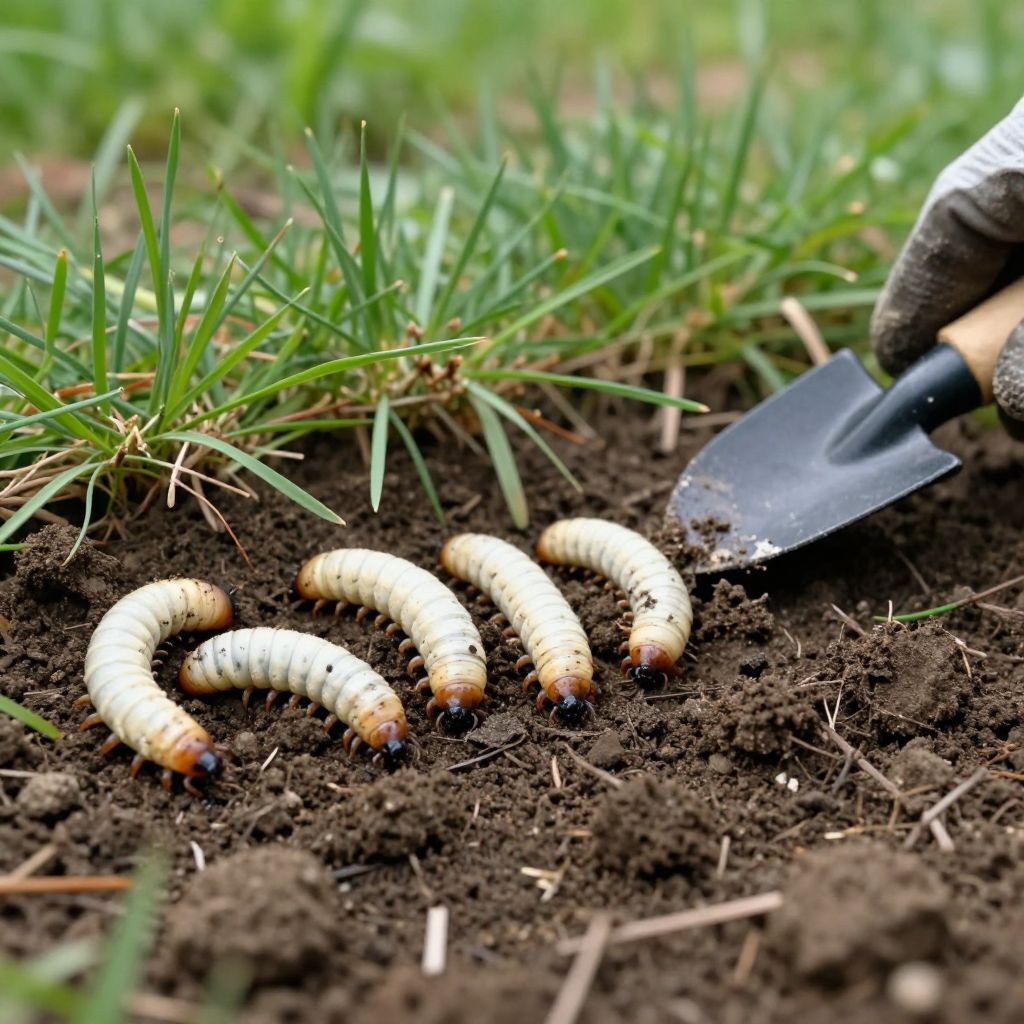
What do grubs look like when you find them in soil, lawn thatch, or a pot? These common garden pests are usually soft, pale, C-shaped larvae with a distinct brown head and six small legs near the front. Identifying them correctly helps you decide whether they are harmless decomposers or the root-chewing larvae causing plant damage.
Not every white grub means trouble, but some species can seriously damage turf, vegetable beds, and ornamentals. Knowing what to look for, where to look, and how to tell grubs apart from helpful soil insects can save you time and prevent unnecessary treatments.
What do grubs look like?
Grubs are the immature larval stage of certain beetles. They are typically creamy white to grayish, C-shaped, and about 1/4 to 1 inch long depending on age and species, with a tan to brown head capsule and three pairs of legs near the front.
Key features to look for
- C-shaped body that curls when disturbed
- Soft, plump, pale body with a darker head
- Six legs clustered near the head
- Visible segments along the body
- Found in soil or thatch near roots, not on leaf surfaces
Most grubs move by wriggling on their backs or sides because their legs are small and their bodies are soft. If you gently uncurl one, it will often curl back up again.
How to tell grubs from other soil insects
Several garden insects look similar at first glance, so it helps to compare body shape, legs, and where you found them. The most important distinction is that true grubs are beetle larvae, while some other white larvae are beneficial decomposers or fly larvae.
Common look-alikes
- Earthworms: smooth, elongated, and clearly segmented, with no legs or brown head
- Leatherjackets (crane fly larvae): gray-brown, legless, and more cylindrical, not C-shaped
- Whitefly or fungus gnat larvae: tiny, threadlike, and usually found in potting mix rather than lawn soil
- Soldier fly larvae: flattened, tough-looking, often darker, and usually beneficial in compost
A grub is most likely if you see a soft white larva with a brown head and legs in turf, garden soil, or around plant roots. If it has no legs at all, it is probably not a beetle grub.
Where you’re most likely to find grubs
Grubs are usually found just below the soil surface, especially in lawns, raised beds, container plants, and around the roots of stressed or declining plants. They feed underground, so the first signs are often indirect.
Signs grubs may be present
- Patches of turf that brown, thin, or lift easily like a loose carpet
- Birds, skunks, raccoons, or other animals digging in the lawn
- Seedlings or young plants that wilt even when the soil is moist
- Roots that look chewed, shortened, or sparse when you inspect them
- Visible larvae in the top 1 to 3 inches of soil
In lawns, grub damage often appears in late summer through fall, though the exact timing depends on your climate and the beetle species involved. In containers, grubs are less common but can appear if potting mix is contaminated or if beetles lay eggs in outdoor pots.
What kinds of beetles become grubs?
Many beetles have grub-like larvae, but the ones gardeners most often worry about include Japanese beetles, June beetles, masked chafers, and other scarab beetles. These larvae feed on roots and can be especially troublesome in turf and nursery stock.
Why species matters
Not all grubs cause the same level of damage. Some are minor feeders, while others can severely weaken grass and ornamental plants if populations are high. If you are unsure, focus first on the amount of damage and the number of larvae present rather than trying to identify every species perfectly.
How to inspect soil for grubs
If you suspect grubs, a simple soil check is the fastest way to confirm them. Look in the root zone where damage is showing, especially in sunny, dry, or stressed areas of the lawn or bed.
- Use a spade, hand trowel, or garden fork to lift a small section of turf or soil.
- Dig 2 to 4 inches deep in lawns, or a little deeper around plant roots if needed.
- Break apart the soil gently and look for curled white larvae.
- Count how many you find in a small sample area.
- Check several spots, since grubs are often patchy rather than evenly spread.
If you find only one or two larvae in a sample, the problem may be minor. If you find many grubs in multiple spots and the plants are declining, you may need to act more quickly.
Are grubs always bad?
No. Some beetle larvae live in compost, mulch, or soil without causing noticeable harm, and a few help break down organic matter. The issue is not simply seeing a grub, but whether the larvae are feeding on living roots in damaging numbers.
When to worry
- Grass pulls up easily because roots have been eaten
- Young plants wilt or collapse without another obvious cause
- You find multiple grubs in the root zone
- Damage is spreading across a lawn or bed
If the plant is otherwise healthy and you find just a few grubs while digging, you may not need immediate treatment. Healthy soil with diverse life can contain some grubs without major problems.
What to do if you find grubs
Your response should match the severity of the damage. In many gardens, the best approach is to combine careful monitoring with cultural fixes rather than reaching for a treatment right away.
Practical steps to take
- Confirm the problem by checking several soil samples.
- Assess damage to roots, turf, or nearby plants.
- Improve plant vigor with proper watering and soil care so plants recover better.
- Reduce stress from compaction, drought, or poor drainage.
- Consider targeted control only if grub numbers and damage justify it.
For lawns, lightly watering during dry spells can help grass tolerate minor feeding, but avoid overwatering, which can create other problems. For beds and containers, check drainage and root health, because stressed plants are more vulnerable to grub injury.
How to prevent grub problems
Prevention works best when you focus on healthy soil and timely monitoring. You cannot always stop beetles from laying eggs, but you can make your garden less attractive to severe infestations and more resilient if grubs appear.
Good prevention habits
- Keep lawns and beds healthy with appropriate watering for your soil and climate
- Avoid excessive thatch buildup in turf
- Improve drainage in areas that stay wet or compacted
- Inspect stressed areas in late summer and early fall
- Quarantine or inspect new container plants and potting mix
- Encourage diverse soil life with compost and sensible maintenance
Healthy turf and vigorous plants can often tolerate modest grub feeding better than stressed ones. That makes routine care one of the most effective long-term defenses.
Common mistakes gardeners make
Grub problems are easy to misdiagnose, especially when plants decline for other reasons such as drought, root rot, or compacted soil. Avoid these common errors so you do not waste time or damage the garden further.
- Treating without checking the soil first
- Assuming all white larvae are harmful grubs
- Overwatering a damaged lawn and worsening root issues
- Ignoring drainage problems that make roots weak
- Pulling up turf or plants too broadly before confirming the cause
If you are unsure, compare the roots and soil conditions in healthy and affected areas. Often the clue is not just the grub itself, but the pattern of damage around it.
When to seek more help
If you keep finding grubs and the damage is spreading despite good care, it may be time to consult a local extension service, garden center, or turf specialist. Local experts can help identify the larva and suggest the most appropriate control for your region and season.
Bring a sample of the larva in a sealed container with a little soil, along with photos of the plant damage and the affected area. That makes identification much easier and leads to better advice.
Conclusion
When you ask, “What do grubs look like?” the short answer is: soft, pale, C-shaped larvae with brown heads and small legs near the front. The next step is to check whether they are actually damaging roots, then respond with better soil care, monitoring, and targeted control only if needed.
If you want to keep troubleshooting garden pests, it also helps to learn how to identify root damage and other common lawn and soil insects before they spread.