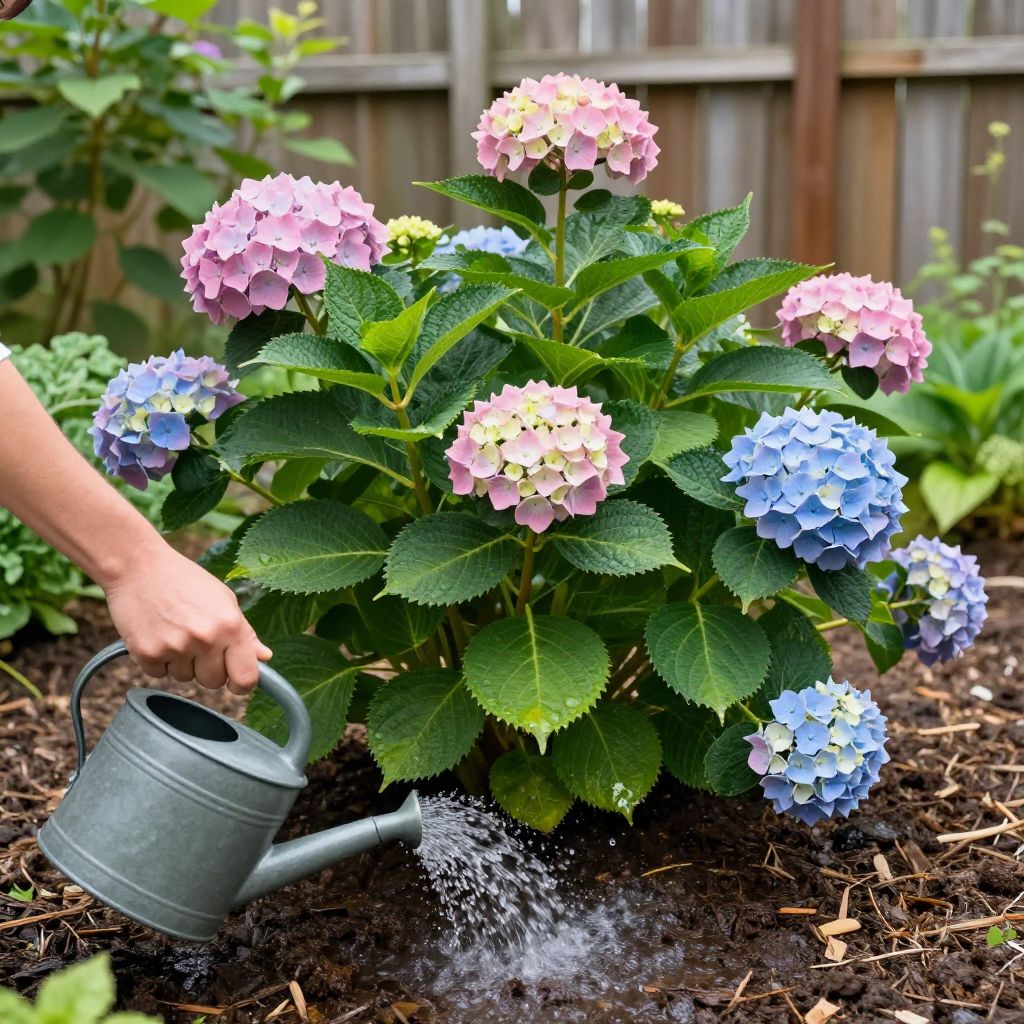
Do hydrangeas need a lot of water? The short answer is: they like consistent moisture, but they do not want soggy soil. Most hydrangeas perform best when the root zone stays evenly damp, especially during hot weather, dry spells, and the first growing season after planting.
If you water them too little, they wilt quickly; if you water them too much, roots can suffer in poorly drained soil. The key is to water deeply, check the soil before watering again, and adjust to your climate, soil type, sun exposure, and plant age.
Do hydrangeas need a lot of water?
Hydrangeas usually need more regular water than many shrubs, but “a lot” depends on the weather and soil. They prefer evenly moist soil, not constant saturation. In sandy soil, full sun, or containers, they may need frequent watering. In clay soil or cool, humid climates, they often need much less.
How much water hydrangeas actually need
Rather than watering on a fixed schedule, aim for soil that feels moist a few inches down. A mature hydrangea in the ground may need a deep soaking during dry periods, while a newly planted shrub may need water several times a week until established.
What changes the watering need?
- Plant age: Newly planted hydrangeas need more frequent watering than established shrubs.
- Soil type: Sandy soil drains fast; clay holds water longer.
- Sun exposure: More sun usually means faster drying.
- Temperature and wind: Hot, windy weather increases water loss.
- Container size: Potted hydrangeas dry out much faster than in-ground plants.
- Rainfall: Natural rain may reduce or eliminate the need to water.
How to tell when a hydrangea needs water
The best test is the soil, not the leaves. Push your finger into the soil near the plant, about 2 to 3 inches deep. If it feels dry at that depth, it is time to water. If it feels cool and moist, wait.
Common signs of thirst
- Leaves droop or look limp in the afternoon
- Flowers fade or wilt faster than usual
- Soil pulls away from the edge of the planting hole or pot
- New growth looks weak during hot weather
Be careful: hydrangeas can wilt in strong sun even when the soil is still moist. Check the soil before assuming the plant needs water.
Best way to water hydrangeas
Deep watering is better than frequent light sprinkling. You want water to reach the root zone, which encourages stronger roots and helps the plant handle dry periods more effectively.
- Water at the base of the plant, not over the leaves if possible.
- Apply water slowly so it soaks in rather than running off.
- Water until the soil is moist several inches down.
- Recheck the soil the next day if the weather is very hot or windy.
Why overhead watering is not ideal
Spraying the foliage can waste water and may encourage leaf disease if leaves stay wet for long periods. A soaker hose or drip irrigation is often the most efficient option for hydrangeas in beds and borders.
Watering hydrangeas in the ground
In the landscape, hydrangeas usually do best with deep, less frequent watering once established. The goal is steady moisture without waterlogging the roots.
Good watering habits for in-ground plants
- Water newly planted hydrangeas more often during the first season.
- Use mulch to slow evaporation and keep roots cooler.
- Water early in the day when possible.
- Check soil after rain; some storms wet only the surface.
A 2- to 3-inch layer of organic mulch, such as shredded bark or composted leaves, helps conserve moisture. Keep mulch a few inches away from the stems to reduce rot and pest problems.
Watering hydrangeas in pots and containers
Container-grown hydrangeas need closer attention because pots dry out quickly. In warm weather, a pot may need water every day, and sometimes twice a day during heat waves, depending on pot size, sun, wind, and soil mix.
Container care tips
- Choose a large pot with drainage holes.
- Use a quality potting mix that holds moisture but drains well.
- Check containers daily in hot weather.
- Do not let pots sit in standing water for long periods.
If a potted hydrangea wilts repeatedly even after watering, the root ball may be drying out too fast or the pot may be too small. Repotting into a larger container can help.
Soil, drainage, and compost matter too
Hydrangeas like moisture, but they also need drainage. Heavy, compacted soil can stay wet too long and suffocate roots. If your soil is dense, improving it before planting is one of the best things you can do.
How to improve planting conditions
- Work in organic matter such as compost to improve soil structure.
- Avoid planting in low spots where water collects.
- Loosen compacted soil around the planting area.
- Make sure the root ball sits at the proper level, not buried too deeply.
Good drainage does not mean dry soil. It means the soil can hold enough moisture for roots while still letting excess water move away.
Sunlight and temperature affect watering needs
Hydrangeas in morning sun and afternoon shade usually need less water than those in full afternoon sun. In hotter climates, too much direct sun can cause rapid wilting and increase the need for frequent watering.
Helpful placement choices
- Give afternoon shade in hot regions.
- Use a sheltered spot if wind dries the soil quickly.
- Avoid planting directly under heat-reflecting walls or pavement if possible.
If your hydrangea gets scorched or droops every afternoon, it may not be a watering problem alone. Too much sun can stress the plant even when moisture is adequate.
Common watering mistakes to avoid
Most hydrangea problems come from either too little water during dry weather or too much water in poorly drained soil. Both can stress the plant and reduce flowering.
- Light, frequent sprinkling: This wets the surface but does not reach the roots.
- Letting plants dry out completely: Hydrangeas can wilt fast and may drop buds or flowers.
- Overwatering in clay soil: Roots can suffocate if the soil stays soggy.
- Ignoring container drainage: Pots without drainage holes can lead to root rot.
- Watering by calendar only: Weather changes, so check the soil first.
What happens if hydrangeas get too much water?
Overwatered hydrangeas may look wilted, which can be confusing because underwatered plants wilt too. The difference is that overwatered soil stays wet, sometimes with a sour smell, and leaves may yellow or drop.
Signs of excess water
- Soil stays wet for days after watering or rain
- Leaves yellow, especially lower leaves
- Stems or roots begin to soften
- Plant growth slows
If you suspect overwatering, pause irrigation, improve drainage if needed, and let the top few inches of soil dry slightly before watering again. In severe cases, root damage may already be present.
How to keep hydrangeas healthy with less guesswork
Once you understand your soil and climate, hydrangea watering becomes much easier. A healthy plant in the right spot usually needs less rescue watering and performs better through the season.
Simple routine to follow
- Check soil moisture before watering.
- Water deeply when the top 2 to 3 inches are dry.
- Mulch to conserve moisture.
- Adjust for heat, wind, rainfall, and plant size.
- Watch for wilting, yellowing, or soggy soil, then correct quickly.
For newly planted hydrangeas, focus on consistent moisture while the roots establish. For mature plants, aim for deep watering during dry periods rather than constant wetness.
Quick troubleshooting guide
If your hydrangea looks unhappy, the fix often depends on what the soil is doing.
- Wilting but soil is dry: Water deeply and add mulch.
- Wilting but soil is wet: Reduce watering and check drainage.
- Yellow leaves with wet soil: Overwatering or poor drainage may be the issue.
- Brown leaf edges in heat: The plant may need more consistent moisture or afternoon shade.
Conclusion
So, do hydrangeas need a lot of water? They need consistent moisture, not constant soaking. The best approach is to water deeply when the soil begins to dry, then let the plant and your local conditions guide the timing. Check the soil, mulch well, and adjust for heat, sun, and drainage.
If you want to keep improving your hydrangea care, you may also find it helpful to read about when to fertilize hydrangeas and whether hydrangeas are deer resistant.