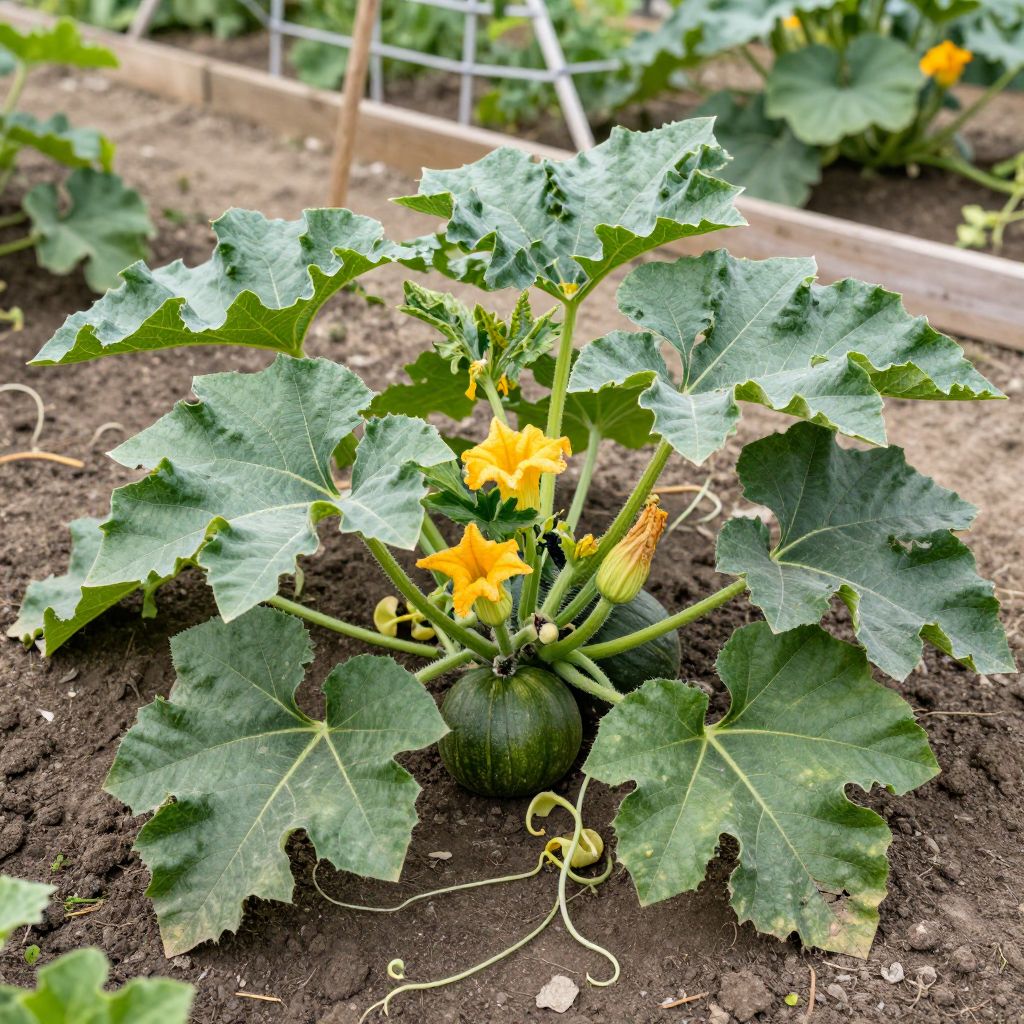
Wondering what does a pumpkin plant look like? Pumpkin plants are sprawling, fast-growing vines with large, rough, deeply lobed leaves, thick hollow stems, and bright yellow-orange flowers. As they mature, they form long runners that spread across the ground and develop round to ribbed fruits after pollination.
Knowing the plant’s appearance helps you identify it early, tell it apart from squash or cucumber, and care for it properly. If you’re growing pumpkins, spotting the leaves, flowers, vines, and young fruit at each stage also helps you troubleshoot pests, watering issues, and poor pollination.
What does a pumpkin plant look like?
A pumpkin plant is a vigorous trailing vine with large, rough, green leaves, thick stems covered in fine hairs, and big yellow flowers. Young plants stay compact at first, then send out long runners that can spread several feet or more, eventually producing round, ribbed fruits with hard rinds.
How to identify a pumpkin plant at different stages
Seedling stage
Young pumpkin seedlings usually emerge with two rounded seed leaves, called cotyledons, followed by the first true leaves, which are broader and more lobed. At this stage, the plant is still small and easy to confuse with other cucurbits, so wait for the leaf shape to become more distinct.
Leaf shape and growth habit
Mature pumpkin leaves are one of the easiest identification clues. They are:
- Large and broad, often 8 to 12 inches or more across
- Deeply lobed, with a rough or slightly sandpapery texture
- Medium to dark green, sometimes with pale mottling
- Held on long, sturdy petioles that radiate from the crown
The plant grows as a vine rather than a bush in most garden types. You’ll see one main crown near the base, then long runners that creep across the soil and root at nodes if conditions are moist enough.
Stems and vines
Pumpkin stems are thick, ridged, and covered with fine hairs. They can look angular and somewhat prickly to the touch, so handle them gently. The vines can be surprisingly strong, but they bruise easily if dragged or stepped on.
Flowers
Pumpkin plants produce separate male and female flowers on the same plant. The flowers are large, bright yellow to orange-yellow, and open for a short time, usually in the morning. Male flowers appear first and are more numerous, while female flowers have a small swelling behind the bloom that looks like a tiny pumpkin.
Fruit
After successful pollination, the female flower’s swollen base develops into a pumpkin. Young fruits are green and firm, then gradually enlarge and change color as they mature. Depending on the variety, ripe pumpkins may turn orange, tan, white, or another mature color.
How pumpkin plants grow in the garden
Pumpkins are warm-season plants that need room, sun, and consistent moisture. They do best in full sun and fertile, well-drained soil rich in organic matter. Because the vines spread widely, they’re often grown in open beds, mounds, or large garden spaces rather than tight containers.
Best growing conditions
- Sunlight: Full sun for strong growth and fruiting
- Soil: Loose, fertile, well-drained soil with plenty of compost
- Space: Enough room for vines to sprawl, or a trellis for smaller-fruited types
- Moisture: Even watering, especially during flowering and fruit set
If your soil stays soggy, pumpkins may struggle with root problems and weak growth. If it dries out too quickly, the vines can wilt and fruit may develop poorly. A layer of mulch helps hold moisture and keeps developing pumpkins cleaner.
How to tell a pumpkin plant from similar plants
Pumpkin plants belong to the cucurbit family, so they can resemble squash, zucchini, and cucumbers. The easiest way to separate them is by leaf shape, vine habit, and fruit form, though some varieties overlap enough that flowers and fruit are the best clues.
Common look-alikes
- Squash: Often similar leaves and flowers, but fruit shape varies widely and may be more elongated or scalloped
- Zucchini: Also a cucurbit, but usually grows as a more compact bush-type plant
- Cucumber: Leaves are smaller and more triangular, and the vines often look thinner
If you’re unsure, look for the developing fruit. A female pumpkin flower has a tiny swollen base that becomes the fruit, while male flowers sit on a plain stem with no swelling behind the bloom.
Planting and care basics for healthy pumpkin growth
Once you know what a pumpkin plant looks like, it becomes easier to give it what it needs. Good care starts with rich soil, warm temperatures, and enough room for the vines to spread without crowding nearby plants.
Soil preparation
Work compost into the planting area before sowing or transplanting. Pumpkins prefer soil that drains well but still holds steady moisture. If your native soil is heavy clay, improve it with organic matter and consider planting on a slight mound or raised bed to reduce waterlogging.
Watering
Water deeply at the base rather than wetting the leaves whenever possible. Consistent moisture is especially important when the plant is flowering and setting fruit. Irregular watering can contribute to poor fruit development and stress the plant during hot weather.
Mulching
Apply mulch after the soil has warmed. Straw, shredded leaves, or similar organic mulch can reduce weed competition, conserve moisture, and keep fruit cleaner as it enlarges on the ground.
Feeding
Compost often provides a strong foundation for pumpkins. If growth is weak or leaves are pale, check soil fertility and drainage before adding more fertilizer. Too much nitrogen can produce lush leaves but fewer flowers and fruits.
Pruning, training, and space management
Pumpkin vines can take over a garden quickly, so plan for their spread early. You can let them run naturally, train them away from walkways, or guide them onto a sturdy support if you’re growing a smaller-fruited type.
When pruning helps
Light pruning can improve access and reduce crowding, but avoid cutting too much healthy foliage. Leaves feed the plant and support fruit growth. Remove only damaged, diseased, or badly misplaced vines when necessary.
Simple space tips
- Give the plant a dedicated area where vines can spread.
- Keep fruit off wet soil with straw, boards, or a dry mulch layer.
- Guide runners gently rather than forcing them into sharp bends.
Common pests and diseases to watch for
Healthy pumpkin plants can still attract pests and fungal diseases, especially in warm, humid weather. Early identification matters because the leaves are large and dense, which can hide problems until they spread.
Common pests
- Squash bugs: Cause wilting, yellowing, and speckled leaves
- Cucumber beetles: Chew foliage and can spread disease
- Aphids: Cluster on tender growth and distort new leaves
Common diseases
- Powdery mildew: White, dusty coating on leaves, often later in the season
- Downy mildew: Yellow patches and leaf decline in humid conditions
- Root rot: Often linked to poorly drained soil or overwatering
To reduce problems, water early in the day, leave enough space for air movement, and remove heavily diseased leaves if needed. Rotate cucurbit crops in your garden from year to year when possible.
Propagation and starting new pumpkin plants
Most gardeners grow pumpkins from seed because they germinate readily in warm soil and are easy to handle. Direct sowing is often simplest, but in shorter seasons you can start seeds indoors and transplant carefully once the weather is warm enough.
Direct sowing
Plant seeds into warm soil and keep the area evenly moist until germination. Pumpkin seedlings dislike cold soil, so growth will be slow or uneven if conditions are too cool.
Starting indoors
If you begin indoors, use biodegradable pots or containers that minimize root disturbance. Transplant gently, because pumpkin roots and vines can resent being moved once established. Harden off seedlings before planting outside.
When to harvest pumpkins
Harvest timing depends on the variety and your local growing season, but ripe pumpkins generally have hard rinds, fully developed color, and a dried or browning stem. The skin should resist a fingernail press, and the fruit should sound hollow when tapped.
Signs a pumpkin is ready
- The color has deepened to the mature shade for that variety
- The rind feels hard and resists scratching
- The stem begins to dry and cork over
- The vine is declining naturally
Use clean pruners or a knife to cut the stem, leaving several inches attached if possible. Avoid carrying pumpkins by the stem alone, since it can break and shorten storage life.
Common mistakes when identifying or growing pumpkin plants
One of the most common mistakes is assuming every large-leaved cucurbit is a pumpkin. Another is crowding the plant, which limits airflow and makes disease more likely. Overwatering, especially in cool soil, can also slow growth and invite root trouble.
What to avoid
- Planting in shade or partial shade
- Using heavy, soggy soil without improvement
- Letting vines sprawl through weeds and debris
- Confusing male flowers with fruiting female flowers
- Handling vines roughly when they are young and tender
Conclusion
If you’re asking what does a pumpkin plant look like, remember the key signs: broad lobed leaves, thick hairy vines, large yellow flowers, and a sprawling habit that quickly fills garden space. Once you can recognize those features, it becomes much easier to care for the plant and spot problems early.
For more help with seasonal garden planning and vine crop care, you may also want to read related guides on growing squash in the home garden and how to identify common vegetable seedlings.