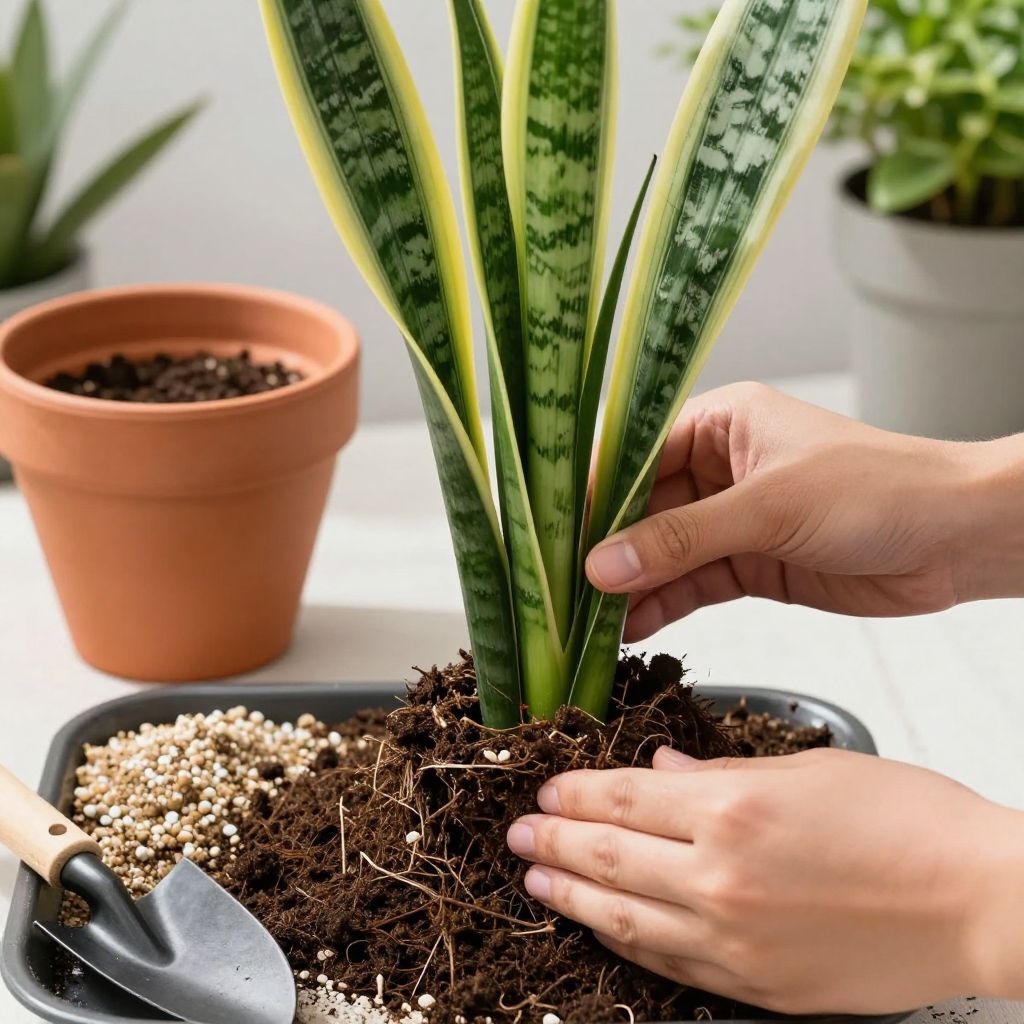
What kind of soil for snake plant do you need to keep it healthy? The short answer is a fast-draining, airy mix that dries out between waterings. Snake plants, also called Dracaena trifasciata, rot quickly in heavy, moisture-holding soil, so the goal is to give the roots plenty of oxygen and very little chance to sit wet.
If your snake plant is struggling, the soil is often the real problem. The right mix makes watering easier, prevents root rot, and helps the plant stay upright, healthy, and low-maintenance indoors or in warm outdoor climates.
What kind of soil for snake plant?
Snake plants do best in a loose, well-draining potting mix with plenty of air space. Use a cactus or succulent mix, or make your own by blending regular potting soil with coarse sand, perlite, or pumice. Avoid dense garden soil or rich, moisture-retentive mixes that stay wet too long.
Why snake plants need a fast-draining mix
Snake plants store water in their thick leaves and roots, so they do not need soil that holds moisture for long periods. In fact, soggy soil is one of the fastest ways to cause yellowing leaves, soft stems, and root rot.
Unlike many houseplants, snake plants prefer a drying cycle between waterings. The soil should support the plant without staying compacted or waterlogged.
What happens in the wrong soil
- Too much moisture can rot the roots and rhizomes.
- Heavy soil reduces airflow around the roots.
- Compacted mix makes it harder for water to drain evenly.
- Wet soil can attract fungus gnats and other moisture-loving pests.
Best soil ingredients for snake plants
A good snake plant mix balances drainage, structure, and just enough moisture retention to keep roots from drying out completely. The exact blend can vary, but the key is to keep it light and gritty rather than dense and sticky.
Recommended components
- Potting soil for a basic organic base
- Perlite to improve drainage and air pockets
- Pumice for structure and long-lasting aeration
- Coarse sand in small amounts to increase grit
- Orchid bark if you want an even airier mix
If you are buying a premade mix, look for cactus and succulent soil. Many of these are suitable as-is, though some are still a little moisture-retentive and may benefit from extra perlite or pumice.
A simple DIY snake plant soil mix
For most indoor snake plants, a practical starting mix is:
- 2 parts regular indoor potting soil
- 1 part perlite or pumice
- 1 part coarse sand or fine orchid bark
This mix drains well while still holding enough moisture for the roots to absorb between waterings. If your home is humid or you tend to overwater, increase the perlite or pumice slightly.
What soil to avoid
Some soils are simply too heavy for snake plants, especially in containers. If the mix stays wet for many days after watering, it is probably not suitable.
- Garden soil from the yard
- Potting mixes with lots of peat that stay spongey for too long
- Compost-heavy blends that hold too much moisture
- Topsoil or “all-purpose” soil meant for outdoor beds
These materials may seem rich, but for snake plants they often create the wrong balance. A plant that likes lean conditions usually performs better in a lighter mix than in a nutrient-rich one.
Should you add compost to snake plant soil?
Use compost sparingly, if at all. Snake plants do not need a heavily amended, fertile soil, and too much compost can make the mix hold excess water. If you want to improve a basic potting blend, add only a small amount of well-finished compost and keep the overall mix airy.
For indoor container growing, compost is usually optional. A little can help with structure and slow-release nutrients, but drainage should always come first.
Container drainage matters as much as soil
Even the best soil can fail in a pot without drainage holes. Snake plants need a container that lets extra water escape quickly so the roots do not sit in a wet bottom layer.
Choose the right pot
- Use a pot with at least one drainage hole.
- Pick a container only slightly larger than the root ball.
- Terracotta is often helpful because it dries faster than plastic.
- Avoid oversized pots, which hold too much wet soil around the roots.
If you are repotting, do not jump to a much larger container unless the plant is clearly rootbound. A pot that is too large can keep the soil wet for too long.
How to repot a snake plant in the right soil
Repotting is a good time to correct poor soil or root problems. If the plant has been sitting in heavy, wet mix, refreshing it can make a big difference.
- Remove the plant gently from the pot.
- Shake off loose old soil and inspect the roots.
- Trim away any black, mushy, or rotten roots with clean scissors.
- Choose a pot with drainage holes that is only slightly larger than the root mass.
- Fill the base with fresh, fast-draining snake plant soil.
- Set the plant at the same depth it was growing before.
- Backfill lightly and do not pack the soil tightly.
- Wait a few days before watering if the roots were disturbed or trimmed.
Keeping the mix loose is important. Tamping it down too firmly removes the air pockets snake plant roots need.
How soil affects watering
The soil you choose changes how often you need to water. A gritty, fast-draining mix dries sooner than a dense one, so you may need to check the plant more often, especially in warm weather or bright light.
Instead of watering by calendar, check the soil first. Insert a finger several inches into the pot, or lift the container to judge how light it feels. Water only when the mix is dry most of the way down.
Signs the soil is too wet
- Leaves feel soft or mushy
- The plant leans or collapses at the base
- Soil stays damp for many days
- There is a sour or musty smell
Signs the soil is too dry or too coarse
- Leaves wrinkle or look slightly shriveled
- Water runs straight through without soaking in
- The mix becomes dusty and hydrophobic
If dry soil repels water, water slowly and in stages so the mix can absorb it evenly. For very dry pots, a short bottom-watering session can help rehydrate the root zone.
Indoor vs. outdoor snake plant soil needs
Most snake plants are grown indoors, where drainage and airflow are limited compared with outdoor beds. Indoors, a gritty potting mix is especially important because rainfall is not helping flush the soil and evaporation is slower.
In warm climates, snake plants can sometimes grow outdoors in containers or sheltered beds, but only where the soil drains well and temperatures stay suitable. Outdoor soil should still be loose and fast-draining, not heavy clay.
If you are planting in the ground
- Choose a raised or well-drained site.
- Amend heavy soil with coarse mineral material, not just compost.
- Avoid low spots where water collects after rain.
- Do not plant in dense clay unless drainage has been improved significantly.
In cooler or wetter regions, container growing is usually safer because you can control the soil and moisture more easily.
Common soil-related problems and fixes
When a snake plant looks unhealthy, the issue is often linked to the root zone. The good news is that many problems can be corrected if you catch them early.
Yellowing leaves
Yellow leaves often suggest overwatering or soil that stays wet too long. Check the roots and repot into a drier, better-draining mix if needed.
Soft or mushy base
This is a strong sign of rot. Remove damaged tissue, let healthy sections dry briefly, and replant in fresh, airy soil.
Slow growth
Snake plants naturally grow slowly, but poor soil can slow them even more. If the plant is healthy otherwise, refresh the mix and ensure it has bright, indirect light.
Fungus gnats
These pests often appear in consistently moist soil. Let the mix dry more between waterings, remove decaying organic matter, and consider repotting if the soil is staying wet too long.
Light, temperature, and soil work together
Soil choice is only part of the picture. Snake plants usually grow best in bright, indirect light, though they tolerate lower light better than many houseplants. In lower light, the soil dries more slowly, so you must be extra careful not to overwater.
Warmer rooms and brighter windows can speed drying, while cool, dim spaces slow it down. Adjust your watering habits to match the plant’s environment rather than following a fixed routine.
Simple maintenance tips for healthy roots
- Use a pot with drainage holes every time.
- Keep the soil mix loose and airy.
- Repot only when the plant is rootbound or the soil has broken down.
- Remove dead or damaged leaves at the base with clean tools.
- Check the roots if the plant starts to wobble, yellow, or smell sour.
Snake plants do not need frequent feeding, and too much fertilizer can stress roots in already heavy soil. If you fertilize at all, do so lightly during active growth and only when the plant is otherwise healthy.
Conclusion
What kind of soil for snake plant works best? Choose a light, fast-draining mix that dries out between waterings, and pair it with a pot that has drainage holes. If your plant has been struggling, repotting into a better soil blend is one of the most effective fixes you can make.
For more practical plant care help, you may also want to read about repotting houseplants and choosing the right potting mix for container-grown plants.