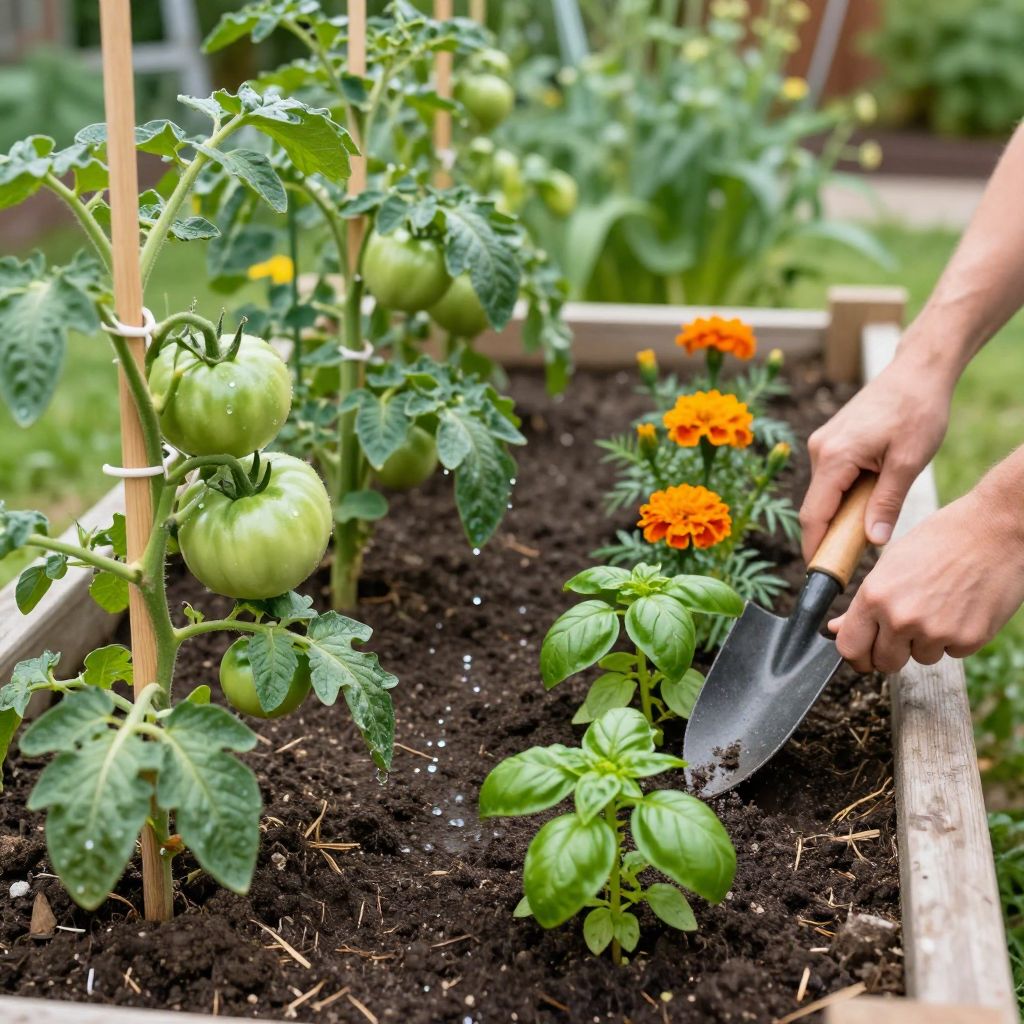
Wondering what to plant next to tomatoes so they grow better and take up less space? The best companions are plants that fit tomatoes’ sunlight, water, and root needs while helping with pollination, pest confusion, or efficient use of the bed. Good choices can also make harvesting easier and reduce bare soil.
The wrong neighbors, though, can compete too heavily, shade tomatoes, or share the same disease problems. The goal is not to crowd the bed, but to choose companions that support healthy growth and make the planting area more productive.
What to plant next to tomatoes?
Plant basil, onions, garlic, chives, carrots, lettuce, marigolds, calendula, and low-growing herbs next to tomatoes. These companions usually fit well around tomato roots and foliage, help use space efficiently, and may reduce pest pressure. Keep tall or aggressive plants from shading tomatoes or competing too strongly for water and nutrients.
Best companion plants for tomatoes
Herbs that grow well nearby
Many gardeners pair tomatoes with herbs because they stay relatively compact and are easy to tuck into edges or gaps. Choose herbs that like similar sun and drainage conditions.
- Basil – A classic tomato companion for containers and beds. Keep it in bright sun and avoid crowding it under dense tomato foliage.
- Chives and other alliums – Their upright growth fits between tomatoes and along bed edges.
- Parsley – Useful in partial sun at the edge of a tomato bed, especially where afternoon heat is intense.
- Thyme – Works best where drainage is excellent and tomatoes are not overwatered.
Herbs are especially useful when you want a mixed planting that still allows airflow. Air circulation matters because tomatoes are prone to fungal problems when leaves stay damp or plants are packed too tightly.
Vegetables that make good neighbors
Several vegetables can be planted next to tomatoes without causing major competition, especially when you stagger planting times and keep spacing sensible.
- Carrots – Their narrow roots use a different soil layer than tomatoes.
- Lettuce – A good cool-season filler beneath or beside young tomato plants before the tomato canopy expands.
- Spinach – Similar to lettuce, it can occupy space early in the season.
- Radishes – Fast-growing and useful as a short-term filler while tomatoes are still small.
- Beans – Bush beans can work in some gardens, but only if they do not crowd tomatoes and if disease pressure is low.
These companions are most successful when tomatoes are staked or caged so the bed stays organized. If you grow sprawling tomatoes, leave extra room so nearby vegetables are not buried under shade later in the season.
Flowers that help the planting area
Flowers can be more than decoration. They can attract beneficial insects, fill gaps, and help the garden look intentional instead of overgrown.
- Marigolds – Commonly planted near tomatoes for their bright flowers and pest-confusing scent.
- Calendula – A useful cool-season flower that can draw pollinators and beneficial insects.
- Nasturtiums – Good as a trailing edge plant if you have room; they can also act as a “trap” plant for some pests.
- Zinnias – Best placed nearby rather than directly inside a tight tomato row, since they need room and airflow.
Flowers are most helpful when they are planted in a way that does not block sunlight from tomato leaves. Tomatoes need full sun to fruit well, so avoid tall flowers on the south side of the bed in the Northern Hemisphere unless you have extra space.
What not to plant next to tomatoes
Some plants are poor neighbors because they compete strongly, invite similar pests, or need very different conditions. Avoid pairing tomatoes too closely with crops that can cause crowding or disease issues.
- Potatoes – They share several serious diseases and pests with tomatoes, including blight concerns.
- Fennel – Often suppresses nearby plants and is best grown separately.
- Large brassicas such as cabbage or broccoli – They can compete heavily and may make the bed feel cramped.
- Very tall corn – It can shade tomatoes and compete for moisture.
- Other crowded nightshades – Peppers and eggplants can be grown nearby in some gardens, but they should not be packed tightly together because they share similar pest and disease pressures.
When in doubt, separate tomatoes from plants that need very different watering or that grow into large, dense canopies. A little distance often prevents a lot of trouble later.
How to arrange companion plants around tomatoes
Use the edges and gaps first
The easiest way to companion plant is to place smaller plants around the perimeter of the tomato bed. This keeps the center open for staking, pruning, and harvesting.
- Set tomato plants first and give them proper spacing for the variety and support method you use.
- Plant low growers like lettuce, radishes, or basil in the open spaces between young tomatoes.
- Place taller companions, such as marigolds or zinnias, on the outer edge where they will not shade the tomatoes.
- Leave room to reach all sides of each tomato plant for pruning and inspection.
If you use cages or stakes, remember that tomatoes expand as they grow. A companion that looks harmless in early spring can become a problem by midsummer if it is too close to the stem.
Match sun and water needs
Tomatoes do best in full sun and evenly moist, well-drained soil. Choose companions that can handle the same conditions, or place less demanding plants where they receive a bit of shade from the tomato canopy later in the season.
- In hot climates, lettuce and spinach may appreciate partial shade from tomatoes by midsummer.
- In cooler climates, basil and marigolds may need the warmest, sunniest spots.
- In containers, keep the pot large enough that roots do not dry out too quickly.
Drainage is critical. Tomatoes dislike soggy soil, and companion plants should not force you to overwater the bed. If one plant needs much wetter soil than the others, it is usually better in a separate container or bed.
Soil, compost, and spacing basics
Good companion planting starts with healthy soil. Tomatoes are heavy feeders, so the bed should be rich but not waterlogged, with plenty of organic matter worked in before planting.
Prepare the bed well
- Mix compost into the top layer of soil before planting.
- Break up compacted soil so tomato roots and companion roots can spread.
- Mulch after planting to help conserve moisture and reduce weeds.
Keep mulch a little away from the tomato stem to reduce rot problems. Straw, shredded leaves, and other breathable mulches work well in most gardens.
Leave enough space
Spacing depends on variety, support, and climate, but crowded tomatoes are more likely to get leaf disease and produce fewer healthy fruits. Companion plants should fit into the plan, not force the tomatoes to be squeezed together.
- Use compact companions in tight beds.
- Keep vigorous companions at the bed edge.
- Prune lower tomato leaves as needed for airflow, especially in humid weather.
Common problems when planting near tomatoes
Too much shade
One of the most common mistakes is planting tall companions on the wrong side of the bed. If tomatoes get less than several hours of strong direct sun, flowering and fruiting can suffer.
Fix it by moving tall plants to the outer edge or removing them if they are blocking important light.
Overcrowding
It is tempting to fill every gap, but dense plantings trap humidity and make pests harder to spot. Tomatoes need room for pruning, tying, and checking for disease.
Use quick crops like radishes or lettuce early in the season, then thin them out before the tomato canopy closes in.
Shared pests and diseases
Plants in the same family can share pests and diseases, which is why potatoes are a poor companion. Even with good companions, inspect tomato leaves regularly for aphids, whiteflies, hornworms, and early signs of fungal disease.
If you see problems, remove badly affected leaves, improve airflow, and avoid overhead watering when possible.
Companions that outgrow their space
Some flowers and herbs look small at planting time but spread quickly. Watch trailing plants like nasturtiums and vigorous herbs so they do not smother young tomatoes or block access.
Container gardening: what to plant next to tomatoes in pots
If you grow tomatoes in containers, choose compact companions only. The root space is limited, so every plant in the pot must be manageable and not too thirsty.
- Best choices: basil, chives, thyme, lettuce, and small marigolds.
- Avoid: large flowers, sprawling vines, and anything with a strong root system that will crowd the pot.
Use a large container with good drainage holes, and make sure the tomato still gets the lion’s share of the pot space. In small containers, it is often better to plant companions in a separate nearby pot rather than directly in the same one.
A simple companion planting plan for tomatoes
- Plant tomatoes in full sun with sturdy support.
- Choose one or two companions that match your climate and space.
- Put low growers near the base and taller companions at the edge.
- Mulch to conserve moisture and suppress weeds.
- Check weekly for crowding, pests, and airflow problems.
This approach keeps the bed productive without making it hard to maintain. The best companion planting is practical first and decorative second.
Conclusion
If you are deciding what to plant next to tomatoes, start with easy, compatible choices like basil, chives, lettuce, carrots, marigolds, or calendula. Keep the bed open enough for sun, airflow, and harvesting, and avoid plants that compete too strongly or share disease problems. A well-planned layout will make your tomatoes healthier and your garden easier to manage.
For more help with planning a productive vegetable bed, you may also want to read about companion planting basics and how to grow tomatoes successfully.
Leave a Reply