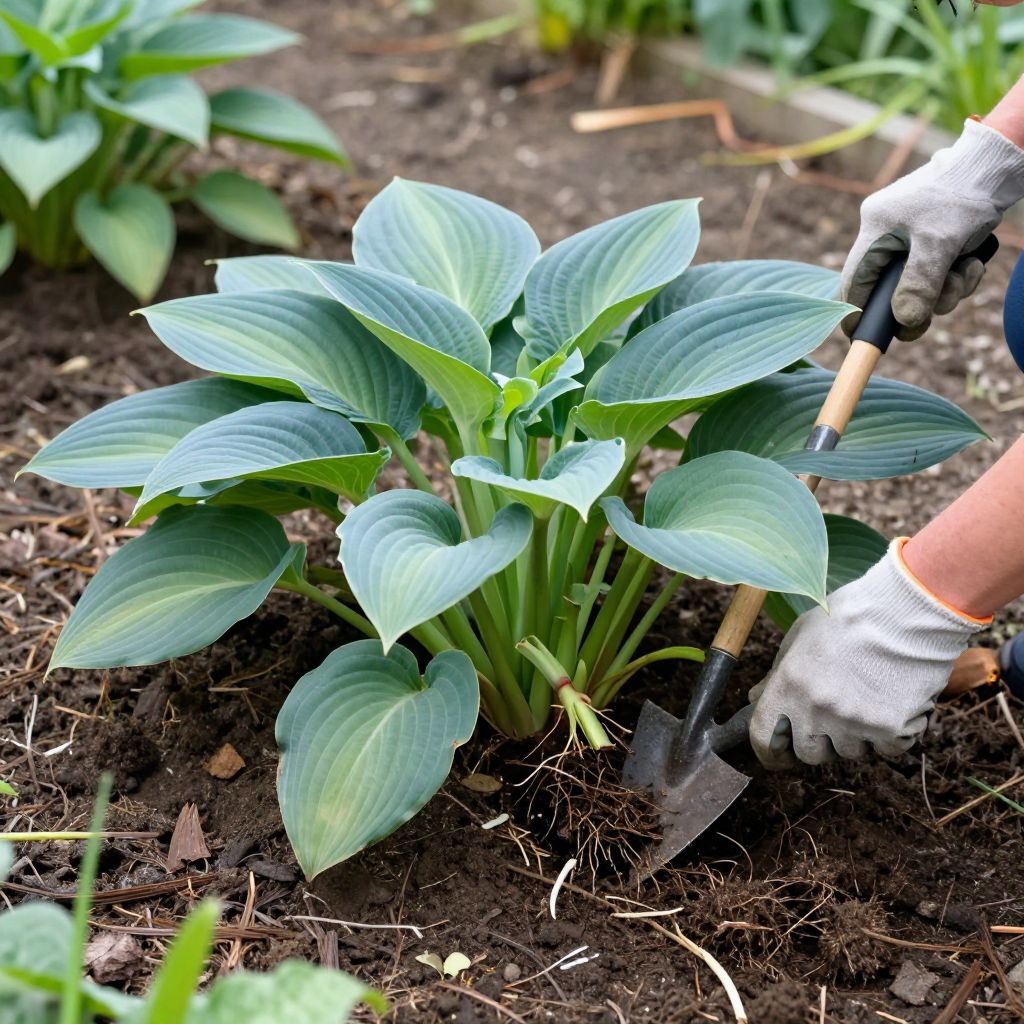
If you’re wondering when to divide hostas, the short answer is: do it when the plant is actively growing but not stressed by extreme heat or cold. In most gardens, early spring or early fall gives the best results, with cool weather and moist soil helping divisions recover quickly.
Hostas are forgiving perennials, but timing still matters. Divide them at the right season and you’ll get healthier clumps, more plants, and less transplant shock.
When to divide hostas?
The best time to divide hostas is early spring, just as the shoots emerge, or early fall, about 4 to 6 weeks before the ground freezes. Spring division is usually safest in colder climates, while fall division works well where autumn stays mild and moist long enough for roots to re-establish.
Why timing matters for hosta division
Hostas are perennial shade plants that grow from a crown and rhizome-like root mass. When you split them, you temporarily reduce the plant’s ability to draw water, so cool temperatures and consistent moisture help the divisions recover.
Dividing at the wrong time can slow growth, reduce flowering, and increase the risk of wilting or root rot. The goal is to give each division enough time to make new roots before summer heat or winter cold arrives.
Best seasonal windows
- Early spring: Ideal when the “pips” or shoots are just poking through the soil and leaves are still small.
- Early fall: Good after summer heat eases, while soil is still warm enough for root growth.
- Late spring to early summer: Possible in a pinch, but only if you can keep the divisions evenly moist and out of hot sun.
- Mid-summer: Usually the least desirable time because heat and active leaf growth increase stress.
How to know a hosta is ready to divide
Not every hosta needs division on a schedule. Many clumps can stay in place for years and still look great. Divide when the plant is crowded, the center of the clump is thinning, or you want to make more plants for another part of the garden.
- The clump is large and pushing against nearby plants.
- The center looks sparse or dies out while the outer ring thrives.
- Flowering has declined and the plant seems less vigorous.
- You want to control size or reshape a planting bed.
Very young hostas usually do not need dividing. A well-established clump with multiple crowns is a better candidate.
How to divide hostas step by step
Division is straightforward, but a little care goes a long way. Work on a cool, cloudy day if possible, and prepare the new planting spots before you lift the plant.
- Water the plant the day before if the soil is dry.
- Cut back large leaves if needed to make handling easier, especially in spring or after flowering.
- Use a spade or garden fork to dig around the clump and lift as much of the root mass as possible.
- Shake or rinse off excess soil so you can see the crowns and natural break points.
- Separate the clump into sections with a sharp spade, knife, or two garden forks back-to-back.
- Make sure each division has at least one healthy crown and several roots. Larger divisions establish faster.
- Replant immediately at the same depth they were growing before.
- Water thoroughly to settle the soil around the roots.
How small can you divide hostas?
You can split a hosta into very small pieces, but tiny divisions often take longer to recover. For the best results, aim for divisions with 2 to 3 shoots or more, especially if you are dividing during warmer weather or in a less-than-ideal site.
Where to replant hosta divisions
Hostas grow best in partial shade to shade, though some varieties tolerate more morning sun if the soil stays evenly moist. Choose a site with rich, well-drained soil that holds moisture without staying soggy.
Soil and drainage
Before planting, loosen the soil and mix in compost if needed. Hostas appreciate organic matter because it improves both moisture retention and drainage, which helps roots recover after division.
Avoid planting divisions in heavy, waterlogged soil unless you improve drainage first. Standing water can rot newly cut crowns and roots, especially in cool weather.
Spacing and planting depth
- Set the crown at the same depth it was growing before.
- Space divisions according to the mature size of the variety.
- Leave room for air movement to reduce slug and disease problems.
If you are moving hostas into a new bed, resist the urge to bury them deeper. Deep planting can slow emergence and increase crown rot risk.
Aftercare for divided hostas
New divisions need steady moisture while they rebuild roots. The soil should stay lightly moist, not saturated, for the first few weeks after planting.
- Water deeply after planting.
- Check moisture regularly during dry spells.
- Mulch lightly with compost or shredded leaves, keeping mulch away from the crown.
- Protect from hot afternoon sun if the site is brighter than the plant prefers.
A light mulch helps conserve moisture and suppress weeds, but too much mulch piled against the crown can trap excess moisture and invite rot.
Should you fertilize divided hostas?
In most cases, compost worked into the soil is enough. If your soil is poor, a light application of a balanced, slow-release fertilizer may help, but avoid overfeeding freshly divided plants. Too much nitrogen can push soft growth before the roots are ready.
Common mistakes to avoid
Most hosta division problems come from stress, not from the act of dividing itself. Avoid these common errors for better recovery.
- Dividing in extreme heat without extra watering.
- Leaving roots exposed for too long while you work.
- Planting too deep or too shallow.
- Using tiny divisions when the plant is already stressed.
- Letting the soil dry out for the first several weeks.
- Splitting a plant that is already weak from drought, pests, or disease.
What to expect after dividing
It is normal for hostas to look a little tired right after division. Some leaves may droop, and growth may slow while roots re-establish. If the plant was divided at the right time and kept moist, it should perk up within a few weeks.
In spring, new leaves usually expand quickly once roots begin to recover. In fall, top growth may not change much before winter, but the roots can settle in and support stronger growth next season.
Pests and diseases to watch for
Dividing hostas does not usually create pest problems, but stressed plants are more vulnerable. Slugs and snails often target tender new growth, especially in damp shade. Crown rot and root rot are more likely if the soil stays wet or the crown is buried too deeply.
- Inspect divisions for mushy roots or soft crowns before replanting.
- Keep the area tidy to reduce hiding spots for slugs.
- Water the soil, not the leaves, when possible.
- Improve airflow in crowded beds.
Can you divide hostas in summer or winter?
Yes, but it is not ideal. Summer division can work if you can provide consistent moisture and some shade from intense afternoon sun. Winter division is generally not practical because the plant is dormant and the soil may be frozen or too wet to work.
If you must divide outside the usual windows, choose a cool spell, work quickly, and keep the roots from drying out. The more stressful the weather, the larger each division should be.
Quick decision guide
- Best overall: Early spring or early fall.
- Best for cold climates: Early spring.
- Best for mild autumns: Early fall.
- Only if necessary: Cool summer weather with careful watering.
Conclusion
If you want the easiest answer to when to divide hostas, choose a cool, moist window in spring or fall, then replant promptly and keep the soil evenly moist. Start by checking whether your clump is crowded or thinning, and divide only as much as needed so each section has strong roots and a healthy crown.
For more practical shade-garden advice, you may also want to read about how to grow hostas in shade and mulching perennial beds for moisture retention.