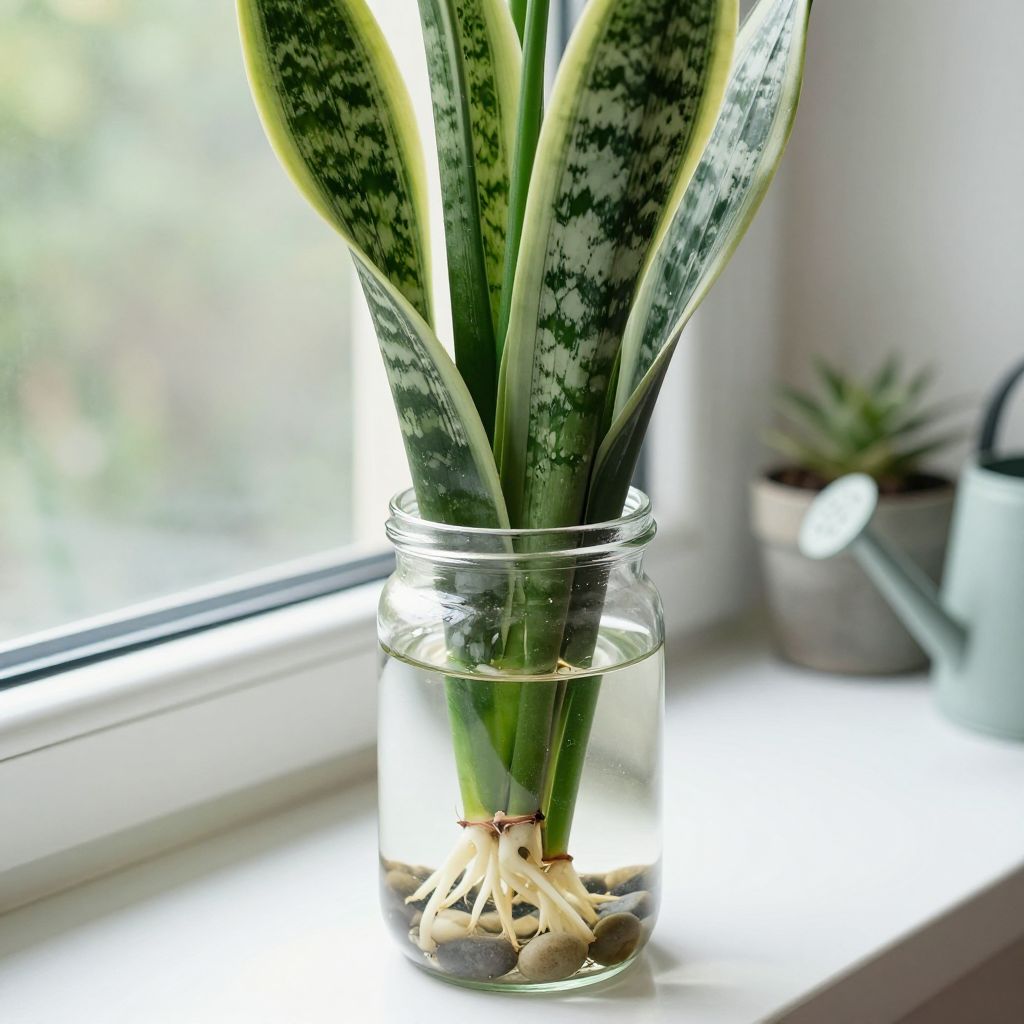
Can snake plants live in water? Yes, they can—at least for a long time, and often very successfully as a low-maintenance indoor display. Snake plants (Dracaena trifasciata, formerly Sansevieria) are adaptable, and healthy cuttings or divisions can root and grow in water if you keep the setup clean and give them bright, indirect light.
That said, water culture is not the same as soil growing. Snake plants usually stay healthier long-term in a well-draining potting mix, but water propagation and temporary water growing can work well if you manage rot, light, and water quality carefully.
Can snake plants live in water?
Yes, snake plants can live in water, especially as cuttings or divided sections with roots. They may grow slowly but steadily in a vase or jar if only the roots or the cut end touches water. The biggest risks are rot, algae, and weak growth, so clean water and good light are essential.
How snake plants behave in water
Snake plants are succulents in habit, even though they are not true cacti. Their thick leaves store moisture, which is why they tolerate low water and can survive in water culture better than many houseplants.
In water, the plant uses stored energy to form new roots. Once established, it can continue growing, but it usually grows more slowly than in soil and may need more attention to cleanliness.
What works best in water
- Leaf cuttings placed in water for rooting
- Divisions with existing roots transferred from soil to water
- Small offsets that already have a base and root nub
What to expect
- Slower growth than in potting mix
- Occasional yellowing if the water is stagnant or too deep
- More frequent cleaning than with soil-grown plants
- Less risk of underwatering, but more risk of rot if the plant sits too wet
How to grow a snake plant in water
If you want to try water growing, start with a healthy cutting or division and use a clean container. The goal is to keep the base moist while preventing the leaf from sitting too deep in water.
- Choose a healthy piece with firm tissue and no soft, mushy spots.
- Let fresh cuts dry for 1 to 3 days so the cut end can callus slightly.
- Use a clean glass or jar with enough support to hold the plant upright.
- Add water only to the roots or cut base, not high up the leaf.
- Place it in bright, indirect light away from hot direct sun.
- Change the water regularly to keep it fresh and oxygenated.
Best container choice
A narrow-neck jar, vase, or propagation vessel helps hold the plant in place. Clear glass looks attractive, but it also encourages algae if the container gets a lot of light. If algae becomes a problem, switch to an opaque container or wrap the glass to block light from the water.
How much water to use
Use just enough water to cover the roots or the bottom portion of the cutting. If the leaf base sits too deep, it can soften and rot. A shallow water level is usually safer than a deep one.
Best light, temperature, and room conditions
Snake plants in water do best indoors in bright, indirect light. A spot near an east-facing window or a few feet back from a south- or west-facing window often works well, depending on your home’s light intensity.
- Light: bright indirect light is best; avoid harsh midday sun through glass
- Temperature: normal indoor temperatures are usually suitable
- Humidity: average household humidity is fine
- Airflow: gentle air movement helps reduce stagnant conditions
If the plant is too far from a window, rooting may slow and the leaves may stretch or weaken. If it gets too much direct sun, the water can warm up, which increases the chance of bacterial growth and rot.
How often should you change the water?
There is no single schedule that fits every home, but clean water matters more than frequent feeding. In most indoor conditions, changing the water every 1 to 2 weeks is a practical starting point, and sooner if the water looks cloudy, smells off, or develops slime.
Signs the water needs changing
- Cloudy or foul-smelling water
- Slippery film on the container
- Yellowing or softening at the base
- Algae growth on the glass or roots
When you change the water, rinse the container and gently wash the roots if needed. Fresh water helps reduce bacteria and keeps oxygen levels higher around the roots.
Can a snake plant stay in water permanently?
Some snake plants can survive in water for a long time, but “survive” is not always the same as “thrive.” Many growers use water culture successfully for propagation or decorative indoor growing, yet the plant may remain smaller and more vulnerable than a soil-grown snake plant.
If you want a low-maintenance houseplant that can live in a vase, water culture can work. If you want the most robust long-term growth, a pot with a fast-draining mix is usually the better choice.
When water culture makes sense
- You want to root a cutting before potting it up
- You like a decorative tabletop display
- You want to monitor root health easily
- You prefer a soil-free indoor setup
When to move it to soil
- The roots become crowded
- New growth is weak or stalled for months
- The base keeps rotting despite clean water
- You want stronger long-term growth with less maintenance
Common problems and how to fix them
Most problems with snake plants in water come from too much moisture at the base, poor light, or dirty water. Catching these issues early usually saves the plant.
Rot at the base
If the leaf base turns soft, brown, or mushy, remove the plant immediately and trim away damaged tissue with a clean blade. Let the cut end dry before placing it back in fresh water, and make sure the water level stays below the soft area.
Yellow leaves
Yellowing can happen from rot, low light, or stress after moving the plant from soil to water. If the base is firm, improve the light and freshen the water. If the base is soft, rot is the likely cause.
Algae in the container
Algae usually appears in clear containers with strong light. Wash the container thoroughly, reduce direct sun exposure, and consider using an opaque vase or a darker glass container.
Root problems
Healthy water roots should look pale, firm, and fresh. If roots become brown, slimy, or foul-smelling, trim them off and restart in clean water. A little patience goes a long way here; snake plants root slowly, and rushing them often causes more damage.
How to propagate snake plants in water
Water propagation is one of the easiest ways to multiply a snake plant. It works best with healthy leaf sections or divisions, but keep in mind that leaf cuttings may not always produce the exact same growth pattern as the parent plant.
- Cut a healthy leaf into sections if you want to root leaf cuttings.
- Mark the bottom end of each section so you do not place it upside down.
- Allow the cut ends to dry and callus for a day or two.
- Set the cut end just into water, not deeply submerged.
- Place in bright, indirect light and refresh the water regularly.
- Wait for roots before potting up, or keep the cutting in water if you prefer that style.
Divisions with roots are usually faster and more reliable than leaf cuttings. If you already have a mature plant, dividing it is often the best way to create a new plant for water growing.
Should you fertilize snake plants in water?
Snake plants in water need very little feeding. In many cases, plain water is enough for a long time, especially while the plant is rooting or staying small. If you do fertilize, use a very diluted houseplant fertilizer and only occasionally, because excess nutrients can encourage algae and root damage.
If you are unsure, skip fertilizer at first. A healthy root system and clean water matter more than feeding for a water-grown snake plant.
Water vs. soil: which is better?
Both methods can work, but they serve different goals. Water is useful for propagation, display, and easy root monitoring. Soil is better for long-term vigor and lower maintenance.
- Water: easier to watch roots, decorative, good for propagation
- Soil: stronger growth, less frequent maintenance, lower rot risk when potted correctly
If you want the easiest long-term care, use a pot with drainage holes and a gritty, fast-draining mix. If you want to experiment or enjoy a vase display, water growing is a perfectly reasonable option.
Final care tips for success
To keep a snake plant alive in water, focus on three things: a shallow water level, clean containers, and bright indirect light. Watch the base closely during the first few weeks, because that is when rot is most likely to start.
If you want the most reliable result, begin with a healthy division, keep the water fresh, and move the plant to soil if it stops thriving. That way, you can enjoy the look of a water-grown snake plant without losing the plant to avoidable problems.
If you want to keep learning about easy indoor plant care, you may also enjoy reading about houseplant drainage and potting mix basics and propagating common indoor plants.