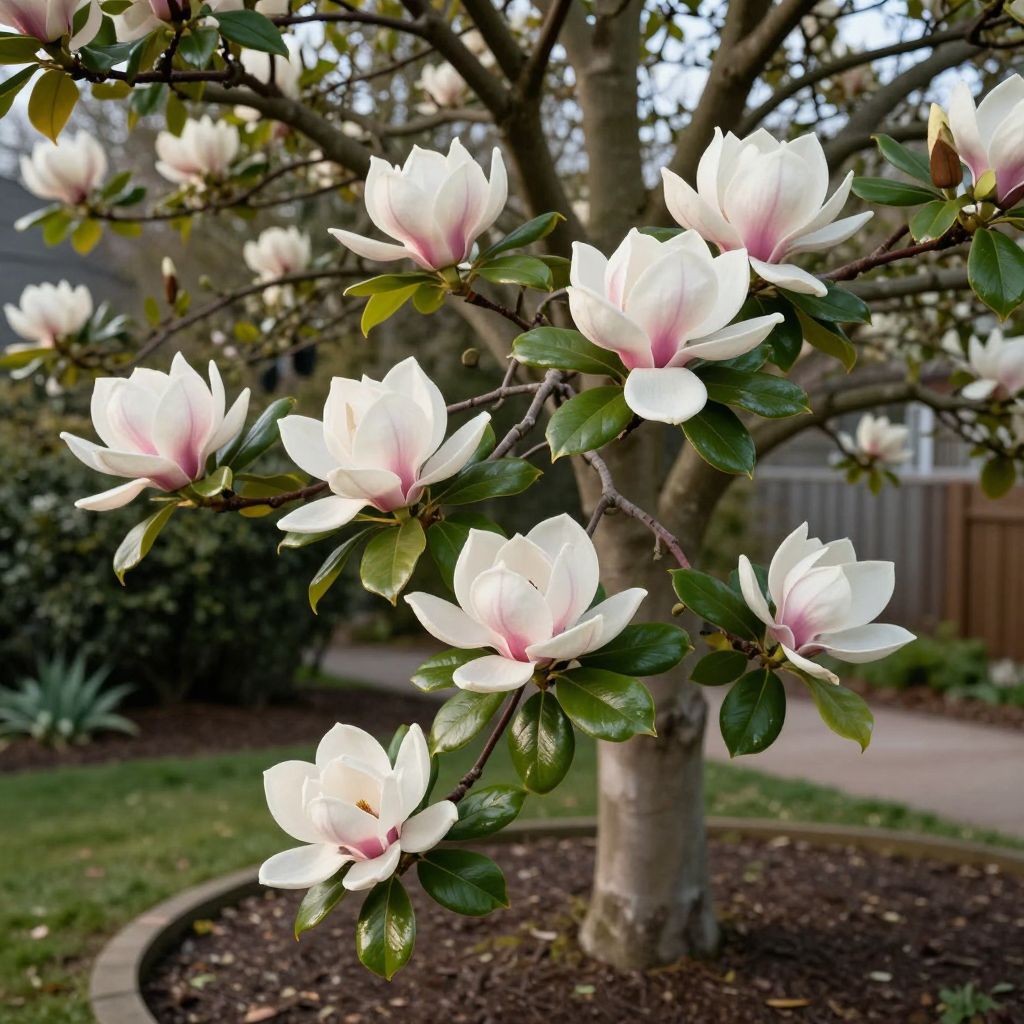
Wondering when do magnolia trees bloom in your garden? The answer depends on the species, your climate, and spring weather, but most magnolias flower in late winter, early spring, or sometimes again in summer. If your tree is young, recently planted, or hit by a late frost, bloom time can shift or be reduced.
Magnolias are prized for their large, fragrant flowers, but they need the right conditions to bloom well. With the right site, soil, and care, you can improve flowering and avoid the common reasons magnolia buds fail to open.
When do magnolia trees bloom?
Most magnolia trees bloom in late winter through spring, with some species flowering in summer. Star magnolia (Magnolia stellata) often blooms earliest, followed by saucer magnolia (Magnolia × soulangeana) and many deciduous magnolias in spring. Evergreen types such as southern magnolia (Magnolia grandiflora) usually bloom later, from late spring into summer.
Bloom timing by magnolia type
Early-blooming deciduous magnolias
These are often the first shrubs or small trees to flower at the end of winter or very early spring. In mild climates, you may see buds open before the leaves appear.
- Star magnolia usually blooms earliest, often in late winter to early spring.
- Saucer magnolia typically blooms in early spring, but timing varies with weather.
- These blooms are especially vulnerable to frost because they emerge before the tree is fully leafed out.
Mid- to late-spring magnolias
Many deciduous magnolias bloom after the earliest spring species, once cold weather begins to ease. In cooler regions, flowering may be delayed by several weeks compared with warmer areas.
- Some hybrids bloom in mid-spring.
- Flowering may last longer in cool weather and shorten during sudden heat.
- Bud development usually begins the previous season, so stress in summer can affect next year’s flowers.
Summer-blooming magnolias
Evergreen magnolias often bloom later than deciduous types. Southern magnolia commonly flowers from late spring into summer, and in warm climates it may continue producing blossoms over a long period.
- Flowers can appear intermittently rather than all at once.
- Warm nights and steady moisture often support better bloom display.
- Some trees may flower lightly when young and become more floriferous as they mature.
What affects magnolia bloom time?
Several factors influence when do magnolia trees bloom, and why one tree flowers earlier or later than another of the same species. Climate, sun exposure, frost, age, and pruning all matter.
Climate and local weather
Magnolias respond strongly to temperature. A warm spell can push buds open early, while a late cold snap can damage flowers or delay bloom. In colder regions, flowering may happen later than in mild coastal or southern climates.
- Warm winters can trigger earlier bloom.
- Late frosts can brown petals and reduce display.
- Cool springs often extend bloom, but also slow opening.
Sunlight
Most magnolias bloom best in full sun to light shade. Too much shade can reduce flower production and make the tree grow more leafy than floral.
- Give deciduous magnolias at least half a day of direct sun if possible.
- Southern magnolia can tolerate some afternoon shade in hot regions.
- Deep shade often means fewer buds and weaker growth.
Age and maturity
Young magnolias may take several years to settle in before flowering heavily. Newly planted trees often focus on root establishment first, so light bloom in the first seasons is normal.
- Do not expect a full floral display immediately after planting.
- Established trees usually bloom more reliably than young ones.
- Repeated transplant stress can reduce flowering.
Pruning
Heavy pruning at the wrong time can remove flower buds, especially on spring-blooming deciduous magnolias. Since many buds form on older wood, timing matters.
- Prune only to remove dead, damaged, or crossing branches.
- Shape the tree right after flowering if needed.
- Avoid hard pruning in late summer or winter unless necessary.
How to help magnolia trees bloom well
Good flowering starts with good growing conditions. Magnolias are not difficult, but they dislike root disturbance, poor drainage, and prolonged stress. The right planting site can make a big difference.
Choose the right planting spot
Pick a location with room to mature, shelter from strong wind, and soil that drains well. Magnolias have broad root systems and dislike being moved once established.
- Select a site with sun or light shade.
- Avoid low spots where water collects after rain.
- Leave enough space for the mature width of the tree.
- Plant away from competing tree roots if possible.
Prepare the soil
Magnolias generally prefer slightly acidic, fertile soil that stays evenly moist but never soggy. If your soil is heavy clay, improve drainage before planting rather than trying to fix it later around the roots.
- Work in compost to improve soil structure.
- Do not bury the root flare.
- Mulch the surface to conserve moisture and moderate soil temperature.
Important: Avoid piling mulch against the trunk. Keep it a few inches away so the bark stays dry and healthy.
Water correctly
Newly planted magnolias need regular moisture while they establish, especially during dry spells. Mature trees are more tolerant, but drought stress can reduce next season’s buds and flowers.
- Water deeply rather than giving frequent shallow sprinkles.
- Check soil moisture before watering; the top layer should not stay constantly wet.
- During hot, dry weather, monitor young trees more closely.
Feed lightly, if needed
Overfertilizing can encourage leafy growth at the expense of flowers. If your soil is already reasonably fertile, magnolias often need little feeding beyond compost and mulch.
- Use compost as a gentle soil amendment.
- If growth is weak, a soil test is better than guessing with fertilizer.
- Too much nitrogen can reduce bloom.
Why magnolia buds fail to open
If your magnolia forms buds but does not bloom well, the problem is often environmental rather than a disease. Start by checking weather, light, and tree health.
Late frost damage
Spring frost is one of the most common reasons magnolia flowers fail. Buds may turn brown, blacken, or dry before opening.
- Damage is more common on early-blooming deciduous magnolias.
- There is little you can do once buds are exposed, but a sheltered site helps in future years.
- Mulch and good watering support recovery, but they will not repair frost-damaged flowers.
Too much shade
A tree that grows well but blooms poorly may simply need more light. If nearby trees have grown taller over time, the magnolia may now be too shaded to flower well.
- Prune competing plants if appropriate.
- Consider whether the tree has outgrown its original site.
- Improving light often helps more than adding fertilizer.
Stress from drought or root damage
Magnolias can skip or reduce bloom after root disturbance, compacted soil, or prolonged dry weather. Even if the tree survives, flower production may suffer for a season or two.
- Protect roots from digging and construction.
- Water during dry periods, especially for younger trees.
- Keep lawn competition away from the root zone if possible.
Common pests and diseases that affect blooming
Most magnolias are relatively trouble-free, but pests and disease can weaken growth and reduce flowering. Catching problems early helps preserve the tree’s energy for bud production.
Scale insects
Scale can weaken magnolias by feeding on sap. Severe infestations may cause yellowing leaves, sticky residue, or general decline.
- Inspect stems and leaf undersides regularly.
- Prune out heavily infested twigs if needed.
- Encourage tree vigor with proper watering and mulching.
Leaf spots and fungal issues
Leaf diseases usually do not stop blooming by themselves, but repeated stress can reduce overall plant performance. Good air circulation and clean garden hygiene help.
- Rake up fallen leaves if disease has been a recurring issue.
- Avoid wetting the foliage late in the day.
- Do not overcrowd the tree with other plants.
Planting and maintenance tips for better flowers
If you are planting a new magnolia, a careful start can improve flowering for years. The goal is to reduce stress and encourage strong root development.
- Plant in spring or early fall if your climate allows, avoiding extreme heat or frozen ground.
- Dig a wide planting hole, but do not plant deeper than the root flare.
- Backfill with the native soil you removed, lightly amended if needed with compost.
- Water thoroughly after planting and keep the root zone evenly moist.
- Mulch 2 to 4 inches deep, keeping mulch away from the trunk.
- Prune only lightly and only when necessary.
Do not move an established magnolia unless you truly have to. They dislike transplanting, and root shock can delay flowering for several seasons.
What to expect from a healthy magnolia
A healthy magnolia may not bloom exactly the same way every year. Some seasons bring a heavy display, while others are lighter because of weather, age, or stress the previous year.
- Early-blooming types may flower before leaves emerge.
- Later-blooming types may open over several weeks.
- Flowering often improves as the tree matures.
If your magnolia is growing well but blooming lightly, give it one full season of good care before making major changes. Often the best improvement comes from better light, steadier moisture, and less pruning.
For more help with tree care and site selection, you may also want to read related gardening guides on choosing the right planting site for trees and how to mulch woody ornamentals correctly.
Leave a Reply