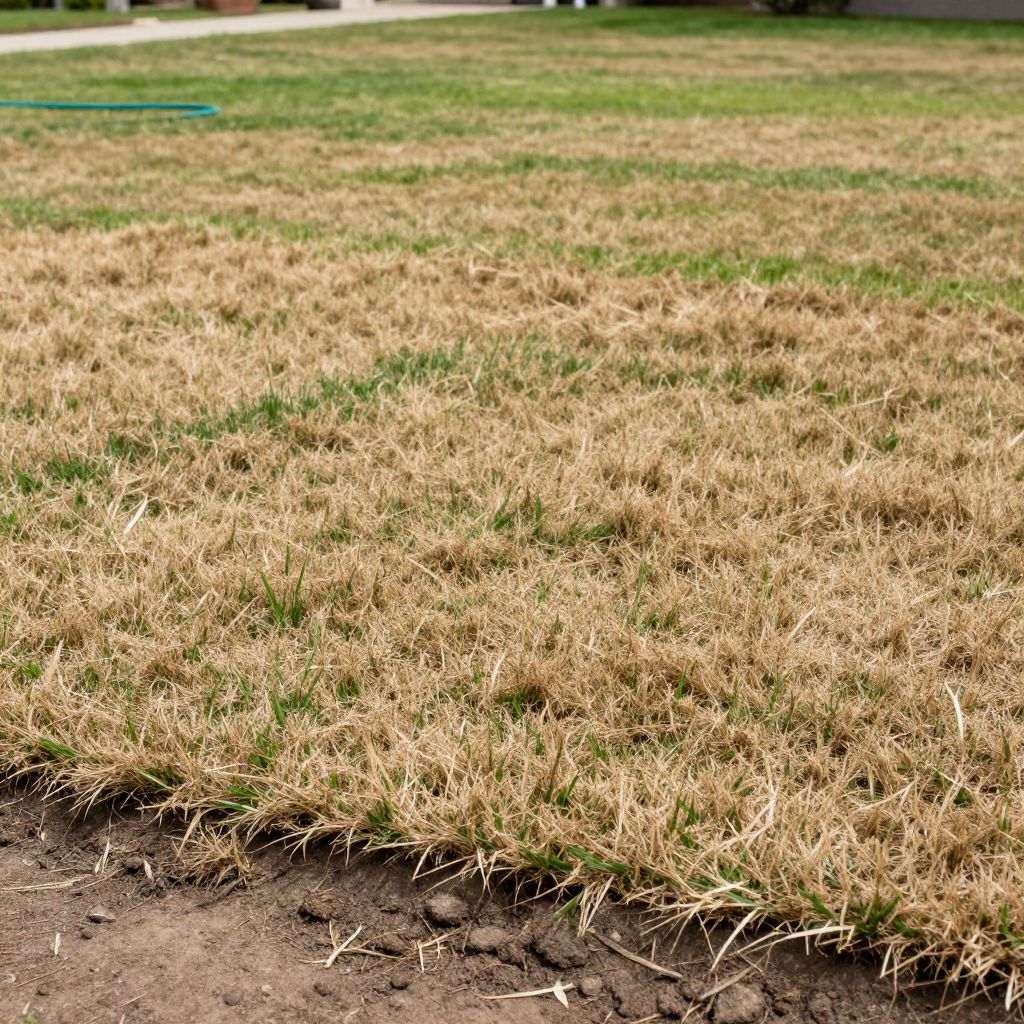
Why is my grass turning brown? In most cases, the problem is one of a few common lawn stressors: too little water, too much heat, compacted soil, mowing too short, pests, disease, or pet urine. The good news is that brown grass is not always dead, and many lawns can recover once you identify the cause and correct it.
The fastest way to fix it is to inspect the lawn closely before you treat it. Look at the pattern of damage, check soil moisture, and notice whether the browning started after weather changes, mowing, foot traffic, or fertilizer use.
Why is my grass turning brown?
Brown grass usually means the turf is stressed, not necessarily dead. The cause is often uneven watering, drought, heat, scalp cuts from mowing, compacted soil, insects, fungal disease, or chemical burn. The pattern of browning and the condition of the roots will tell you whether the lawn needs water, repair, or deeper troubleshooting.
Check the pattern first
Before you reach for fertilizer or reseed the whole yard, look at where the browning is happening. The shape of the damage often points to the cause.
- Entire lawn turning tan or straw-colored: likely drought, heat stress, or dormancy.
- Small circular patches: often fungal disease or localized pest damage.
- Brown spots near sidewalks, driveways, or slopes: heat reflection, runoff, or dry soil.
- Stripes or scalped areas after mowing: mower blades set too low or dull blades tearing turf.
- Random dead patches with loose turf: grubs, chinch bugs, or other insect feeding.
- Brown rings around urine spots: pet damage or excess nitrogen from fertilizer.
Common causes of brown grass and how to fix them
1. Underwatering or drought stress
Grass often turns brown when the soil dries out faster than the roots can absorb moisture. In hot, windy weather, shallow watering makes this worse because roots stay near the surface instead of growing deeper.
To check, push a screwdriver or garden trowel into the soil. If it resists strongly or the soil is dry 2 to 3 inches down, the lawn may be drought-stressed.
What to do:
- Water deeply and less often rather than giving short daily sprinkles.
- Apply enough water to moisten the root zone, usually about 6 inches deep for established turf.
- Water early in the morning to reduce evaporation.
- If local restrictions apply, prioritize the most stressed areas first.
If the grass is dormant from heat or drought, it may look brown but still be alive. A healthy crown and roots can allow recovery when moisture returns.
2. Heat stress and summer dormancy
Many cool-season grasses, such as Kentucky bluegrass, perennial ryegrass, and tall fescue, may brown during extreme summer heat even if they are not dying. They slow growth to conserve energy.
This is especially common when high temperatures combine with dry soil, compacted ground, or frequent foot traffic. Warm-season grasses can also brown if temperatures swing unusually or if the lawn is stressed by other factors.
What to do:
- Keep mowing a little higher during hot weather so the blades shade the soil.
- Reduce traffic on stressed areas.
- Water only when the lawn shows real drought stress, not just because the weather is hot.
- Wait for cooler conditions before assuming the grass is dead.
3. Mowing too short
Scalping the lawn removes too much leaf surface at once, which weakens the grass and exposes the soil to sun and drying wind. Brown patches often appear after an aggressive mow, especially on uneven ground.
Dull mower blades can also tear the leaf tips, leaving the lawn gray-brown and ragged rather than cleanly cut.
What to do:
- Raise the mowing height to suit your grass type and season.
- Never remove more than about one-third of the blade at a time.
- Sharpen mower blades regularly for a clean cut.
- Mow when the grass is dry enough to cut cleanly, but not wilted from heat.
4. Compacted soil
When soil is compacted, water and oxygen cannot move freely to the roots. Grass may look thin, patchy, and brown even if you water regularly.
Compaction is common in high-traffic areas, clay-heavy soils, and yards that have been driven or walked on repeatedly.
What to do:
- Aerate the lawn if the soil is compacted and the turf is established.
- Topdress lightly with compost after aeration if appropriate for your lawn type.
- Limit foot traffic on the worst areas.
- Improve drainage if water pools after rain or irrigation.
5. Poor drainage or overwatering
Brown grass is not always dry grass. If roots sit in soggy soil, they can suffocate or rot, and the turf may yellow, then brown. Overwatering can also encourage fungal problems.
Signs include spongy ground, moss, standing water, or a sour smell from the soil.
What to do:
- Let the soil dry slightly between waterings.
- Check sprinkler coverage so some spots are not getting oversaturated.
- Improve grading, drainage, or soil structure if water collects in low spots.
- Reduce irrigation during cool or rainy periods.
6. Lawn diseases
Fungal diseases can cause brown patches, rings, or irregular spots. Some common lawn diseases are more likely in humid weather, on overwatered turf, or when grass stays wet overnight.
Look for expanding circles, tan centers with darker edges, or fine lesions on blades. Disease symptoms often spread in a pattern rather than appearing as a single dry spot.
What to do:
- Water in the morning so blades dry quickly.
- Avoid frequent evening watering.
- Do not overfertilize, especially with quick-release nitrogen during stress.
- Rake up heavy thatch if it is trapping moisture.
- If disease is severe or recurring, identify the problem before using any treatment.
Healthy cultural practices usually matter more than quick fixes. If the lawn is already stressed, improving airflow, drainage, and mowing habits can reduce repeat outbreaks.
7. Insect damage
Some pests feed on roots or stems and cause turf to brown quickly. Grubs, chinch bugs, and other lawn insects can create patches that feel loose, dry, or easy to lift.
To test for grubs, peel back a section of turf in a damaged area and inspect the soil beneath. If the grass lifts like a carpet and the roots are missing, insects may be involved.
What to do:
- Inspect the root zone before treating.
- Check whether birds, skunks, or raccoons are digging in the lawn, which can indicate grubs.
- Use pest control only when you have identified the insect correctly.
- Repair damaged areas after the pest problem is under control.
8. Pet urine or fertilizer burn
Dog urine often causes a dark green ring around a brown center because the nitrogen concentration is too high for the grass. Excess fertilizer can create a similar burn, especially in hot weather or dry soil.
This damage is usually localized and sharply defined. It often appears soon after the lawn was fertilized or after pets repeatedly use the same spot.
What to do:
- Water the spot promptly after urine exposure if possible.
- Flush small fertilizer burns with water if the soil is not already saturated.
- Keep pets moving to different areas of the yard.
- Follow fertilizer directions carefully and avoid applying during drought or heat stress.
How to tell if brown grass is dead or dormant
Not all brown grass is dead. The easiest check is to examine the crown and roots, which sit at the base of the plant near the soil line.
- Pull on a few brown blades gently.
- If they resist and the crown looks firm, the grass may still be alive.
- If the plant pulls up easily and the roots are dry or absent, that area may be dead.
- Scratch a small section near the base. Green tissue suggests recovery is possible.
If the lawn is dormant, avoid overreacting with heavy fertilizer or constant watering. Give it the conditions it needs to recover naturally.
How to repair brown patches
Once you know the cause, repair is usually straightforward. The best method depends on whether the grass is dormant, thin, or dead.
For living but stressed grass
- Correct watering and mowing first.
- Reduce traffic on the area.
- Improve soil conditions if compaction or drainage is part of the problem.
For dead patches
- Rake out dead material and loosen the top layer of soil.
- Remove thatch if it is thick enough to block seed-to-soil contact.
- Topdress lightly with compost if the soil is poor and your lawn type can handle it.
- Reseed or patch with sod suited to your climate and sun exposure.
- Keep the area evenly moist until new grass is established.
Match the repair method to the season. In cool weather, reseeding often works well for cool-season lawns. In warm weather, some lawns recover better from plugs or sod than from seed, depending on the grass type.
Prevention tips to keep grass green
Good lawn care prevents many brown patches before they start. Focus on root health, not just blade color.
- Mow high enough for your grass type and season.
- Water deeply when needed, not lightly every day.
- Keep mower blades sharp.
- Avoid compacting wet soil.
- Fertilize only when the lawn is actively growing and can use the nutrients.
- Watch for early signs of pests or disease.
- Improve shade, drainage, or airflow where the lawn struggles repeatedly.
When to call in extra help
If the brown areas keep spreading, if the turf lifts easily, or if you see repeated damage despite good care, the problem may be more than simple drought. A local garden center, extension service, or lawn professional can help identify pests, disease, or soil issues specific to your region.
For more lawn care help, you may also want to read about how to aerate a lawn and how to fix bare patches in grass once you have identified the cause of the browning.