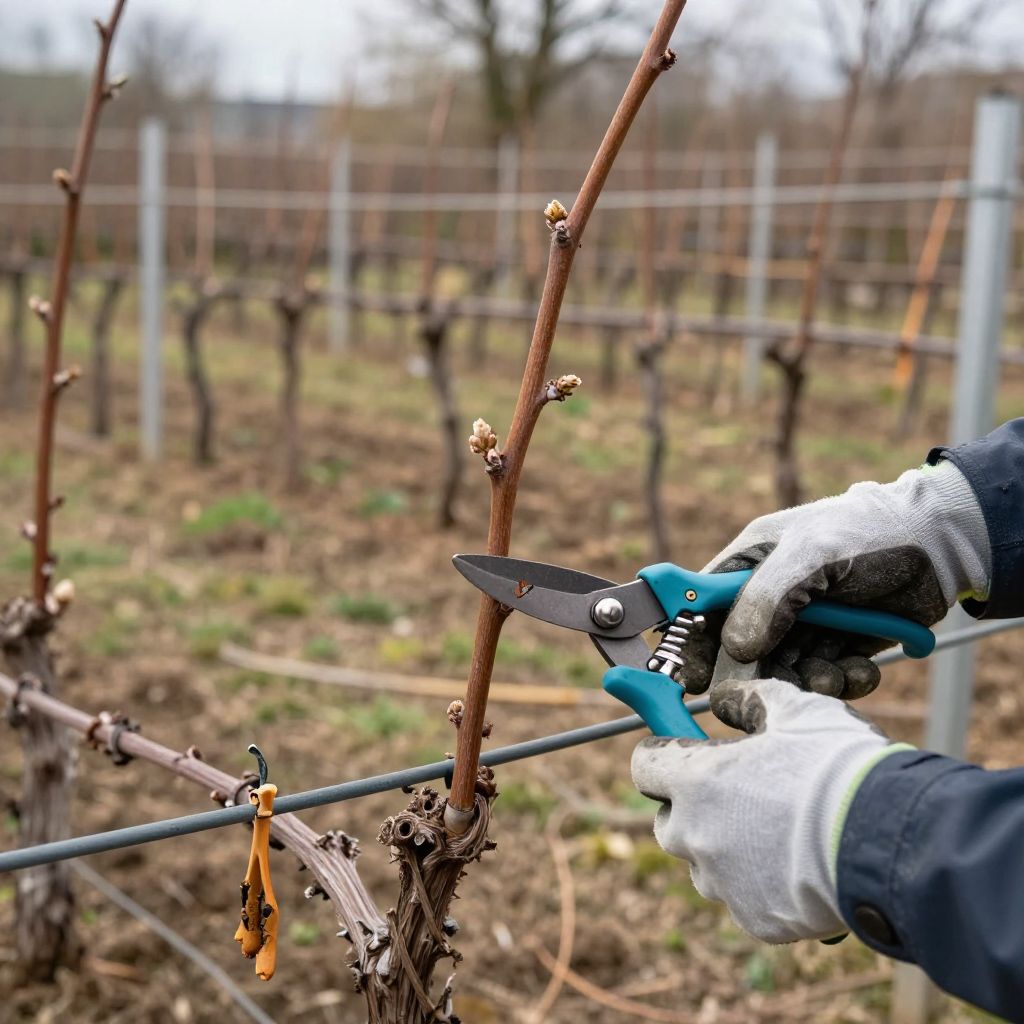
Wondering when to prune grape vines so you get healthy growth and a better crop? The timing matters a lot: prune too early or too late, and you can reduce fruiting, encourage weak growth, or cause excessive sap bleed in some climates.
For most home gardeners, the best time to prune grape vines is during dormancy in late winter, after the coldest weather has passed but before buds begin to swell. The exact window depends on your climate, vine vigor, and whether you are training young vines or maintaining mature ones.
When to prune grape vines?
Prune grape vines in late winter while the plant is fully dormant, usually after the hardest freezes but before spring growth starts. In mild climates this may be midwinter; in colder regions it is often late winter or very early spring. The goal is to remove most of last season’s growth before buds open.
Why timing matters for grape pruning
Grapes fruit on one-year-old wood, so pruning controls how much fruiting wood the vine produces each season. If you leave too much old growth, the vine can become tangled and unproductive. If you prune at the wrong time, you may stimulate weak growth or lose some buds to cold damage.
Late winter is usually best
Late winter pruning helps you see the vine’s structure clearly and removes wood that has already served its purpose. It also reduces the chance that a sudden warm spell will trigger early bud break before the risk of severe frost has passed.
Avoid pruning too early in fall
Pruning in autumn can leave fresh cuts exposed before winter cold arrives. In some climates, that can increase winter injury. It also removes stored energy the vine still needs to harden off properly.
Avoid pruning too late in spring
If buds are already swelling or opening, pruning can remove productive buds and delay the season. In some grape varieties, late pruning may also cause noticeable sap bleed. While sap bleed is usually not harmful, it can be messy and signals that the vine is already waking up.
How to choose the right pruning window for your climate
The best pruning date is not the same everywhere. Use your local weather and the vine’s growth stage as your guide rather than a fixed calendar date.
- Cold climates: prune after the harshest freezes, often in late winter or very early spring.
- Mild climates: prune in midwinter when the vine is fully dormant.
- Areas with late frosts: delay pruning as long as practical to reduce the chance of early bud break.
- Very vigorous vines: some gardeners delay final pruning slightly to help manage excessive growth, but major pruning should still happen before bud swell.
If you are unsure, check the vine weekly as winter ends. Once buds begin to plump, it is time to finish pruning soon.
How to prune grape vines step by step
Grape pruning is usually more severe than many gardeners expect. The vine needs a framework, not a mass of tangled canes.
- Start by removing dead, damaged, diseased, or weak wood.
- Choose the strongest canes that will form next season’s fruiting wood.
- Cut back most of the previous year’s growth, leaving only the canes or spurs needed for your training system.
- Remove crowded, crossing, or inward-growing stems to improve air movement and light.
- Make clean cuts just above a bud or at the point where a cane joins older wood.
For beginners, the most important rule is simple: grape vines usually need hard pruning. If you are hesitant, remember that overpruning a grape vine is often less damaging than leaving too much wood behind.
Use the right tools
Sharp bypass pruners work for most small canes. For thicker wood, use loppers or a pruning saw. Clean tools before and during pruning, especially if you are cutting diseased wood, to reduce the spread of problems.
How much should you remove?
The exact amount depends on the vine’s age, training style, and vigor, but grape vines are typically cut back heavily each dormant season. Mature vines often keep only a limited number of canes or short spurs, while the rest of the previous season’s growth is removed.
If your vine has become a dense tangle, do not try to “tidy it up” by leaving lots of extra shoots. That usually leads to more leaves and less fruit. Instead, restore a clear structure over one or two seasons if needed.
Young vines vs. mature vines
Young vines need training first and heavy fruiting later. In the first few years, pruning focuses on building a strong trunk and arms.
Mature vines are pruned to maintain fruiting wood, balance growth, and keep the canopy open. Their pruning is more about renewal and control than shaping from scratch.
Common pruning systems in home gardens
You do not need to become an expert in grape training to prune well, but it helps to know the basic system your vine is using.
Cane pruning
Cane pruning leaves selected one-year-old canes for next season’s fruiting and removes most older growth. This is common where vines are trained on wires or trellises and need annual renewal.
Spur pruning
Spur pruning leaves short stubs with a few buds on permanent arms or cordons. This is simpler for many home gardeners and works well when the vine is trained on a stable support.
If you are not sure which system your vine uses, look at how it was pruned last year. Matching the existing training style usually gives the best results.
What happens if you prune at the wrong time?
Timing mistakes do not always kill a grape vine, but they can reduce vigor and fruiting for a season or more.
- Too early in fall: can expose the vine to winter injury and reduce hardiness.
- Too early in winter: may be fine in mild areas, but can be risky where severe cold follows.
- Too late in spring: can remove buds that were ready to grow.
- Too little pruning: leads to crowded canes, poor light penetration, and smaller or fewer clusters.
- Too much pruning in the wrong way: can reduce the vine’s productive framework if you remove the wrong canes or spurs.
If a vine was neglected for years, avoid stripping it all at once. Rebuild it gradually so you do not shock the plant or lose the structure needed for future crops.
Summer pruning: should you do it?
Summer pruning is not a replacement for dormant pruning, but light trimming can help manage growth during the season. Remove obvious suckers, excess shoots, and some crowded leaves if airflow is poor.
Be careful not to overdo it. Leaves feed the vine, and too much summer cutting can reduce sugar production and expose clusters to sunburn in hot climates.
Signs your grape vine is ready to prune
Look for these signs before you start:
- The vine is fully dormant and has dropped its leaves.
- Hard frosts have mostly passed, or the coldest period is over.
- Buds are still tight and not swelling.
- You can clearly see the vine’s framework and last season’s canes.
If buds are already swelling, prune immediately rather than waiting longer.
Common pruning mistakes to avoid
Grape vines are forgiving, but a few mistakes can make a big difference.
- Leaving too much old wood: this is the most common error and often leads to weak fruiting.
- Cutting without a plan: always decide which canes will carry next season’s growth before you start snipping.
- Ignoring diseased wood: remove and discard infected canes rather than composting them if disease is present.
- Using dull tools: ragged cuts heal more slowly and can invite problems.
- Pruning during wet weather when avoidable: dry conditions are usually better for clean cuts and easier cleanup.
After-pruning care
Once pruning is finished, clear away cuttings so pests and disease have fewer places to hide. Check the vine’s support system, tie in selected canes loosely if needed, and watch for bud break as temperatures rise.
In spring and early summer, keep the vine evenly watered if rainfall is lacking, especially while new shoots are developing. Avoid heavy nitrogen feeding unless your soil test or vine growth clearly suggests a need, because too much fertility can drive leafy growth at the expense of fruit.
What about pest and disease concerns?
Pruning is a good time to inspect for cane injury, cankers, and signs of disease. Remove any obviously diseased wood well below the damaged area if needed, and sanitize tools between cuts if you suspect infection.
Good pruning also improves airflow, which helps reduce common fungal issues by drying the canopy faster after rain or dew. That matters especially in humid regions where grape diseases can spread more easily.
Final pruning tip for better grapes
When in doubt, prune your grape vine in late winter while it is still dormant, and prune more boldly than you think you should. A well-pruned vine is easier to manage, healthier, and more likely to produce better-quality fruit than an overgrown one.
If you want to keep improving your vine care, it also helps to read about grape trellis training and seasonal vine maintenance so your pruning cuts support the structure you want year after year.