Dealing with soggy patches, standing water, or runoff in your yard? Yard drainage solutions do yourself projects can make a real difference when you choose the right fix for your soil, slope, and problem area.
The key is to match the drainage method to the cause. Some yards need simple grading or downspout extensions, while others benefit from a French drain, dry creek bed, or rain garden.
What are the best yard drainage solutions you can do yourself?
The best DIY yard drainage solution depends on where the water comes from and where it settles. For many homes, the easiest fixes are extending downspouts, regrading low spots, improving soil structure, and redirecting runoff with shallow swales or a French drain.
Start by finding the cause of the drainage problem
Before you dig anything, watch your yard during and after rain. Water problems usually come from roof runoff, compacted soil, poor slope, clay-heavy ground, or a low spot that traps water.
Look for these common signs
- Puddles that remain for more than 24 hours after rain
- Moss, algae, or mud in one area
- Water spilling from downspouts near the foundation
- Grass thinning out in wet spots
- Erosion channels where runoff is moving too fast
If you can, mark the wettest areas with stakes or flags. That helps you see whether the problem is localized or part of a larger slope issue.
Simple DIY yard drainage fixes that often work first
1. Extend downspouts away from the house
Roof runoff is one of the easiest drainage problems to fix. Add downspout extensions so water discharges well away from the foundation, ideally onto a lawn, gravel splash block, or another area that can absorb it.
- Make sure extensions slope away from the house.
- Keep outlets clear of walkways and neighbor property.
- Inspect after storms to confirm water is moving where you want it.
2. Regrade small low spots
If water collects in a shallow depression, you may be able to fill and smooth it with soil. Use topsoil or a topsoil-compost blend, then lightly compact and seed or sod the area.
Important: The finished surface should slope away from buildings, not toward them. Even a small reverse slope can keep water trapped against the house.
3. Improve compacted soil
Clay soil and compacted turf drain slowly because water cannot move through tightly packed particles. Core aeration, topdressing with compost, and reducing foot traffic can gradually improve infiltration.
- Aerate when the soil is moist but not saturated.
- Topdress with a thin layer of compost, then rake it in lightly.
- Avoid repeated tilling, which can create a hardpan over time.
4. Use mulch and planting beds to absorb runoff
Raised planting beds, shrub borders, and mulched areas can help slow water and reduce splash erosion. Deep-rooted plants also improve soil structure over time, especially in areas that stay damp but are not flooded.
How to build a DIY French drain
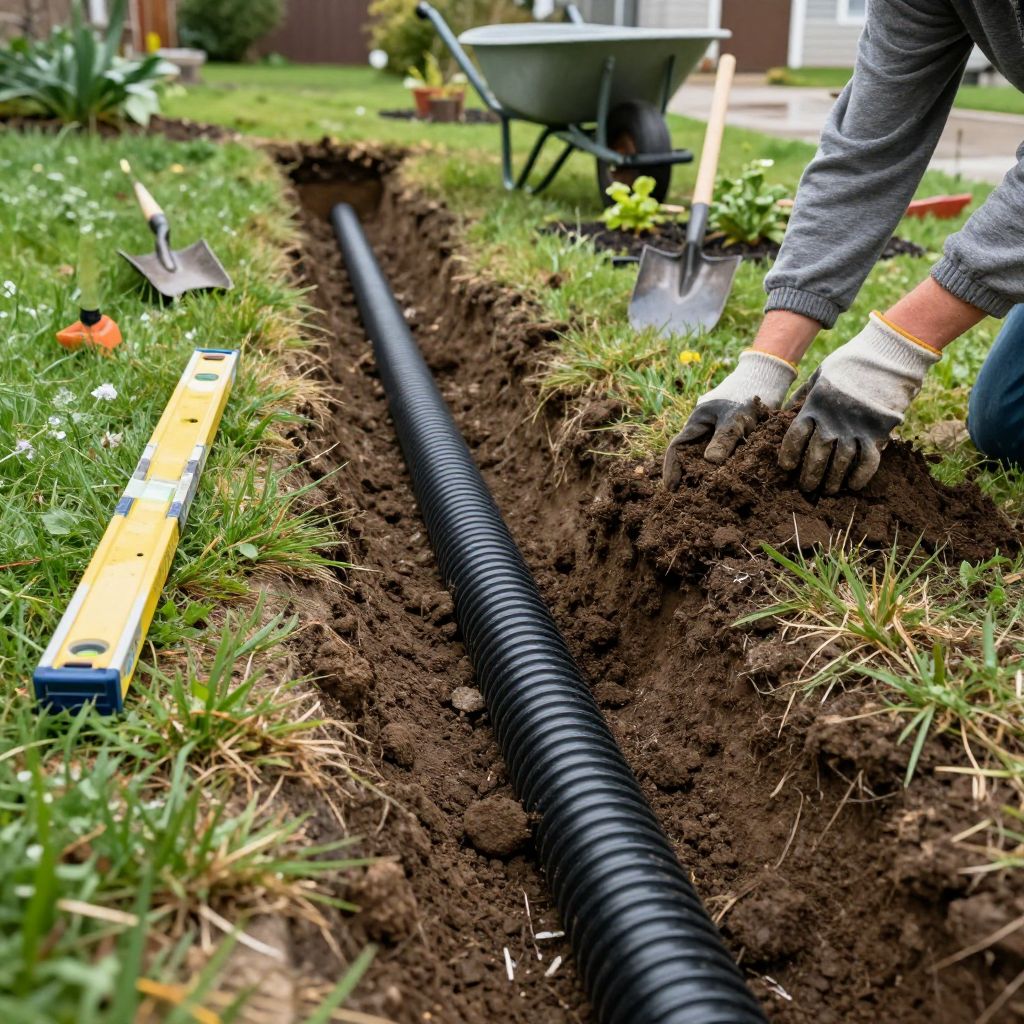
A French drain is a gravel-filled trench with a perforated pipe that collects and redirects excess water. It works well for persistent wet areas, especially where water needs to move away from a lawn, patio, or foundation.
When a French drain makes sense
- Water pools in the same spot after most rains
- The area is too wet for turf or planting
- You need to move water to a lower outlet point
- Surface grading alone has not solved the issue
Basic materials and tools
- Shovel or trenching spade
- Perforated drain pipe
- Washed gravel
- Landscape fabric
- Level or string line
- Rake and wheelbarrow
Step-by-step overview
- Plan the route so water can flow to a safe outlet.
- Dig a trench with a steady downward slope.
- Line the trench with landscape fabric.
- Add a base layer of gravel.
- Set the perforated pipe in place.
- Cover the pipe with more gravel.
- Fold fabric over the top, then add soil or sod.
The drain must have somewhere to discharge. A French drain that ends nowhere will simply store water underground and may fail during heavy rain.
Common French drain mistakes
- Not sloping the trench enough
- Using fine gravel or muddy fill that clogs the system
- Placing the outlet where water can return to the same area
- Skipping fabric in silty soil, which can shorten the drain’s life
Other practical yard drainage solutions do yourself gardeners can try
Swales
A swale is a shallow, broad channel that slows and redirects runoff. It is useful on gentle slopes where water moves too quickly and causes erosion.
Plant grass, sedges, or moisture-tolerant ornamentals along swales to help stabilize the soil and filter sediment.
Dry creek beds
A dry creek bed is both functional and decorative. It guides stormwater through a rock-lined path, helping prevent erosion while giving runoff a controlled route through the yard.
Use varied stone sizes, and make the bed look natural by curving it slightly rather than running it in a straight line.
Rain gardens
A rain garden is a shallow planted basin designed to catch and absorb runoff from roofs, driveways, or patios. It is a good choice where you want drainage help plus pollinator-friendly planting.
- Choose a spot that is not directly over septic components or too close to foundations.
- Use plants that tolerate both wet and dry periods.
- Shape the basin so water spreads out instead of forming a deep puddle.
Soil, slope, and planting choices that improve drainage
Choose plants suited to the moisture level
Not every wet area needs to be “fixed” with hardscape. Sometimes the smartest solution is to plant species that tolerate periodic wet feet. Match the plant to the site rather than forcing a dry-soil plant into a soggy bed.
For consistently damp areas, look for moisture-tolerant grasses, sedges, shrubs, and perennials appropriate to your climate. For drier edges, use plants that prefer well-drained soil so they do not decline from excess moisture.
Use compost carefully
Adding compost can improve structure and help sandy soil hold moisture more evenly, but it will not solve a drainage problem by itself. In heavy clay, repeated light topdressing is usually better than mixing in large amounts all at once.
Raised beds can help in wet gardens
If a planting area stays too wet for vegetables or herbs, raised beds are often the most reliable solution. They lift roots above the saturated zone and let you control the soil mix more easily.
How to tell whether your fix is working
After completing a drainage project, test it with a hose or wait for the next rain. Watch how quickly water moves, where it collects, and whether the soil stays saturated longer than expected.
- Water should move away from the house and low spots.
- Puddles should shrink faster after rainfall.
- Soil should feel moist, not swampy, a day or two later.
- Mulch and soil should stay in place instead of washing away.
If the problem persists, you may need a larger drainage route, a different outlet, or professional help for major grading issues.
Maintenance tips to keep drainage working
Even good drainage systems need occasional care. Leaves, sediment, and roots can reduce performance over time.
- Clear downspout outlets and grates regularly.
- Check gravel channels and swales after heavy storms.
- Replenish mulch where erosion exposes bare soil.
- Inspect for settling in filled low spots and top up as needed.
- Keep tree roots and dense weeds from clogging drains.
When to stop the DIY approach
Some drainage problems are too large or too close to structures for simple home fixes. If water enters the basement, undermines a foundation, floods repeatedly, or involves major slope correction, it is time to consult a drainage or landscaping professional.
Also be cautious if your yard drains toward a neighbor’s property, a septic field, or a public walkway. Water should be redirected legally and safely.
Conclusion
For most homeowners, the best yard drainage solutions do yourself projects begin with observation, then move to simple fixes like downspout extensions, grading, compost improvement, or a small French drain. Start with the least invasive option that fits your site, then test it after rain and adjust as needed.
For more help planning a healthier landscape, you may also find it useful to read about improving soil structure in the garden and choosing plants for wet areas.