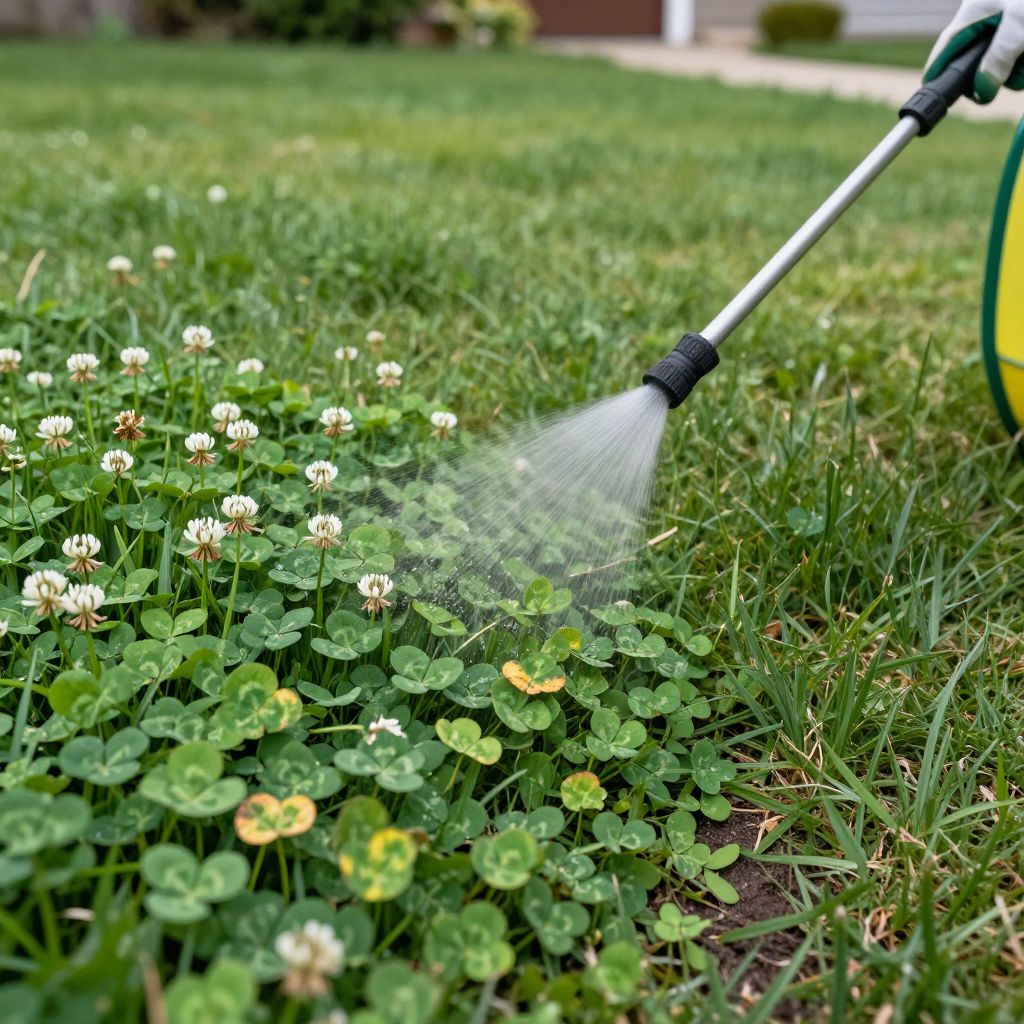
Does weed and feed kill clover? In many lawns, yes—it often damages or kills clover because the “weed” part is usually a broadleaf herbicide. Clover is a broadleaf plant, so it is commonly treated as a target along with dandelions and other lawn weeds.
That said, results depend on the product, the clover species, application rate, weather, and how healthy the lawn is. If you want to keep clover, you need to choose lawn products carefully and manage the turf in a way that reduces clover without creating bare, weedy patches.
Does weed and feed kill clover?
Usually, yes. Most weed and feed products contain a broadleaf herbicide designed to kill plants like clover, chickweed, plantain, and dandelion while leaving grasses alone. Clover may not die instantly, but it often yellows, curls, and thins out within days to a few weeks after treatment.
Some products are stronger than others, and a few “weed and feed” formulas are made for specific lawn types. Always read the label, because the active ingredients determine whether clover is likely to be controlled, suppressed, or mostly unaffected.
Why clover is vulnerable
Clover is a broadleaf legume, not a grass. Broadleaf herbicides are designed to disrupt broadleaf plants while sparing turf grasses such as Kentucky bluegrass, perennial ryegrass, tall fescue, and fine fescues.
Because clover grows low and spreads by stolons, it can sometimes survive a light application or recover from partial injury. But repeated exposure or a properly timed application often removes it from the lawn.
What happens to clover after weed and feed?
After treatment, clover usually shows visible stress first. Leaves may twist, discolor, or stop growing, and the patch can thin out as stems weaken. In some cases, the clover dies back while the grass remains.
If the lawn is thin, compacted, or low in nitrogen, clover may return quickly from nearby runners or seed. That is why weed and feed is often only a short-term fix unless you also improve the turf.
Common signs the product is working
- Leaf curling or cupping
- Yellowing or bronzing
- Stunted growth
- Patchy browning over 1–3 weeks
When weed and feed may not kill clover
Sometimes clover survives because the treatment was not ideal. Weather, mowing, irrigation, and the product formulation all affect results.
Reasons for poor control
- Wrong product: Some formulas are not strong enough for established clover.
- Too little coverage: Missed patches leave clover untouched.
- Rain or irrigation too soon: The herbicide may wash off before it is absorbed.
- Heat or drought stress: Stressed clover can be harder to control, and turf injury risk increases.
- Mow timing: Mowing too soon before or after treatment can reduce uptake.
If the label says to wait before mowing or watering, follow that guidance exactly. Label directions are product-specific and are the best source for safe, effective use.
How to use weed and feed more effectively
If your goal is to remove clover from an existing lawn, timing and lawn condition matter as much as the product itself. A healthy, dense turf competes better and makes future clover invasion less likely.
Best practices before application
- Mow a few days before treatment so clover has enough leaf area to absorb the herbicide.
- Apply only when the lawn and weeds are actively growing.
- Avoid application during extreme heat, drought, or when rain is expected too soon.
- Check the label for grass species compatibility, especially if you have a mixed or specialty lawn.
After application
- Keep people and pets off the lawn for the label-specified period.
- Do not mow immediately unless the label allows it.
- Watch for injury over the next 1–3 weeks.
- Reseed thin spots only when the label says it is safe to do so.
If you want to keep clover in your lawn
Not every gardener wants clover gone. Many people keep white clover, Trifolium repens, because it stays green, tolerates foot traffic reasonably well, and can help fill thin areas in a lawn.
If you want clover as part of a mixed lawn, avoid broadleaf weed and feed products. Instead, focus on lawn care practices that support grass while allowing clover to remain where you want it.
Better options for a clover-friendly lawn
- Use a grass-only fertilizer if your lawn needs feeding.
- Mow at a height that suits your grass type and local conditions.
- Water deeply but only when the lawn needs it, rather than keeping it constantly damp.
- Overseed thin areas to strengthen grass competition.
- Spot-treat only problem weeds instead of treating the whole lawn.
How to get rid of clover without harming the lawn more than necessary
If clover is spreading because the lawn is weak, the most effective long-term plan is to improve turf density. Clover often thrives where soil is low in nitrogen, compacted, or thin in grass cover.
Practical lawn improvements
- Feed the grass appropriately: A lawn with adequate nitrogen is usually less welcoming to clover.
- Reduce compaction: Aerate compacted soil if your lawn suffers from poor drainage or heavy foot traffic.
- Overseed thin spots: Bare soil invites clover and other weeds.
- Adjust mowing height: Cutting too short weakens grass and gives clover room to spread.
- Improve drainage: Clover often persists in damp, poorly drained areas where grass struggles.
Spot treatment vs. broadcast treatment
For small clover patches, spot treatment is often more practical than applying weed and feed across the whole lawn. This reduces herbicide use and lowers the risk of stressing healthy grass.
For larger infestations, a broadcast treatment may be needed, but only if the product label matches your grass type and the conditions are suitable.
Soil, drainage, and why clover shows up in the first place
Clover is not always a sign of failure, but it often points to lawn conditions that favor it over grass. Thin turf, low fertility, compacted soil, and uneven moisture all make clover more noticeable.
Before reaching for weed and feed, check whether the lawn needs better drainage, more organic matter, or a different mowing routine. A little compost topdressing can help improve soil structure over time, especially in sandy or compacted lawns, but use it lightly so you do not smother the grass.
What to look for in problem areas
- Puddling after rain or irrigation
- Thin grass with exposed soil
- Hard, compacted ground
- Pale turf that may need nutrients
- Repeated weed pressure in the same spots
Common mistakes to avoid
Many lawn problems after weed and feed come from rushing the process or using the wrong product for the situation. A careful approach usually works better than repeated applications.
- Applying to a drought-stressed lawn: This can injure grass and reduce weed control.
- Using a product not labeled for your grass type: Some lawns are more sensitive than others.
- Expecting instant results: Clover often takes time to decline.
- Overapplying: More product does not mean better control and may damage turf.
- Ignoring lawn health: Clover returns quickly where grass is weak.
When to choose another approach
Weed and feed is not always the best answer. If you have a mixed lawn, a pollinator-friendly yard, or a desire to keep clover intentionally, a blanket herbicide treatment may work against your goals.
In those cases, use targeted weed control, overseeding, better mowing, and soil improvement instead. If you are unsure about the exact product or your grass type, test on a small area first or ask your local extension office for guidance.
Conclusion
So, does weed and feed kill clover? In most lawns, yes—it is commonly designed to do exactly that. For the best results, use a product labeled for your grass type, apply it under suitable weather conditions, and strengthen the lawn so clover has less room to return.
If you want to dig deeper into lawn care, you may also find it helpful to read about lawn maintenance basics and practical weed control in home landscapes.