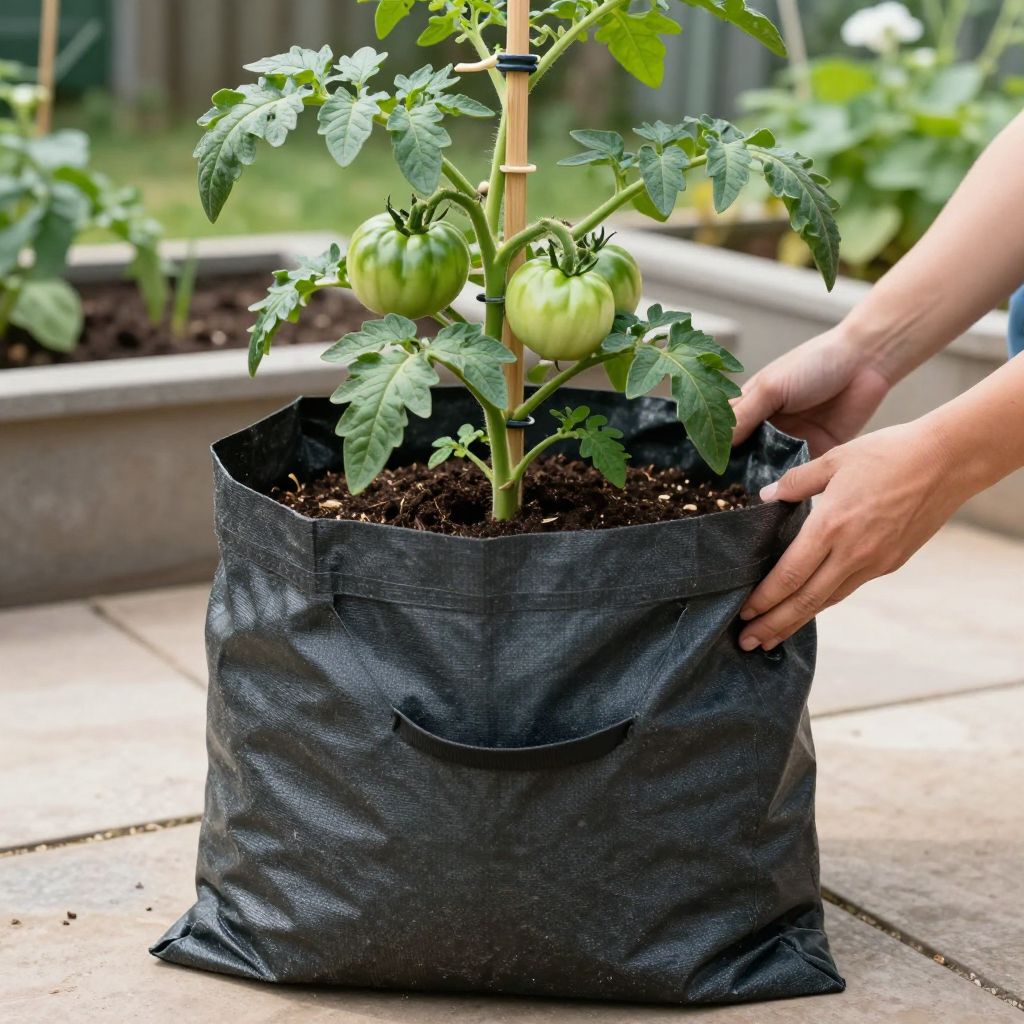
What size grow bag for tomatoes is best? For most tomato plants, a 10- to 15-gallon grow bag is the sweet spot, with 20 gallons or more ideal for large indeterminate varieties. Smaller determinate or patio tomatoes can manage in 5 to 7 gallons, but bigger bags usually mean steadier moisture, healthier roots, and better fruiting.
The right size depends on the tomato type, your climate, and how often you can water. A grow bag is forgiving, but tomatoes are heavy feeders and thirsty plants, so choosing enough root space makes a noticeable difference in growth and harvest quality.
What size grow bag for tomatoes?
For most home gardeners, a 10-gallon grow bag is the minimum practical size for one tomato plant, while 15 gallons is often better for reliable moisture and root development. Large indeterminate tomatoes do best in 20-gallon bags or larger, especially in hot, windy, or very sunny locations.
How tomato type affects grow bag size
Tomato size and growth habit matter more than many beginners realize. A compact bush tomato does not need the same root room as a tall, vining indeterminate plant that keeps growing and producing for months.
Determinate tomatoes
Determinate tomatoes grow to a set size and tend to fruit over a shorter period. They can work in 5- to 7-gallon bags, but 10 gallons gives you more margin for watering and nutrient stability.
Indeterminate tomatoes
Indeterminate tomatoes keep growing and setting fruit until frost or disease stops them. These plants are much happier in 10- to 15-gallon bags at minimum, and often perform best in 20-gallon containers if you want strong root growth and fewer watering problems.
Cherry, patio, and dwarf tomatoes
Smaller-fruited tomatoes and dwarf varieties can be grown in smaller bags than beefsteak types. Even so, a slightly larger bag often improves consistency, especially during hot weather when small containers dry out quickly.
Grow bag size recommendations at a glance
- 5 gallons: Only for very compact tomatoes, short-season use, or one small plant with close attention to watering.
- 7 gallons: Suitable for compact determinate or dwarf tomatoes if you can water and feed regularly.
- 10 gallons: A solid all-purpose choice for most tomatoes.
- 15 gallons: Excellent for indeterminate tomatoes and gardeners in warm climates.
- 20 gallons or larger: Best for vigorous indeterminate plants, multiple stakes, or very hot and dry conditions.
Why bigger grow bags usually work better for tomatoes
Tomatoes in grow bags depend on you for water, nutrients, and root space. A larger bag gives the plant more buffer against heat stress and drying out, which can reduce blossom drop, leaf curl, and uneven fruit development.
Benefits of more root room
- More stable moisture between waterings
- Better nutrient retention in the potting mix
- Less stress during hot spells
- Stronger root systems and better plant support
- Lower risk of stunting from cramped roots
In a small grow bag, tomatoes can still grow, but they may need frequent watering and feeding. If you miss a day or two during hot weather, the plant can quickly suffer.
How climate changes the best bag size
Your local weather should influence your decision. The same tomato variety may do fine in a 10-gallon bag in a cool, mild climate but struggle in a smaller bag where summer heat is intense.
Hot, dry, or windy climates
Choose larger bags, 15 to 20 gallons, because they dry out faster and heat up more quickly. Dark-colored bags can warm the root zone even more, so monitor moisture closely.
Cooler or mild climates
In cooler regions, a 10-gallon bag is often enough for most tomatoes, especially if the plant receives full sun and the season is long enough for fruit to ripen.
Small spaces and balconies
If space is tight, use the largest bag that fits safely on your patio, balcony, or deck. A slightly larger bag is usually worth the extra room if it means fewer watering problems and better harvests.
What to plant in each bag size
5-gallon bags
Best for compact determinate varieties, dwarf tomatoes, or single small plants. Use these only if you can water often and provide steady support.
10-gallon bags
Good for most standard tomato plants. This is the best starting point if you want a simple, reliable setup without going too large.
15- to 20-gallon bags
Ideal for vigorous indeterminate tomatoes, large-fruited slicing types, or gardeners who want fewer watering headaches. These sizes also give you more room for companion planting at the edges, though tomatoes usually do best alone in the bag.
How to plant tomatoes in a grow bag
- Choose a bag with strong handles and good drainage.
- Place it where it will get at least 6 to 8 hours of direct sun.
- Fill with a quality potting mix, not garden soil.
- Mix in compost if your potting mix is lean, but keep it light and airy.
- Plant the tomato deeply, burying part of the stem to encourage extra roots.
- Install a stake, cage, or trellis at planting time so you do not disturb roots later.
- Water thoroughly until moisture runs from the bottom of the bag.
Tomatoes can root along buried stems, so deep planting is helpful in grow bags. Remove lower leaves before planting if needed so the stem can be set deeper without burying foliage.
Best soil mix for tomato grow bags
Use a light, well-draining potting mix designed for containers. Tomato roots need air as much as they need water, and heavy garden soil can compact in a bag and reduce root health.
What to look for in a mix
- Good drainage and aeration
- Moisture retention without becoming soggy
- Enough organic matter to hold nutrients
- No dense clay soil or unamended topsoil
If you want to improve your mix, add compost in moderation. Too much compost can make the bag too rich or too water-retentive, so aim for balance rather than overloading the container.
Watering tomatoes in grow bags
Watering is one of the biggest reasons tomato grow bags succeed or fail. Bags dry out faster than in-ground beds, especially in sun and wind, so check moisture often instead of following a fixed schedule.
How to check moisture
Stick your finger 1 to 2 inches into the mix. If it feels dry at that depth, water deeply. If it still feels moist, wait and check again later.
Watering mistakes to avoid
- Letting the bag dry out completely
- Giving tiny sips instead of a deep soak
- Watering only the surface
- Allowing the bag to sit in standing water
Uneven watering can lead to blossom-end rot, fruit cracking, and poor fruit set. Consistent moisture is especially important once flowers and developing fruit appear.
Feeding tomatoes in grow bags
Because grow bags hold a limited amount of soil, nutrients can be used up faster than in the ground. Tomatoes usually benefit from regular feeding, but the exact approach depends on the potting mix and how quickly the plant is growing.
Practical feeding approach
- Start with a mix that contains some compost or slow-release nutrients.
- Watch plant color and growth rather than feeding blindly.
- If growth slows or leaves pale, consider a balanced container fertilizer according to the label.
- Once flowering and fruiting are underway, avoid overdoing nitrogen, which can push leafy growth at the expense of fruit.
Always follow the product label for rates and timing. Container plants can be overfed more easily than garden plants, so less is often safer than more.
Support, pruning, and plant care
Even in a grow bag, tomatoes need support. A bag alone will not hold up a heavy plant loaded with fruit, and top-heavy vines can tip over in wind.
Support options
- Wire tomato cages for compact plants
- Stakes tied with soft garden ties
- Trellises or string systems for indeterminate varieties
Pruning tips
Light pruning can improve airflow, especially in dense indeterminate plants. Remove lower leaves that touch the soil and any damaged foliage, but do not strip the plant bare. A little leaf cover helps protect fruit from sunscald.
Common problems with tomatoes in grow bags
Plants wilt in the afternoon
This often means the bag is drying too fast. Move the bag if possible, mulch the surface with a light layer of compost or straw, and check moisture more often.
Leaves turn yellow
Yellowing can come from underwatering, nutrient shortage, or root stress. Check the soil first, then consider whether the plant needs feeding or a larger bag next time.
Blossom-end rot appears
This is usually linked to inconsistent watering, not just calcium deficiency. Keep moisture even and avoid letting the bag swing between very dry and very wet.
Fruit cracks or splits
Sudden changes in watering after dry spells can cause splitting. Harvest ripe fruit promptly and keep watering steady as fruit matures.
Pests and diseases to watch for
Container tomatoes can still get the same pests and diseases as garden tomatoes. Good spacing, airflow, and clean watering habits help reduce problems.
- Aphids: Check new growth and undersides of leaves.
- Whiteflies: Common in warm, sheltered spots.
- Hornworms: Can strip foliage quickly, so inspect plants often.
- Early blight and leaf spots: Remove affected lower leaves and avoid wetting foliage.
Because grow bags are portable, you can sometimes move a struggling plant to improve airflow or sun exposure. That flexibility is one of the biggest advantages of container growing.
Can you reuse a grow bag for tomatoes?
Yes, but refresh it properly. Empty old soil if it is depleted, compacted, or disease-prone, then wash the bag if needed and refill with fresh potting mix or a renewed blend. Reusing the same soil without improvement can reduce performance over time.
When to replace the mix
If your plants repeatedly show weak growth, poor drainage, or disease issues, start with fresh mix. Healthy containers are much easier to manage when the root zone begins clean and airy.
Final tips for choosing the right size
If you are unsure what size grow bag for tomatoes to buy, choose one size larger than you think you need. Tomatoes reward extra root room, and a slightly bigger bag usually means less stress, fewer watering problems, and better harvests.
For most gardeners, 10 to 15 gallons is the best answer. If you grow large indeterminate tomatoes or live in a hot climate, go bigger. If you want more container gardening advice, it also helps to read about how to choose the best potting mix for vegetables and supporting tomatoes with cages, stakes, and trellises.