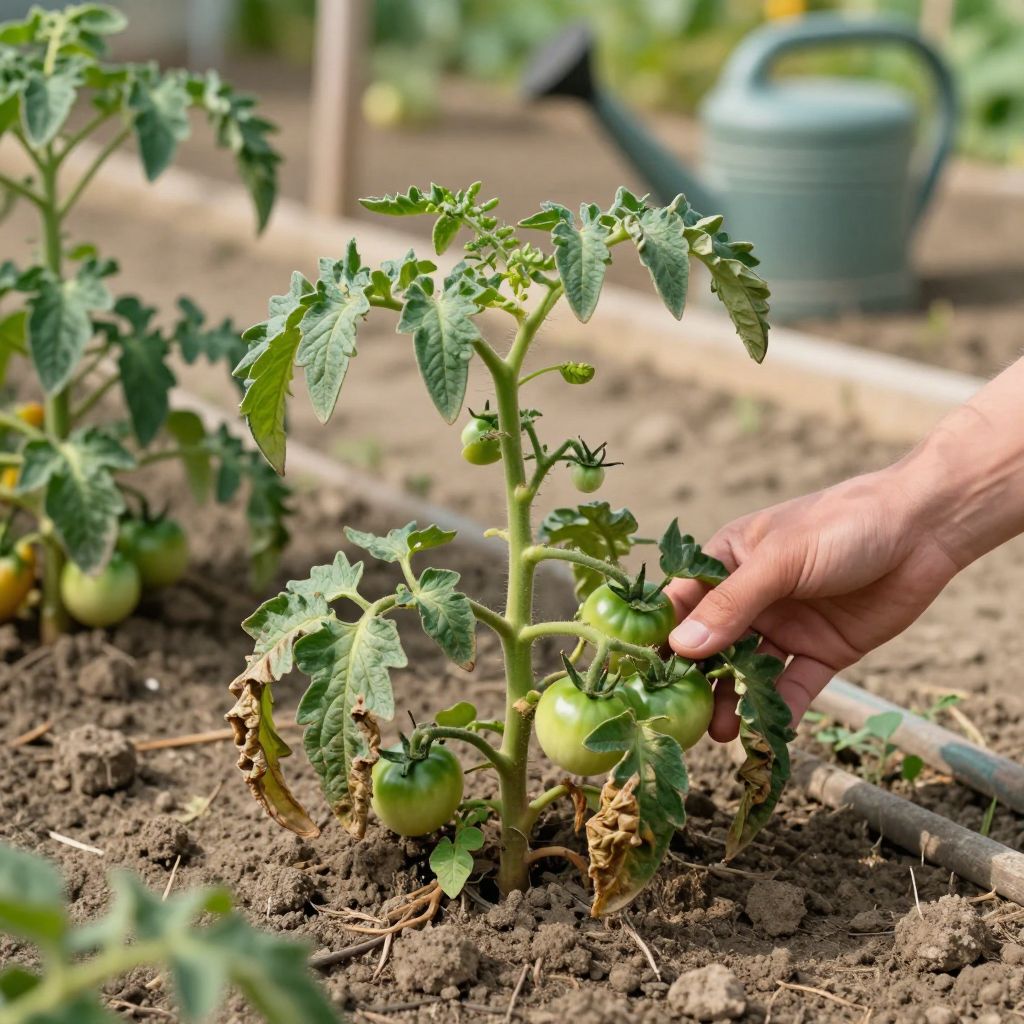
Why is my tomato plant wilting? In most cases, wilting means the plant can’t move enough water from the roots to the leaves, or the roots are under stress. That stress may come from heat, inconsistent watering, root damage, disease, pests, or a pot that’s too small.
The good news is that wilting is often reversible if you catch it early. The key is to look closely at when the plant wilts, how the leaves look, and whether the soil is too dry, too wet, or simply not supporting the roots well enough.
Why is my tomato plant wilting?
Tomato plants wilt when water uptake is interrupted. The most common causes are underwatering, overwatering, heat stress, transplant shock, root problems, and vascular diseases like fusarium or verticillium wilt. Check the soil, stems, and leaves first, then match the symptoms to the cause before you water or treat anything.
Start with the soil and watering
Before assuming disease, feel the soil 2 to 3 inches below the surface. If it’s dry, the plant may simply need a deep watering. If it’s soggy, roots may be struggling from poor drainage or overwatering.
Underwatering
Tomatoes need consistent moisture, especially while flowering and fruiting. Dry soil can cause leaves to droop in the heat of the day, then recover in the evening.
- Water slowly at the base so moisture reaches the root zone.
- Soak deeply rather than giving frequent shallow splashes.
- Add 2 to 3 inches of mulch to slow evaporation and buffer soil temperature.
Important: If the plant perks up overnight, drought stress is more likely than a serious wilt disease.
Overwatering and poor drainage
Tomatoes need moisture, but they do not like waterlogged soil. When roots sit in saturated ground, they may suffocate and stop functioning properly.
- Make sure containers have drainage holes.
- Empty saucers under pots after watering.
- In beds, avoid compacted soil and low spots where water collects.
- Mix in compost to improve structure, but don’t create a heavy, muddy planting hole that traps water.
If the soil stays wet for days, pause watering and improve drainage before doing anything else.
Could heat or sun be causing the wilting?
Yes. On very hot afternoons, tomato leaves may droop even when the soil is moist. This is a protective response to reduce water loss, and the plant may recover in the evening. Young transplants are especially vulnerable during sudden heat or strong wind.
How to tell heat stress from a real problem
- Heat stress often appears only during the hottest part of the day.
- The plant usually looks normal in the morning.
- Leaves may curl slightly but remain green and firm.
To help, water early in the day, mulch well, and give temporary afternoon shade during extreme heat if your climate allows it. Container tomatoes dry out much faster than in-ground plants, so they often need closer monitoring.
Is transplant shock the reason my tomato plant is wilting?
Recently transplanted tomatoes often wilt for a few days while roots settle into the new soil. This is common after planting seedlings outdoors or moving a plant into a larger container.
What helps transplants recover
- Water deeply immediately after planting.
- Keep the soil evenly moist, not soggy, for the first week or two.
- Protect from harsh afternoon sun and wind if possible.
- Avoid heavy fertilizing until you see new growth.
If the plant was root-bound in a pot, gently loosen circling roots before planting so they can grow outward.
Check the roots if the plant keeps wilting
When wilting doesn’t improve after watering, the root system may be damaged. Roots can be restricted by a too-small pot, compacted soil, root rot, or pests feeding underground.
Container-grown tomatoes
Tomatoes in small containers dry out fast and can become root-bound. If roots fill the pot, the plant may wilt even with regular watering because there isn’t enough soil to hold moisture.
- Move the plant to a larger container if roots are circling densely.
- Use a pot large enough for the mature plant and water-holding capacity.
- Choose a potting mix made for containers, not garden soil.
In-ground tomatoes
In beds, compacted clay or repeatedly wet soil can limit oxygen around the roots. If the area drains poorly, consider raised beds, broader spacing, or amending the soil with organic matter over time.
Look for disease if wilting is one-sided or persistent
Some tomato wilts are caused by soil-borne diseases that block water movement inside the plant. These problems are more serious because they do not usually reverse with watering.
Fusarium wilt and verticillium wilt
These diseases often cause yellowing and wilting that may start on one side of the plant or on lower leaves first. The plant may look stressed even when soil moisture is adequate.
- Leaves may yellow, then brown and dry.
- The plant may wilt during the day and fail to recover.
- Older plants are often affected as the disease progresses.
If you suspect a soil-borne wilt, remove the plant if it is clearly declining and avoid replanting tomatoes or other susceptible crops in that spot immediately. Rotate crops and use resistant varieties when available.
Bacterial wilt and other serious infections
Some bacterial diseases can cause rapid collapse. If a healthy-looking plant suddenly wilts and dies back, especially in warm, humid conditions, disease is a strong possibility.
Because symptoms can overlap, it helps to compare the whole plant: leaves, stems, soil moisture, and whether neighboring plants are affected.
Could pests be making the tomato plant wilt?
Yes. Insects and other pests can damage stems, roots, or leaves enough to cause wilting. Check both the top and underside of the plant, and inspect the stem near the soil line.
Common pest problems to inspect
- Cutworms: seedlings may suddenly droop or be severed near the base.
- Stalk borers or stem borers: may tunnel into stems and interrupt water flow.
- Aphids and whiteflies: usually weaken plants, especially when infestations are heavy.
- Root-knot nematodes: can cause stunting and wilting, often with swollen or galled roots.
If you find chewing damage or holes in stems, prune out badly damaged tissue only if the plant still has healthy growth above it. For root problems, gently lift the plant if needed and check for swollen, damaged, or sparse roots.
Pruning, staking, and plant stress
Tomatoes can wilt more easily when they are overloaded with fruit, poorly supported, or heavily pruned during hot weather. A stressed plant has to work harder to move water through its stems and leaves.
Support matters
Use cages, stakes, or trellises so stems stay upright and air can move through the plant. Good support reduces breakage and helps leaves dry faster after watering or rain.
Avoid over-pruning
Removing too many leaves can expose fruit and stems to intense sun and increase stress. Prune lightly and only as needed to improve airflow or remove diseased tissue.
Tip: If a plant is already wilting, hold off on major pruning until it stabilizes.
How to troubleshoot a wilting tomato plant step by step
- Check the soil 2 to 3 inches down.
- Look at the timing: morning, midday, or all day?
- Inspect leaves for yellowing, spots, or curling.
- Examine the stem near the base for damage or discoloration.
- Look for pests on stems, undersides of leaves, and around roots.
- Confirm the container has drainage or the bed drains well.
- Compare nearby plants to see whether the problem is isolated or spreading.
If the plant wilts only during heat and recovers later, focus on moisture and shade. If it wilts constantly and the soil is fine, suspect disease, root damage, or pests.
How to help a wilting tomato plant recover
Once you identify the cause, act quickly but carefully. Tomatoes can bounce back from water stress, transplant shock, and heat stress, but they may not recover from advanced wilt diseases.
- Water deeply at the base, then recheck soil moisture the next day.
- Add mulch to reduce evaporation and soil temperature swings.
- Improve drainage in pots and beds if the soil stays wet too long.
- Stake or cage the plant so stems are not strained.
- Remove only clearly dead or diseased leaves and stems.
If the plant is in a container and the mix dries out too fast, consider repotting into a larger container with fresh mix. If the plant is in the ground and the area is chronically wet, raised beds or a different planting spot may be the long-term fix.
How to prevent tomato wilting next time
Prevention starts before planting. Healthy roots and steady growing conditions make a big difference in how well tomatoes handle stress through the season.
- Choose a sunny site with at least 6 to 8 hours of direct sun where possible.
- Use well-draining soil enriched with compost.
- Space plants so air can move around them.
- Water consistently, especially during dry spells and fruiting.
- Mulch after the soil has warmed.
- Rotate crops to reduce disease buildup in the soil.
Also, clean up old plant debris at the end of the season. Diseased stems and leaves left in the garden can carry problems into the next year.
When to remove the plant
If a tomato plant continues to wilt despite proper watering, has spreading yellowing, or shows clear signs of vascular disease, removal may be the best option. This is especially true if the plant is collapsing and producing little healthy growth.
Pulling a badly diseased plant early can protect nearby tomatoes and help break the cycle of soil-borne problems. Dispose of infected material according to local garden guidance rather than composting it if disease is suspected.
If you want to dig deeper into tomato care, it also helps to read about tomato plant care basics and common tomato diseases and how to spot them so you can prevent wilting before it starts.