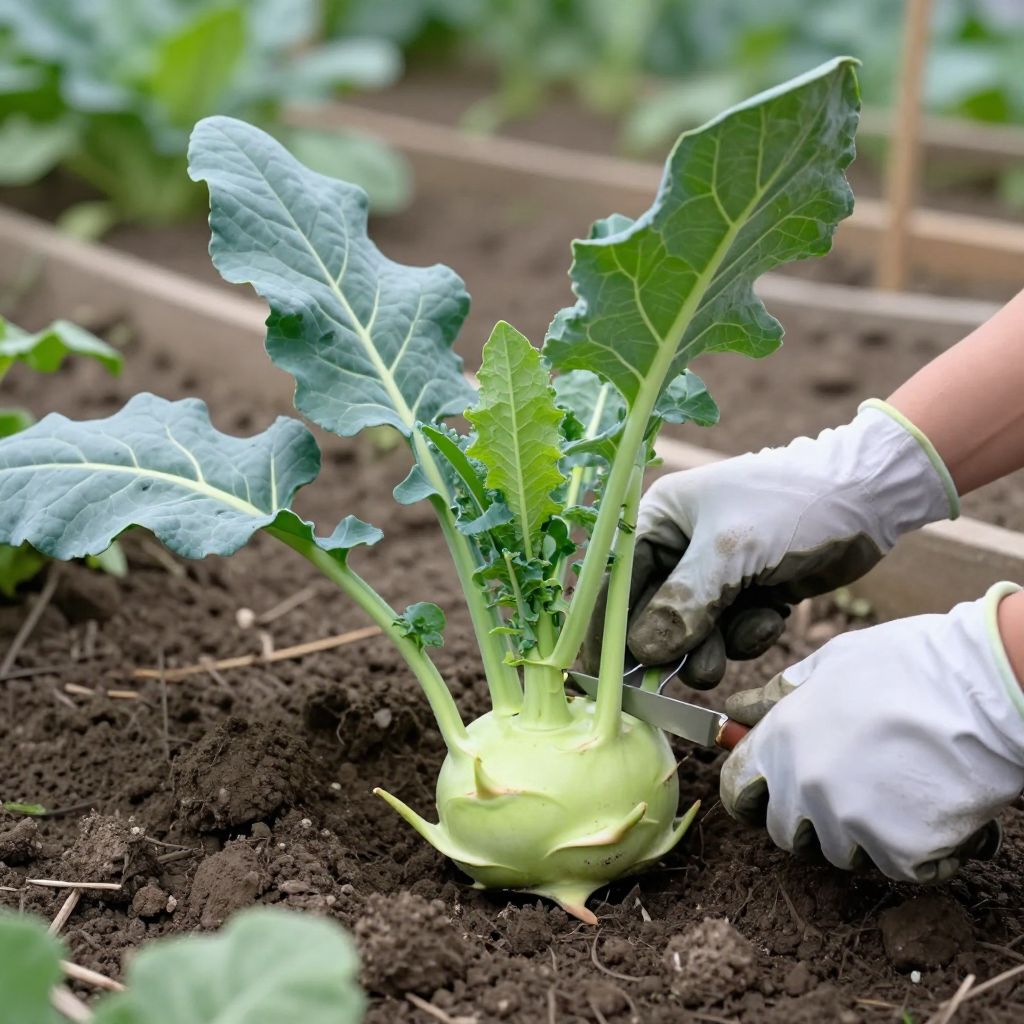
Wondering when to harvest kohlrabi so it’s tender, sweet, and not woody? The short answer is to harvest it when the swollen stem is still young and firm, usually when it reaches about 2 to 3 inches across for the best flavor. If you wait too long, the bulb can become tough, fibrous, and overly pungent.
Timing matters because kohlrabi grows fast, and the edible stem enlarges quickly in cool weather. With a little observation, you can pick it at the right stage and enjoy crisp, mild bulbs instead of oversized, stringy ones.
When to harvest kohlrabi?
Harvest kohlrabi when the swollen stem base is about 2 to 3 inches wide, feels firm, and still tastes crisp and mild. Most varieties are best picked before they reach 4 inches across, because larger bulbs often turn woody. Check the size, texture, and leaf condition rather than relying on calendar days alone.
How to tell kohlrabi is ready
Kohlrabi is a cool-season brassica, and its harvest window is fairly short. The plant tells you a lot if you know what to look for.
Size is the first clue
- Best eating size: about 2 to 3 inches across
- Still acceptable for many types: up to about 4 inches across
- Often too mature: larger than 4 inches, especially in warm weather
If you are unsure, gently brush away soil around the base and measure the swollen stem. The above-ground bulb-like portion should be round or slightly flattened, depending on the variety.
Texture and firmness matter
A ready kohlrabi feels solid and dense, not soft or spongy. The skin should be smooth and the plant should still look vigorous. If the stem has become hard and the outer skin seems thick, it is likely past peak tenderness.
Leaves can help you judge timing
Young leaves are edible too, but the plant’s overall look gives clues. When kohlrabi is growing well, the leaves are upright and healthy. If the plant starts to bolt, or send up a flower stalk, the edible stem can become tougher quickly.
How long does kohlrabi take to mature?
Many kohlrabi varieties are ready in roughly 45 to 60 days from sowing, but that depends on weather, soil fertility, moisture, and variety. Cool conditions usually produce the best flavor. Warm spells can speed up growth but also make the bulbs more likely to become fibrous.
Why days to maturity are only a guide
Seed packets give a useful estimate, but your garden may not match the average. Fast growth in rich soil can make plants ready sooner, while cool, cloudy weather may slow them down. Always combine the packet timing with actual bulb size.
What happens if you harvest kohlrabi too late?
Overmature kohlrabi is the most common harvesting mistake. The swollen stem becomes woody, pithy, or stringy, and the flavor can turn sharp or bitter. Once that happens, peeling may remove a lot of usable flesh, and the texture may never fully improve.
Signs it has gone past peak
- The bulb feels very hard and heavy
- The skin is thick or tough
- The inside looks fibrous when cut
- The flavor is strong, bitter, or peppery
- The plant has started to bolt
How to harvest kohlrabi step by step
Harvesting is simple, but a clean cut helps protect the plant and keeps the bulb in good condition if you plan to store it briefly.
- Choose a cool part of the day if possible, such as morning.
- Check that the bulb is the size you want, usually 2 to 3 inches across.
- Loosen soil around the base if the plant is tightly anchored.
- Use a sharp knife, pruning knife, or garden shears to cut the stem just above the root.
- Trim off the leaves, leaving a short stem if you are storing the bulb.
- Brush off excess soil, but do not wash unless you plan to use it soon.
If the plant is young and tender, you can sometimes pull it gently from loose soil, but cutting is usually cleaner and safer for the edible portion.
Can you harvest kohlrabi leaves too?
Yes. The leaves are edible, especially when young and tender. You can snip a few outer leaves while the plant is still growing, but avoid stripping too many at once because the plant needs foliage to keep bulking up.
Best way to use leaf harvests in the garden
Take only the outer leaves and leave the center growing point intact. This gives you a small bonus harvest without slowing bulb development too much. Older leaves can become tougher, so pick them earlier if you want the best texture.
Harvesting by season and weather
Kohlrabi usually performs best in cool weather, so harvest timing often depends on the season in your area. In spring, plants can mature quickly as temperatures rise. In fall, growth may be steadier, and bulbs can stay tender longer if frosts are light.
Watch for heat stress
Hot weather can cause kohlrabi to rush toward flowering or become coarse. If a warm spell is coming and your bulbs are already near harvest size, pick them early rather than risk losing quality.
What about frost?
Light frost is often tolerated by kohlrabi, and some gardeners find the flavor improves slightly in cool conditions. However, a hard freeze can damage the plant and reduce storage quality, so harvest before severe cold if your region is heading into winter.
Common harvest mistakes to avoid
- Waiting for very large bulbs: bigger is not better with kohlrabi.
- Ignoring texture: size alone does not guarantee tenderness.
- Letting plants bolt: flowering usually means quality is dropping fast.
- Harvesting in stressed soil: drought can make bulbs tougher.
- Pulling too roughly: this can split the stem or damage nearby plants.
Growing conditions that affect harvest quality
Good harvests start with good growing conditions. Kohlrabi prefers fertile, well-drained soil with steady moisture and full sun to light shade. Uneven watering is one of the biggest reasons bulbs become woody or develop poor texture.
Soil and moisture
Loose, compost-rich soil helps the stem expand evenly. If the soil dries out and then gets soaked repeatedly, growth can become irregular. Aim for consistent moisture so the plant can size up smoothly.
Spacing and airflow
Plants that are crowded may compete for moisture and nutrients, which can affect bulb size and speed. Good spacing also helps reduce disease pressure, especially in damp weather.
Storing kohlrabi after harvest
Kohlrabi is best eaten fresh, but it can store for a short time if handled well. Remove the leaves soon after harvest, because they draw moisture from the bulb and shorten storage life.
Short-term storage tips
- Store unwashed bulbs in the refrigerator
- Keep them in a perforated bag or loose container
- Use them within about 1 to 2 weeks for best quality
- Store leaves separately and use them sooner
If you want the crispest texture, refrigerate the bulbs as soon as possible after harvesting. The longer they sit warm, the more moisture they lose.
What if your kohlrabi is already too big?
If the bulb has grown larger than ideal, cut one open before assuming it is unusable. Sometimes the outer layer is tough but the inner portion is still edible. Peel thickly, remove any fibrous sections, and check the flavor and texture.
When to discard it
If the center is very stringy, dry, or woody, it may not be worth saving for fresh eating. In that case, compost the plant or use the leaves if they are still tender enough.
Quick harvest checklist
- Bulb is about 2 to 3 inches across
- Stem feels firm and heavy
- Skin is still smooth
- No flower stalk is forming
- Flavor should still be mild and crisp
Conclusion
The best time to harvest kohlrabi is when the swollen stem is young, firm, and about 2 to 3 inches across. Check your plants often, especially in warm weather, because they can go from tender to woody quickly. If in doubt, harvest a little early rather than a little late.
For more practical vegetable-growing guidance, you may also find it helpful to read about how to grow brassicas successfully and harvesting cool-season vegetables at peak flavor.