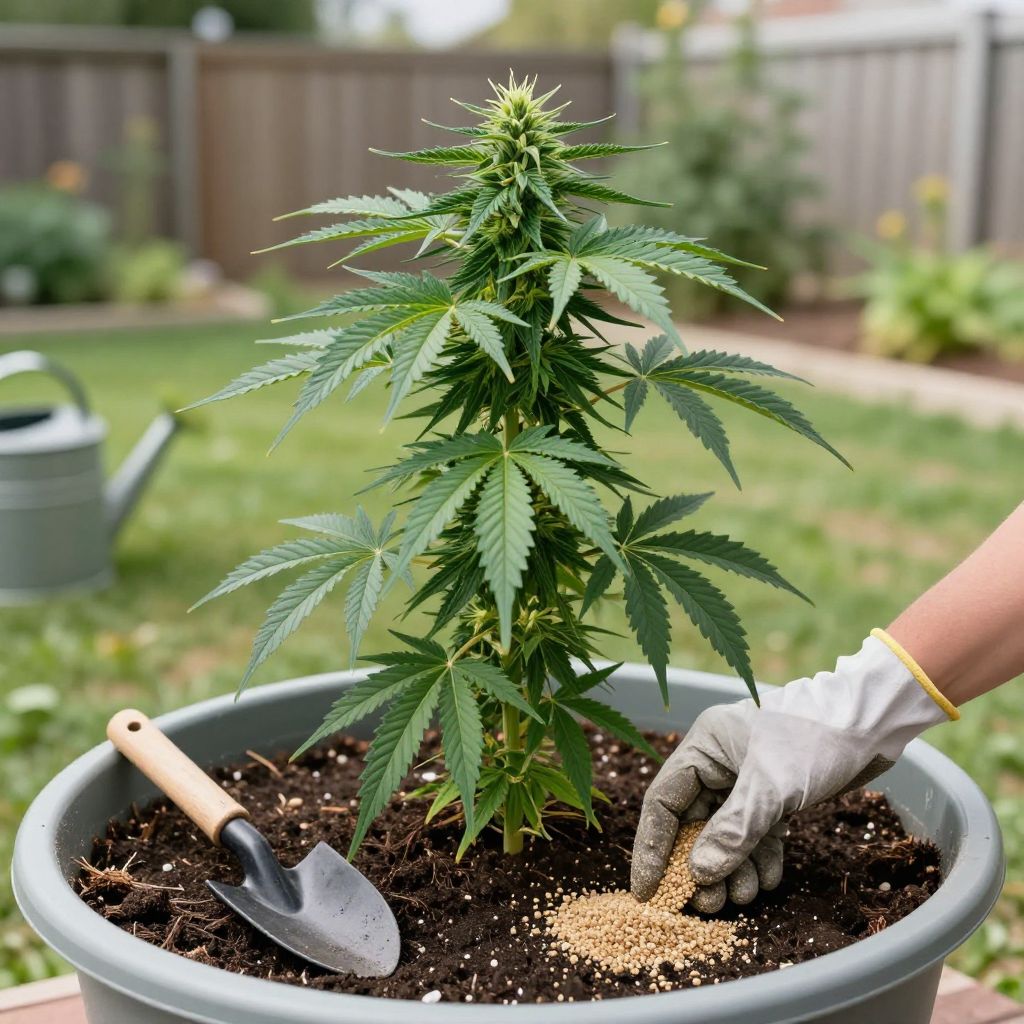
Wondering what is the best fertilizer for marijuanas plants? The short answer is that cannabis grows best with a balanced fertilizer that matches its growth stage, plus a well-aerated soil or soilless mix that drains well. In vegetative growth, plants usually need more nitrogen; during flowering, they need less nitrogen and relatively more phosphorus and potassium.
The “best” fertilizer is not a single brand or formula. It’s the one that fits your medium, your watering habits, and your plant’s stage of growth without overfeeding or causing salt buildup.
What Is The Best Fertilizer For Marijuanas Plants?
The best fertilizer for marijuanas plants is a complete, stage-appropriate fertilizer with a balanced N-P-K ratio and essential micronutrients, used lightly and adjusted to the plant’s growth phase. Seedlings need very little feeding, vegetative plants usually want more nitrogen, and flowering plants need reduced nitrogen with stronger phosphorus and potassium support.
Understand the plant before you feed it
Before choosing fertilizer, identify whether your plant is a seedling, in vegetative growth, or flowering. Feeding needs change quickly, and the wrong fertilizer at the wrong time can slow growth, burn roots, or reduce flower quality.
Vegetative stage
During leafy growth, cannabis generally benefits from a fertilizer with a higher nitrogen level. Nitrogen supports stem and leaf development, which helps the plant build a strong structure before flowering.
Flowering stage
Once flowering begins, reduce nitrogen and shift toward a formula that supports bloom development. A fertilizer with moderate phosphorus and potassium is commonly used, but avoid assuming “more is better.” Excess fertilizer can cause nutrient lockout and stressed roots.
Seedlings and clones
Young plants often do best with very mild feeding or none at all if the potting mix already contains nutrients. Tender roots are easy to burn, so start conservatively and watch the leaves closely.
Choose the right type of fertilizer
Different fertilizer types work well for cannabis, but each has strengths and tradeoffs. Your best choice depends on whether you grow in soil, coco coir, or a hydroponic system.
Liquid fertilizers
Liquid fertilizers are popular because they are easy to adjust. They work well when you want to respond quickly to plant needs, especially in containers or indoor grows.
- Fast to absorb
- Easy to dilute for young plants
- Useful for correcting mild deficiencies
Dry or granular fertilizers
Dry fertilizers and slow-release blends can be useful in outdoor soil beds or large containers. They are convenient, but they release nutrients more gradually and are harder to correct if you overapply them.
Organic fertilizers
Organic options such as compost, worm castings, fish emulsion, kelp meal, and bat guano can improve soil life and structure. They are often gentler, but they still need to be used carefully because too much organic matter can create imbalance or poor drainage.
Mineral fertilizers
Mineral or synthetic fertilizers offer precise control and are common in indoor growing. They can be very effective, but they also make overfeeding easier if you do not monitor runoff, pH, and leaf response.
What to look for on the label
Instead of chasing a single “best” product, read the label and match it to your plant’s stage. A good cannabis fertilizer should provide the primary nutrients plus secondary and trace elements.
- Nitrogen (N) for leafy growth and overall vigor
- Phosphorus (P) for root and flower development
- Potassium (K) for plant function, stress tolerance, and bloom support
- Calcium and magnesium for strong growth, especially in coco or soft water setups
- Micronutrients such as iron, manganese, zinc, and boron
If you are growing in a soilless medium like coco coir, calcium and magnesium are especially important. In rich organic soil, you may need less bottled fertilizer because the medium already provides some nutrition.
Soil, drainage, and pH matter as much as fertilizer
Even the best fertilizer for marijuanas plants will not help much if the roots are sitting in soggy soil or if pH is off. Healthy roots need oxygen, consistent moisture, and a medium that drains well.
Use a loose, airy medium
A cannabis plant generally performs better in a light mix that includes quality potting soil, compost, perlite, or other aeration material. Heavy, compacted soil can trap water and reduce nutrient uptake.
Keep pH in the proper range
pH affects how well plants absorb nutrients. If pH drifts too far, leaves may show deficiency symptoms even when fertilizer is present. Check your medium and water source regularly, and adjust based on the growing system you use.
Avoid salt buildup
Frequent feeding with mineral fertilizer can leave salts in the root zone. If leaves tip burn or runoff becomes unusually strong, pause and reassess your feeding strength and watering method.
How to feed cannabis without overdoing it
Most feeding problems come from applying too much fertilizer too soon. Cannabis often responds better to moderate feeding than to aggressive feeding, especially in containers.
- Start with a mild dose, especially for young plants or new transplants.
- Observe new growth for 3 to 7 days before increasing strength.
- Water thoroughly enough to moisten the root zone, but do not leave the pot waterlogged.
- Watch for leaf color, tip burn, and slowed growth.
- Adjust gradually rather than making large changes all at once.
Tip: If your fertilizer label gives a range, begin at the lower end. It is easier to add more later than to recover from overfeeding.
Common fertilizer problems and what they look like
Reading the plant is one of the most useful gardening skills you can build. Nutrient issues often show up in the leaves first.
Too much nitrogen
Dark green leaves, clawing, and excessive leafy growth can suggest too much nitrogen. This is common when a vegetative fertilizer is used too long into flowering.
Too little nitrogen
Pale lower leaves and slow growth may indicate nitrogen deficiency, especially during active vegetative growth. Older leaves usually show symptoms first.
Phosphorus or potassium shortage
During flowering, poor bud development, weak stems, or leaf edge issues may point to low phosphorus or potassium. However, similar symptoms can also come from pH problems or root stress, so do not assume fertilizer is the only cause.
Calcium and magnesium issues
Interveinal chlorosis, spotting, or distorted new growth can appear when calcium or magnesium is lacking. This is more common in coco coir, reverse-osmosis water setups, and very soft water.
Indoor vs. outdoor feeding differences
The best fertilizer strategy changes depending on where you grow. Indoor plants usually need more controlled feeding, while outdoor plants may benefit from richer soil and slower nutrient release.
Indoor growing
Indoor cannabis often grows in containers, which means nutrients can build up faster. Feed lightly, monitor runoff, and keep a close eye on temperature, humidity, and light intensity because these factors affect how much the plant can use.
Outdoor growing
Outdoor plants may have more room for roots and can be supported with compost, organic amendments, and periodic feeding. Still, weather matters: heavy rain can wash nutrients away, while hot, dry conditions can make fertilizer stress worse.
Compost and organic matter: a strong foundation
If you are growing in soil, compost is often one of the best long-term improvements you can make. It supports soil structure, feeds beneficial microbes, and helps hold moisture without making the mix soggy.
- Use finished compost, not raw manure or undecomposed material.
- Mix in worm castings for gentle, steady nutrition.
- Add perlite or similar material if drainage is poor.
- Top-dress carefully rather than burying the stem.
Organic growing does not mean “no fertilizer.” It means feeding the soil in a way that supports the plant over time.
Practical mistakes to avoid
Many growers run into the same avoidable problems. These mistakes are easy to make, especially if you are eager to push growth.
- Using bloom fertilizer too early and reducing nitrogen before the plant is ready
- Overfeeding seedlings with full-strength nutrients
- Ignoring pH and mistaking lockout for deficiency
- Letting pots stay wet after feeding
- Using one fertilizer for every stage instead of adjusting over time
- Chasing every yellow leaf without checking the whole plant and root zone
How to troubleshoot if growth looks off
If your plant is struggling, do not immediately add more fertilizer. First, check the basics: light, watering, drainage, root health, and pH. Many nutrient symptoms are actually caused by environmental stress.
Ask these questions
- Is the soil staying wet too long?
- Has the fertilizer strength increased recently?
- Are the symptoms on old leaves or new growth?
- Has the plant recently been transplanted?
- Are temperatures or light intensity too high?
If the plant has been overfed, flush only when appropriate for your growing method and medium, then resume with a lighter feeding plan. If the issue is deficiency, correct the underlying cause instead of piling on more product.
Simple fertilizer plan for beginners
If you want a straightforward approach, start with a quality complete fertilizer and keep your feeding gentle. This works better than trying to use many products at once.
- Choose a fertilizer designed for cannabis, vegetables, or flowering container plants.
- Use a well-draining medium with compost or another organic base.
- Feed lightly during vegetative growth and reduce strength if leaves darken excessively.
- Switch to a bloom-oriented formula when flowering begins.
- Watch the plant, not the calendar, and adjust based on actual growth.
Final takeaways
The best fertilizer for marijuanas plants is one that matches the plant’s stage, your growing medium, and your ability to monitor the plant closely. In practice, that usually means a balanced, complete fertilizer used conservatively, with more nitrogen in vegetative growth and a gentler bloom formula during flowering.
For more practical plant-care reading, you may also want to explore related gardening guides on soil drainage, container feeding, and compost management to help you build a stronger root zone and avoid common nutrient mistakes.