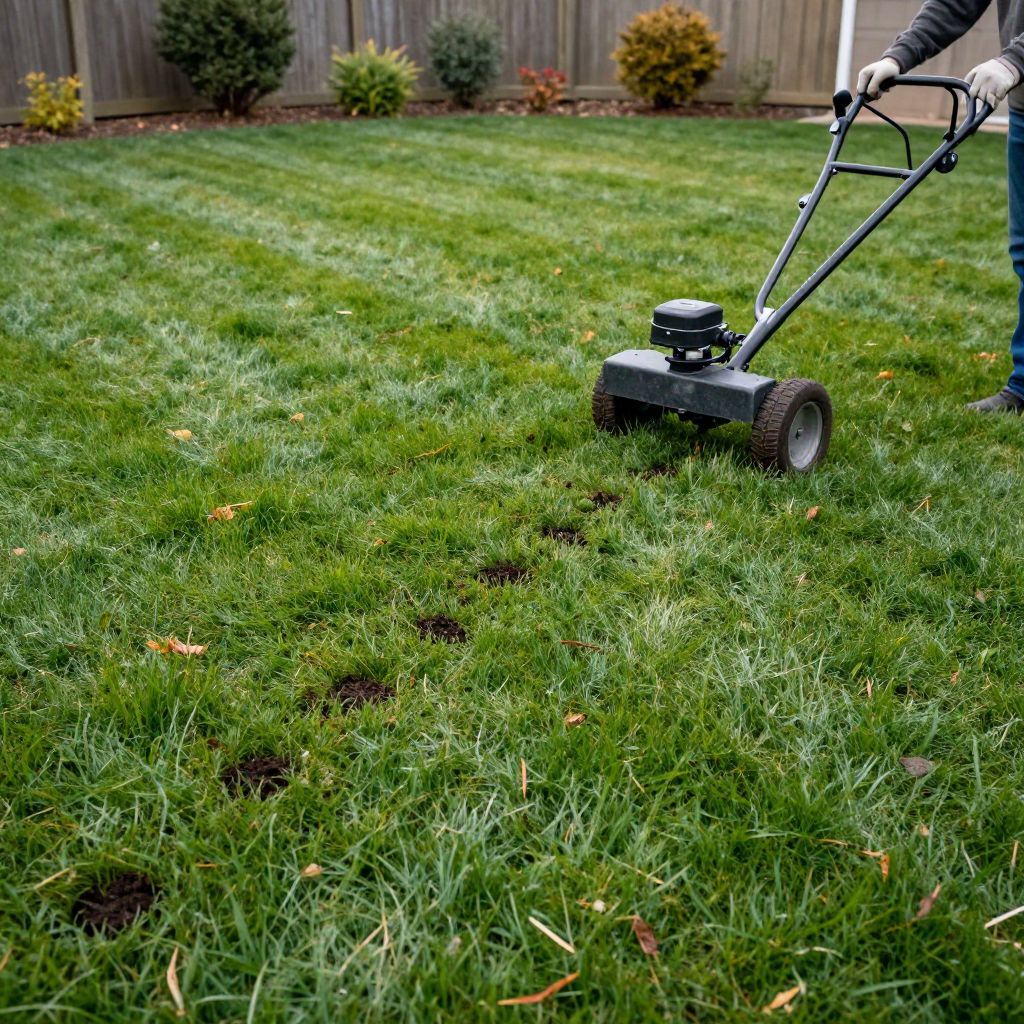
Wondering when to aerate your lawn? The best timing depends on your grass type, your climate, and how compacted your soil is. In general, aerate during active growth so the lawn can recover quickly, fill in holes, and take advantage of better air, water, and nutrient movement.
For most lawns, that means cool-season grasses in early fall or early spring and warm-season grasses in late spring through early summer. The goal is to aerate when the turf is growing strongly, not when it is stressed by heat, drought, or dormancy.
When to aerate your lawn?
Aerate when your grass is actively growing and the soil is moist but not soggy. For cool-season lawns, the best window is usually early fall, with spring as a backup. For warm-season lawns, aerate in late spring to early summer after green-up. Avoid aerating during heat stress, drought, or dormancy.
Why aeration helps a lawn
Aeration removes small plugs or opens channels in the soil so roots can access oxygen, water, and nutrients more easily. It is especially helpful in compacted yards, high-traffic areas, clay soils, and lawns that puddle after rain.
Over time, foot traffic, mowing, and rain can press soil particles tightly together. When that happens, roots struggle to spread, water runs off instead of soaking in, and the lawn can thin out.
Signs your lawn may need aeration
- Water puddles or runs off after rainfall or irrigation
- Soil feels hard and difficult to push a screwdriver into
- Grass looks thin, patchy, or slow to recover from traffic
- Thatch is present, especially if it is thick and spongy
- Moss or weeds are increasing in compacted spots
Best season by grass type
The right timing depends mostly on whether your lawn is cool-season or warm-season grass. Aerating at the wrong time can leave the turf weak and slow to recover.
Cool-season grasses
Examples include Kentucky bluegrass, perennial ryegrass, tall fescue, and fine fescues. These grasses grow most actively in early fall, which is usually the ideal time to aerate. The soil is still warm, weeds are less aggressive, and the lawn can heal before winter.
Spring aeration can also work if fall is not possible, but it may encourage weed germination if you are also overseeding. If you aerate in spring, do it early enough for the grass to recover before summer heat arrives.
Warm-season grasses
Examples include bermudagrass, zoysiagrass, St. Augustinegrass, and centipedegrass. These lawns respond best to aeration in late spring through early summer, after the grass has fully greened up and is growing vigorously.
Do not aerate warm-season lawns too early in spring, when they are still dormant or just waking up. They need active growth to fill in the holes quickly.
How to choose the right aeration time for your yard
Season matters, but local conditions matter too. Your lawn may need a slightly different schedule depending on shade, soil type, rainfall, and how much use it gets.
Use these conditions as your guide
- Soil moisture: Aerate when the soil is moist enough for the tines or coring tines to penetrate, but not waterlogged.
- Grass growth: Choose a period when the lawn is actively growing and can recover within a few weeks.
- Weather forecast: Aim for mild weather and a stretch without extreme heat or drought.
- Traffic level: Heavily used lawns may benefit from annual aeration, while lighter-use lawns may need it less often.
If you are unsure, watch your lawn rather than the calendar alone. A lawn that is green, growing, and not under stress is the best candidate for aeration.
Core aeration vs. spike aeration
For most home lawns, core aeration is the better choice. It removes small plugs of soil and creates open channels that stay open longer, which helps relieve compaction more effectively than simple spikes.
Spike aerators poke holes but can sometimes increase compaction around the hole edges, especially in heavy clay soil. If you are renting equipment or hiring a service, ask for a core aerator or hollow-tine aerator.
When core aeration is most useful
- Clay or dense soils
- Lawns with frequent foot traffic
- Areas that puddle after rain
- Lawns being overseeded
- Yards with visible compaction
How to aerate your lawn step by step
Aerating is straightforward, but a little preparation improves the results. The main goal is to create openings in the soil while the grass is ready to grow into them.
- Mow the lawn slightly shorter than usual a day or two before aerating, but do not scalp it.
- Water lightly if the soil is dry so the aerator can penetrate more easily. Avoid working in mud.
- Mark obstacles such as irrigation heads, shallow roots, cables, or buried utilities.
- Run the aerator over the lawn in one direction, then make a second pass at a right angle if the soil is badly compacted.
- Leave the soil plugs on the lawn unless they are large clumps. They will break down naturally and return organic matter to the soil.
- Water after aerating if the weather is dry, especially if you are overseeding or topdressing.
What to do after aerating
The period after aeration is a good time to help the lawn recover and improve its root zone. Openings in the soil make it easier for seed, compost, and water to reach the root area.
Good follow-up options
- Overseed thin areas if your grass type and season support it
- Topdress lightly with compost to improve soil structure over time
- Water consistently so the lawn does not dry out while it recovers
- Resume normal mowing once the grass is growing well again
If you overseed, match the seed to your existing lawn and your climate. Aeration creates better seed-to-soil contact, which improves germination compared with seeding alone.
Common mistakes to avoid
Many lawn problems after aeration come from poor timing or working under the wrong conditions. Avoid these common errors for better results.
- Aerating during drought or heat stress can damage turf and slow recovery.
- Aerating frozen or waterlogged soil is ineffective and can worsen compaction.
- Using spike aeration on very compacted clay may not solve the problem.
- Skipping recovery care leaves the lawn stressed after the process.
- Aerating too often can be unnecessary on healthy, low-traffic lawns.
How often should you aerate?
There is no single schedule for every yard. Some lawns benefit from annual aeration, especially if the soil is heavy, the lawn gets a lot of use, or drainage is poor. Others may only need it every two to three years.
Use the lawn itself as the guide. If the turf is healthy, the soil drains well, and compaction is mild, you may not need to aerate every year. If the lawn feels hard underfoot and water lingers after rain, more regular aeration may help.
When not to aerate
There are times when aeration does more harm than good. Wait until conditions improve if your lawn is under stress.
- During a summer heat wave
- When the lawn is dormant
- During extended drought
- When the soil is saturated after heavy rain
- Right before a period of extreme cold
Troubleshooting after aeration
Most lawns look a little rough immediately after aeration, and that is normal. The plugs and holes are temporary, and the turf should recover as growth resumes.
If the lawn looks patchy
Check whether the grass was already thin before aeration. Thin areas often need overseeding, better watering, or improved soil conditions in addition to aeration.
If plugs do not break down
Large or sticky plugs may take longer to crumble, especially in clay soil. A light watering and a few mowings usually help them disappear. Do not try to rake them all off unless they are smothering the grass.
If weeds appear afterward
Weeds can move into open soil if the lawn is weak or the season is wrong. Overseeding, proper mowing height, and good recovery care help the grass compete better.
Simple seasonal rule to remember
As a quick guide, aerate cool-season lawns in early fall and warm-season lawns in late spring to early summer. If your lawn is stressed, wait. If it is actively growing, the soil is compacted, and the weather is mild, it is probably a good time.
For more lawn care help, you may also want to read about how to overseed a lawn and how to improve compacted soil if those topics fit your yard’s needs.