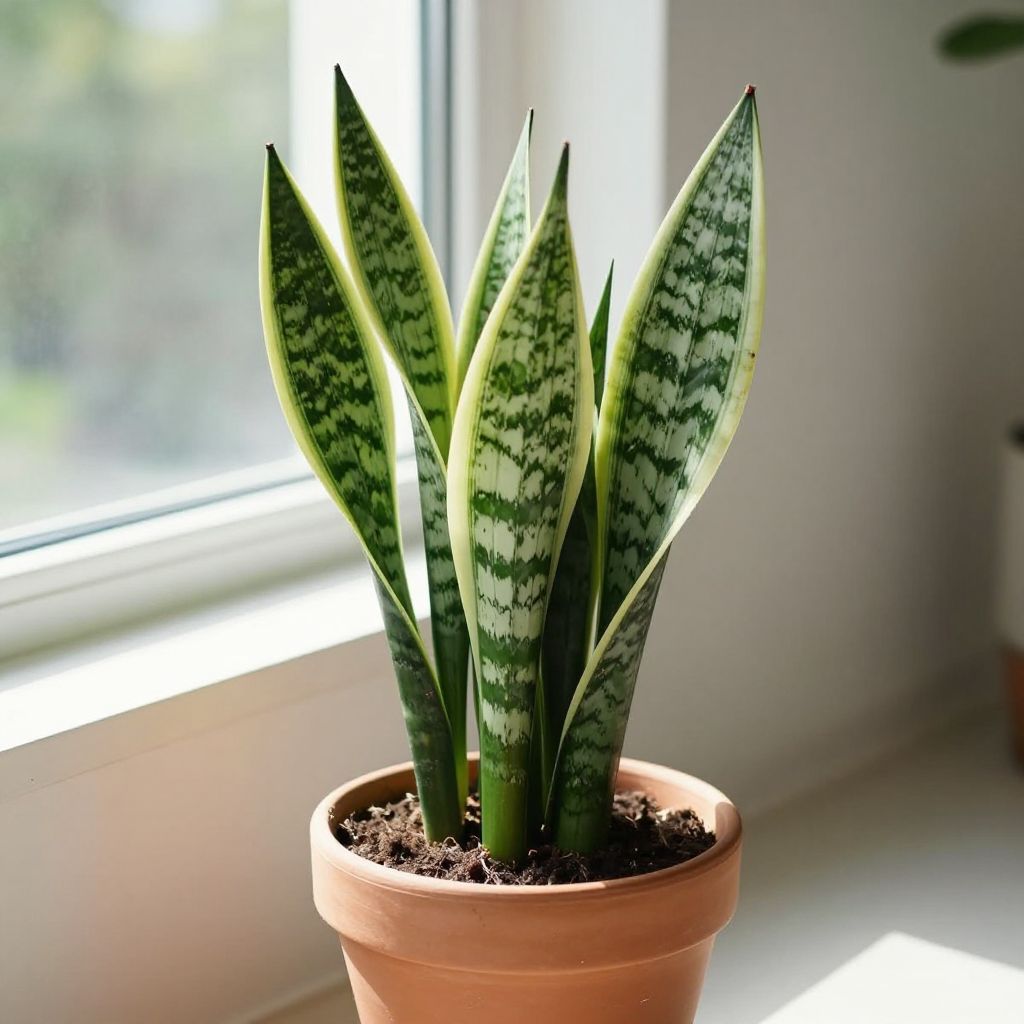
Does snake plant need sunlight? Yes, but not a lot. Snake plants (Dracaena trifasciata, formerly Sansevieria) are famous for tolerating low light, yet they grow best in bright, indirect light and can handle some direct sun if it is gentle.
If you place one in a dim corner, it may survive, but growth will slow and the plant can become leggy or dull. The key is matching the light level to your space and avoiding the extremes of deep shade or harsh all-day sun.
Does snake plant need sunlight?
Snake plants do not need intense sunlight to live, but they do need some light to stay healthy. Bright, indirect light is ideal indoors, while a few hours of soft morning sun can help growth. In low light, they survive but grow more slowly and need less water.
How much light a snake plant really wants
Snake plants are adaptable houseplants, which is why they are often recommended for beginners. They can tolerate low-light rooms, but “tolerate” is not the same as “thrive.”
The sweet spot is usually near an east-facing window, a few feet back from a south- or west-facing window, or in a bright room with filtered light. If the leaves look firm and upright and new growth appears during the warm season, the plant is getting enough light.
Best indoor light conditions
- Bright, indirect light: Best overall for steady growth and good leaf color.
- Low light: Survives, but growth slows and watering must be reduced.
- Direct sun: A little morning sun is usually fine; strong afternoon sun can scorch leaves.
What “indirect light” means in practice
Indirect light means the plant receives brightness without harsh rays hitting the leaves for long periods. A sheer curtain, a nearby window, or a spot a few feet away from direct sun often works well.
If you can comfortably read in the space during the day, the light is often suitable for a snake plant, though not every room with good human light is equally bright for a plant.
Can snake plants grow in low light?
Yes, snake plants can grow in low light, but they usually do not grow much. In darker rooms, they may stay alive for a long time with very little change, which is useful for offices, hallways, and shaded interiors.
Low light is best treated as a survival condition, not an ideal one. If the plant is in a low-light area, water sparingly and watch for signs of stretching, leaning, or pale leaves, which suggest it wants more light.
Signs your snake plant needs more light
- Leaves stretching outward or leaning toward a window
- Slow or no new growth during the growing season
- Pale color or loss of variegation in some varieties
- Soft, weak-looking leaves rather than firm, upright growth
Can snake plants take direct sun?
Snake plants can handle some direct sun, especially gentle morning sun, but too much strong sun can damage the leaves. If you move a plant from low light into bright sun too quickly, the leaves may scorch or bleach.
Outdoor placement is different from indoor placement. Outdoors, snake plants do best in partial shade or filtered light unless your climate is mild and the sun is not intense. In hot regions, afternoon shade is especially important.
Signs of too much sun
- Yellow or bleached patches on the leaves
- Brown, crispy edges or tips
- Wrinkled, stressed-looking foliage after a hot spell
- Leaves that feel dry and look faded
How to place a snake plant indoors
Choosing the right indoor spot matters more than many new plant owners realize. A snake plant can adapt to a wide range of rooms, but the plant will look better and stay healthier in the right location.
- Start with bright, indirect light if possible.
- Keep it near a window, but not pressed against hot glass in summer.
- Rotate the pot every few weeks so the plant grows evenly.
- Move it gradually if you want to increase light exposure.
Rotation is especially helpful because snake plants naturally lean toward light. Turning the pot prevents the plant from developing a lopsided shape over time.
Best window directions
- East-facing window: Often ideal because it gives mild morning sun.
- South-facing window: Good if the plant is set back or filtered by a curtain.
- West-facing window: Can work, but afternoon sun may be too strong close to the glass.
- North-facing window: Usually lower light; the plant may survive but grow slowly.
Watering changes with light level
Light affects how quickly a snake plant uses water. A plant in bright light usually dries out faster than one in a shady corner, so the same watering routine will not work everywhere.
Always check the potting mix before watering. Let the soil dry out well between waterings, especially in low light. Overwatering is one of the most common reasons snake plants fail, and it becomes even riskier when the plant is not using much moisture.
Simple watering rule
- Water when the top several inches of soil are dry and the pot feels lighter.
- Water less often in winter or in low light.
- Make sure excess water drains away completely.
Use a pot with drainage holes and a fast-draining mix. A heavy, constantly damp soil can lead to root rot, especially if the plant is sitting in a dim room where evaporation is slow.
Soil and drainage matter as much as sunlight
Even if you get the light right, poor soil can still cause problems. Snake plants need a mix that drains quickly so roots are not left in soggy conditions.
A well-draining cactus or succulent mix is a good starting point. If your mix holds water for too long, you can improve it with coarse ingredients such as perlite or pumice, depending on what is available locally.
Good potting setup
- Container with drainage holes
- Fast-draining potting mix
- Pot size that is only slightly larger than the root ball
A pot that is too large can stay wet too long, especially in low light. Snake plants often prefer being a little snug rather than sitting in excess soil.
What happens if a snake plant gets too little light?
In very low light, snake plants usually do not die quickly. Instead, they become sluggish, with slow growth and a greater risk of overwatering because the soil stays wet longer.
You may also notice the plant becoming less upright or losing the crisp look that healthy leaves have. If the room stays dark for months, consider moving the plant closer to a window or supplementing with a grow light.
Helpful fix for dark rooms
- Move the plant to brighter indirect light if possible.
- Use a grow light if natural light is limited.
- Reduce watering frequency to match slower growth.
Grow lights can be useful in offices, basements, or rooms with small windows. Place the light at an appropriate distance for the fixture you are using, and keep the plant on a consistent schedule rather than moving it constantly.
What happens if a snake plant gets too much sun?
Too much direct sun can bleach or burn the leaves, especially if the plant was previously kept in shade. This is most common when a plant is moved suddenly into a hot window or outdoors into full sun.
If scorching happens, the damaged leaf tissue will not turn green again. The best response is to move the plant to gentler light and let new growth emerge in better conditions.
How to acclimate a snake plant to stronger light
- Move it into brighter light gradually over one to two weeks.
- Start with a few hours of mild morning sun.
- Watch for bleaching or crisping on the leaves.
- Adjust placement before damage becomes severe.
Seasonal care and sunlight
Light levels change through the year, and your snake plant’s needs change with them. In winter, indoor light is often weaker, so growth slows and the plant usually needs less water. In spring and summer, stronger light may support more active growth.
If you move the plant outdoors for the warm season, place it in shade or filtered light first. Even a plant that has lived happily indoors can burn quickly outside because outdoor sun is much stronger.
Outdoor care tips
- Choose a sheltered spot with bright shade or morning sun.
- Protect from heavy rain if the potting mix stays wet too long.
- Bring the plant indoors before cool nights if your climate is not suitable for year-round outdoor growing.
Pruning, pests, and other maintenance
Snake plants do not need frequent pruning, but you can remove damaged leaves at the base with clean, sharp tools. If a leaf is badly sunburned, soft, or collapsed, it is usually better to remove it than to leave it in place.
Healthy light levels also help reduce stress, which can make the plant less vulnerable to pests. Common houseplant pests such as mealybugs and spider mites may appear, especially on plants that are stressed or kept too dry for long periods.
Basic maintenance checklist
- Wipe dust from leaves occasionally so they can absorb light better.
- Inspect leaf bases and undersides for pests.
- Trim damaged leaves cleanly if needed.
- Repot only when the plant is crowded or the mix has broken down.
Propagation and light
If you want to propagate a snake plant, light still matters. New cuttings or divisions root best in a warm, bright spot out of harsh sun.
After propagation, keep the new plant in moderate light and avoid overwatering. Too little light can slow rooting, while too much sun can stress tender new growth.
Common mistakes to avoid
- Putting the plant in a dark corner and watering it as if it were in bright light.
- Exposing it to strong afternoon sun without acclimation.
- Using a pot without drainage holes.
- Keeping the soil damp for long periods.
- Expecting fast growth in a low-light room.
These mistakes often show up together. For example, a plant in low light plus frequent watering is much more likely to develop root rot than a plant in bright light with a dry, airy mix.
Conclusion: the best light for a snake plant
So, does snake plant need sunlight? Yes, but only moderate light to do well. Bright, indirect light is the best choice indoors, with some gentle morning sun if available. In low light, it can survive, but you should water less and expect slower growth.
Take a look at your plant’s leaves and where it sits right now. If it is stretching, fading, or staying wet too long, move it to brighter indirect light and adjust your watering routine. For more houseplant care ideas, you may also enjoy reading about indoor plant watering basics and choosing the right potting mix for houseplants.