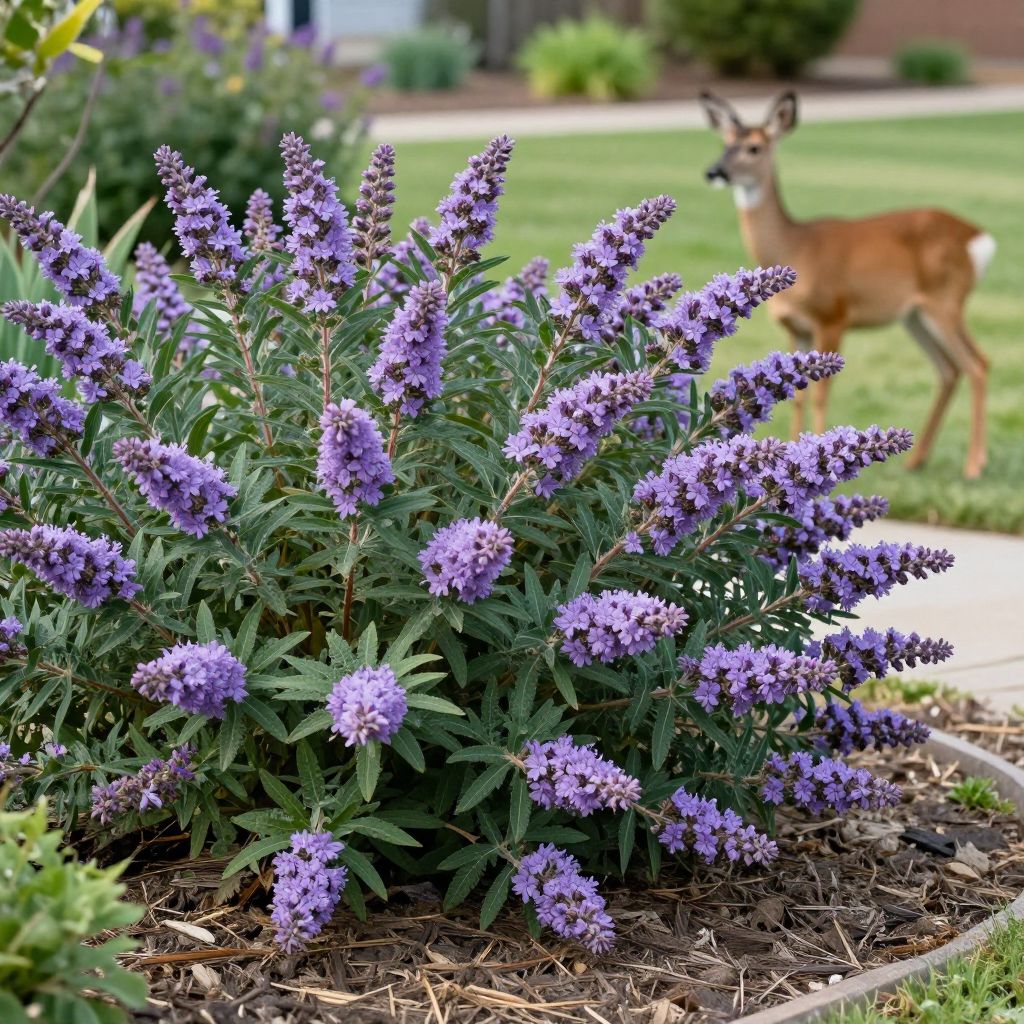
Are butterfly bushes deer resistant? In many gardens, yes—but “resistant” does not mean “deer-proof.” Butterfly bush (Buddleja spp.) is one of those shrubs deer often leave alone when better food is available, but hungry deer can still browse new growth, especially in dry weather or crowded landscapes.
If you want a flowering shrub that attracts butterflies and pollinators while standing a better chance against deer pressure, butterfly bush is worth considering. The key is matching the plant to your climate, giving it full sun and drainage, and protecting young plants until they are established.
Are butterfly bushes deer resistant?
Yes, butterfly bushes are generally considered deer resistant, especially compared with tender ornamentals and many broadleaf shrubs. Deer may avoid the foliage because of its texture and scent, but they will still nibble it if food is scarce, the plant is young, or deer pressure is high in your area.
Why deer usually leave butterfly bush alone
Deer choose plants based on availability, palatability, and risk. Butterfly bush often falls lower on their preference list, which makes it a useful landscape shrub where deer are common.
What makes it less appealing
- Aromatic foliage that can be less attractive to browsing deer.
- Woody stems and a shrub form that is less tender than many garden plants.
- Fast regrowth after pruning, which helps the plant recover if lightly browsed.
What can still attract deer
- New, soft spring growth.
- Drought-stressed plants with less vigorous foliage.
- Gardens near woods, fields, or heavy deer travel routes.
- Severe food shortages in late winter or during dry summers.
Bottom line: butterfly bush is better described as deer resistant, not deer proof. If deer are a serious problem, plan on extra protection for young plants.
How to grow butterfly bush successfully
Healthy, vigorous plants are less likely to suffer serious deer browsing and usually bloom better. Give butterfly bush the conditions it prefers, and it will reward you with stronger growth and more flowers.
Sunlight
Butterfly bush blooms best in full sun, meaning at least 6 hours of direct light per day. In light shade, it may grow but flower less and become leggier.
Soil and drainage
This shrub prefers soil that drains well. Heavy, waterlogged soil can lead to weak growth and root problems. If your soil stays wet after rain, improve drainage with organic matter or choose a raised bed or sloped site.
Compost and soil preparation
Before planting, mix a modest amount of compost into the backfill if your soil is poor or very sandy. Avoid overloading the planting hole with rich amendments, which can encourage roots to stay in the hole instead of spreading outward.
Watering
Water newly planted butterfly bush regularly until it is established, adjusting for rainfall and soil type. After that, it typically handles short dry spells better than many shrubs, but prolonged drought can reduce flowering and make it more vulnerable to deer and stress.
Spacing and airflow
Give the plant room to reach its mature width. Good airflow helps reduce foliar disease and makes it easier to inspect for browsing, pests, and dead wood.
Planting butterfly bush in a deer-prone garden
If deer pressure is moderate to high, planting technique matters almost as much as plant choice. A well-established shrub is more resilient and can recover faster from minor browsing.
- Choose a sunny site with well-drained soil.
- Dig a hole about as deep as the root ball and 2 to 3 times as wide.
- Loosen circling roots if the plant is container-grown.
- Set the plant so the top of the root ball is level with the surrounding soil.
- Backfill, water thoroughly, and mulch lightly.
- Keep mulch a few inches away from the stems to prevent rot.
Tip: In deer-heavy areas, protect new plants with temporary fencing or a cage for the first season or two. Young shrubs are the most likely to be damaged.
Pruning and maintenance for better flowering
Butterfly bush blooms on new growth, so pruning helps shape the plant and encourages fresh flowering wood. In many climates, gardeners cut back the shrub in late winter or early spring after the worst cold has passed.
Pruning basics
- Remove dead, damaged, or crossing stems first.
- Cut back to healthy buds or strong side shoots.
- Thin crowded stems to improve light and airflow.
- Avoid severe pruning if your plant is already stressed from drought or browsing.
If deer have nipped the tips, you can often prune slightly above healthy growth to help the shrub branch out. If browsing is heavy, protect the plant before it resprouts, or deer may keep returning to the tender new shoots.
Common problems that can make deer damage worse
Sometimes gardeners think deer are the only issue, when the real problem is a stressed plant. Weak butterfly bushes are more likely to be browsed and less likely to bounce back quickly.
Drought stress
Dry, wilted growth is more tempting to deer and more likely to be damaged. Water deeply during extended dry periods, especially for plants in their first year.
Poor drainage
Wet feet can weaken roots and reduce flowering. If your soil stays soggy, consider moving the shrub or improving the site before problems become chronic.
Too much shade
Plants grown in shade often produce fewer flowers, stretch toward the light, and become less vigorous. That can make them more noticeable to deer and less attractive in the landscape.
Overfertilizing
Excess nitrogen can produce soft, lush growth that deer may browse more readily. Use compost or a light, balanced feeding only if your soil truly needs it.
How to protect butterfly bushes from deer
If deer visit regularly, combine plant choice with physical protection. No single method works perfectly everywhere, but layered protection is much more effective.
- Temporary fencing: Often the most reliable option for young shrubs.
- Individual cages: Useful for isolated plants or new installations.
- Repellents: Can help, but usually need reapplication after rain and new growth.
- Strategic placement: Plant near the house, patio, or other high-traffic areas where deer may be less comfortable lingering.
- Mixed planting: Surround with other deer-resistant plants to reduce the chance of one shrub becoming a target.
Repellents work best as part of a routine, not as a one-time fix. Reapply according to the product label and after heavy rain, and rotate strategies if deer become accustomed to one deterrent.
Pests, diseases, and other care concerns
Butterfly bush is usually a fairly tough shrub, but it is not immune to problems. Healthy care reduces stress and helps the plant recover if deer do browse it.
Watch for
- Aphids on tender new growth.
- Powdery mildew in humid or crowded plantings.
- Root rot in poorly drained soil.
- Broken stems after browsing, wind, or heavy pruning.
Inspect the plant regularly, especially in spring and early summer when deer and pests are most active. Early detection makes it easier to prune, clean up, or adjust watering before damage spreads.
Propagation and replacing damaged plants
If a butterfly bush has been heavily browsed or winter-damaged, you may decide to replace it or grow new plants from cuttings where allowed and appropriate for your area. Always check local guidance before planting, since some butterfly bush species or cultivars can be invasive in certain regions.
If you are replacing a plant, choose a site with full sun, good drainage, and enough room for mature size. That gives the new shrub the best chance to establish quickly and outgrow minor deer pressure.
Best uses in the landscape
Butterfly bush works well in mixed borders, pollinator gardens, and sunny foundation plantings where you want summer color and a shrub that is less tempting to deer than many alternatives. It also pairs well with other deer-resistant plants that enjoy similar conditions.
Use it where you can enjoy the flowers up close, but avoid crowding it into a shady, wet corner. The right location is one of the best defenses against both deer damage and poor performance.
Conclusion
Butterfly bushes are generally deer resistant, but they are not immune to browsing. For the best results, plant them in full sun, give them well-drained soil, water them well while they establish, and protect young shrubs if deer pressure is high. If you want to compare deer-resistant choices, you may also find what to feed deer useful for understanding what attracts deer to a landscape in the first place.