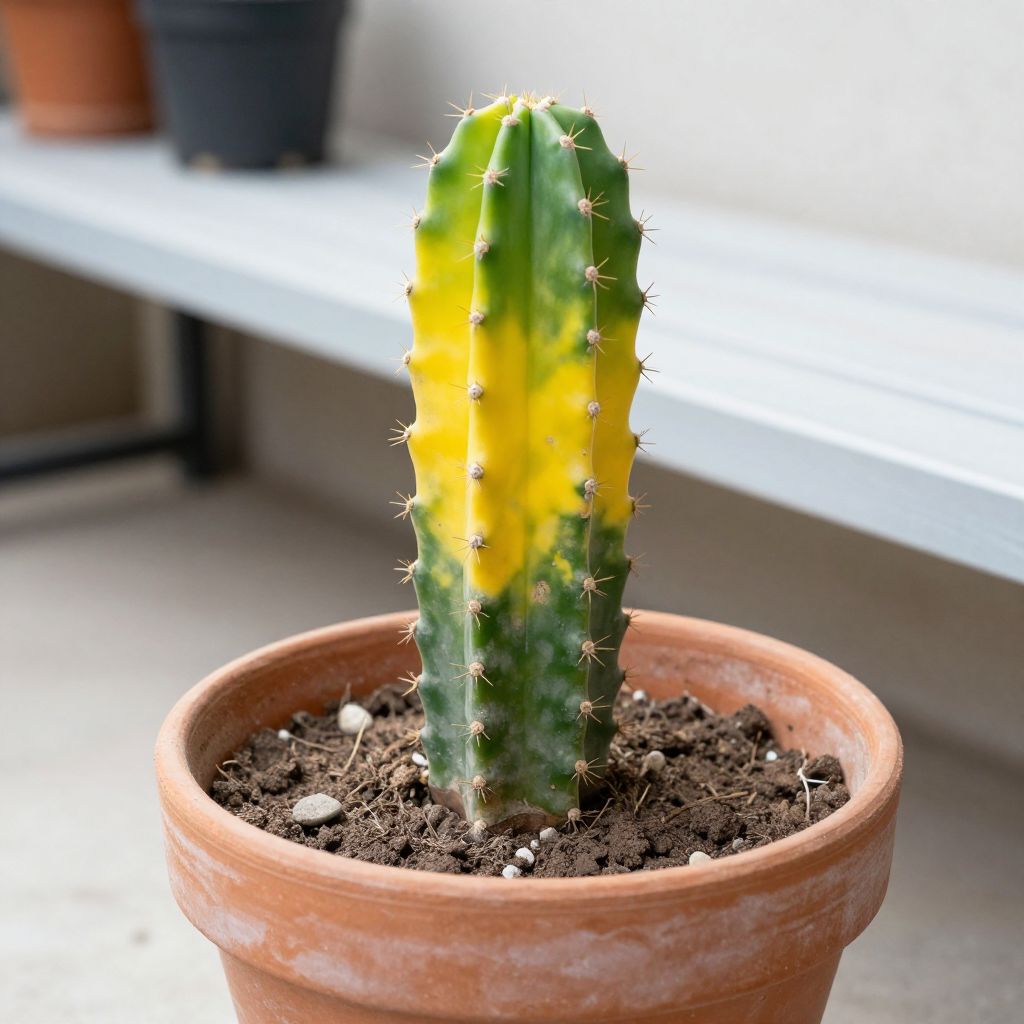
Why is my cactus turning yellow? Yellowing usually means your cactus is under stress, most often from too much water, poor drainage, too little light, or cold damage. Less often, pests, root rot, nutrient problems, or natural aging are involved. The key is to read the whole plant, not just the color.
Most yellowing cacti can recover if you catch the problem early and correct the growing conditions. Start by checking the soil, roots, light, and temperature before adding fertilizer or more water.
Why is my cactus turning yellow?
A cactus turns yellow when its tissues are stressed by waterlogged soil, insufficient light, cold exposure, root damage, pests, or sometimes normal aging. The fastest way to help is to inspect the potting mix and roots first, then adjust watering, light, and temperature to match the cactus’s needs.
Common causes of yellow cactus stems or pads
1. Overwatering
Overwatering is the most common cause of yellowing in cacti grown indoors and in containers. Cactus roots need air as much as moisture, and soggy soil can quickly lead to stress and root rot.
Signs of overwatering include:
- Yellow, soft, or translucent tissue
- A pot that stays wet for days
- Wrinkly but mushy stems or pads
- Musty-smelling soil
Important: Do not water on a fixed schedule if the soil is still damp. Always check the pot first.
2. Poor drainage
Even careful watering can cause trouble if the pot has no drainage holes or the soil holds too much moisture. Heavy garden soil, compacted mix, or decorative cachepots that trap runoff can all keep roots too wet.
For container-grown cacti, use a pot with drainage holes and a fast-draining cactus mix. If you are growing outdoors, make sure the planting site drains quickly after rain.
3. Not enough sunlight
Most cacti need strong light to stay healthy and maintain their color. In low light, they may become pale, yellow-green, stretched, or weak as they struggle to photosynthesize properly.
Indoor cacti often yellow when placed too far from a bright window or kept in a dim room. Outdoor cacti can also yellow if they are shaded by trees, fences, or nearby structures.
Watch for these light-related clues:
- Long, stretched growth
- Loss of firm shape
- Pale or washed-out color on the side facing away from the light
4. Cold stress or sudden temperature changes
Cacti dislike cold, damp conditions, especially if they are not cold-hardy species. A sudden chill, frost, or a draft from a window or air conditioner can cause yellowing, scarring, or collapse in damaged tissue.
Outdoor cacti may yellow after an unexpected cold snap. Indoors, keep them away from cold windowsills in winter and from hot-cold swings near doors or vents.
5. Root rot
Root rot is a serious consequence of too much moisture and poor airflow around the roots. By the time you notice yellowing above the soil, the roots may already be damaged.
Possible signs include:
- Yellowing that spreads quickly
- Soft, dark, or mushy base tissue
- The plant wobbling in the pot
- Blackened roots when unpotted
If you suspect rot, act quickly. A cactus with extensive root rot may not be saveable, but early intervention can sometimes rescue healthy sections.
6. Pests
Mealybugs, scale, and spider mites can weaken a cactus and cause discoloration. Pests often hide in crevices, at the base of spines, or where pads join together.
Look for:
- White cottony clusters
- Small brown bumps that do not move easily
- Fine webbing or stippling on the plant
- Sticky residue or a dull, unhealthy look
Heavy infestations can make a cactus turn yellow because the plant is losing sap and energy.
7. Nutrient imbalance or poor potting mix
Cacti do not need heavy feeding, but they do need a suitable growing medium. In very old, exhausted, or compacted potting mix, the plant may yellow because roots cannot function well or because nutrients are depleted.
That said, overfertilizing can also cause stress. Too much fertilizer may burn roots and create yellowing, weak growth, or a crusty buildup in the soil.
8. Natural aging or sun stress
Sometimes the oldest lower sections of a cactus yellow or tan as they age, especially on older stems or pads. This is usually gradual and limited to the oldest tissue.
Strong direct sun can also cause yellowing or bleaching, especially if the plant was moved suddenly from shade to intense light. This is more like sunscald than healthy sun exposure.
How to diagnose the problem step by step
- Check the soil moisture. Insert a finger 1 to 2 inches into the mix. If it feels wet, hold off on watering.
- Inspect the pot. Make sure there are drainage holes and that no water is trapped in a saucer or cachepot.
- Look closely at the yellowing. Soft and mushy tissue suggests rot or overwatering; dry and pale tissue suggests light or sun issues.
- Examine the roots if needed. Slide the plant out of the pot if rot is suspected. Healthy roots are firm; rotten roots are dark, slimy, or hollow.
- Check for pests. Use a flashlight to inspect joints, ribs, areoles, and the base of the plant.
- Review recent changes. Think about repotting, cold nights, a move to a darker room, or a sudden increase in sun exposure.
How to fix a yellow cactus
If the soil is too wet
- Stop watering immediately.
- Move the cactus to a brighter, warmer spot with good air circulation.
- If the potting mix is still soggy after several days, repot into dry, fast-draining cactus mix.
- Discard any mushy roots or dead tissue with clean, sterilized tools.
After repotting, wait several days before watering again so any damaged roots can begin to heal.
If root rot is present
- Remove the cactus from the pot.
- Trim away black, soft, or foul-smelling roots.
- Let the plant dry in a shaded, airy place for a day or two if appropriate for the species and the amount of trimming done.
- Repot in a clean container with fresh, dry cactus mix.
If the base is also soft, you may need to cut above the rot and try propagating the healthy top section, depending on the cactus type.
If the cactus is not getting enough light
Move it gradually to a brighter location. A south- or west-facing window often works well indoors, but use caution with intense afternoon sun if the plant has been in low light for a long time.
Increase light slowly over 1 to 2 weeks to avoid sunburn. Outdoor cacti should be planted where they receive strong sun for much of the day, but some species prefer light afternoon shade in very hot climates.
If cold caused the yellowing
Move the cactus to a protected spot above freezing, away from drafts and frost. Do not water heavily right after a cold injury, because damaged roots and tissues are more vulnerable in wet soil.
Severely damaged tissue may not recover, but healthy portions can often continue growing once conditions improve.
If pests are involved
Isolate the plant from other houseplants. Remove visible pests with a cotton swab dipped in rubbing alcohol, or rinse the plant carefully if the species tolerates it.
Repeat inspections weekly until the infestation is controlled. Severe infestations may require repeated treatment, and badly damaged tissue may remain yellow even after pests are gone.
What healthy cactus care looks like
Watering
Water deeply, then allow the mix to dry out well before watering again. The exact timing depends on pot size, temperature, humidity, light, and season. In active growth, cacti usually need more frequent watering than in cool, dim winter conditions.
For most container cacti, it is safer to underwater slightly than to keep the soil constantly moist.
Soil and pots
Use a gritty, free-draining cactus mix rather than standard all-purpose potting soil alone. If your mix stays wet too long, amend it with coarse mineral material such as pumice or perlite, depending on what is suitable for your plant and climate.
Choose a pot only slightly larger than the root ball. Oversized pots hold excess moisture and can increase the risk of yellowing.
Light
Give your cactus as much bright light as its species can handle. Indoors, rotate the pot occasionally so growth stays even. Outdoors, site selection matters: morning sun and good airflow are often safer than deep shade or waterlogged beds.
Seasonal adjustment
Cacti usually use less water in cooler months or during slower growth. If your home is cooler in winter or your outdoor climate is rainy, reduce watering accordingly. In hot, bright weather, the plant may dry faster and need closer monitoring.
When yellowing is not an emergency
Not every yellow cactus is dying. Mild yellowing on an older section, slight fading after a move, or temporary color change after repotting can happen. The key is whether the tissue stays firm and the discoloration stops spreading.
If the cactus is firm, the yellowing is limited, and new growth looks healthy, you may only need to improve light or adjust watering habits.
Practical mistakes to avoid
- Watering again before the soil has dried
- Using a pot without drainage holes
- Moving a low-light cactus into harsh direct sun all at once
- Leaving the plant in a cold, damp spot
- Applying fertilizer to a stressed or newly repotted cactus
- Ignoring soft tissue, which can signal rot
Conclusion
If you are asking, “Why is my cactus turning yellow,” start with the basics: check the soil, drainage, light, and temperature, then inspect for pests or rot. Correct the growing conditions first, because that is where most cactus problems begin. If you want to keep your plant healthy long term, focus on fast drainage, bright light, and careful watering.
For more help with cactus care, you may also want to read a guide on basic cactus care and common houseplant pest control.