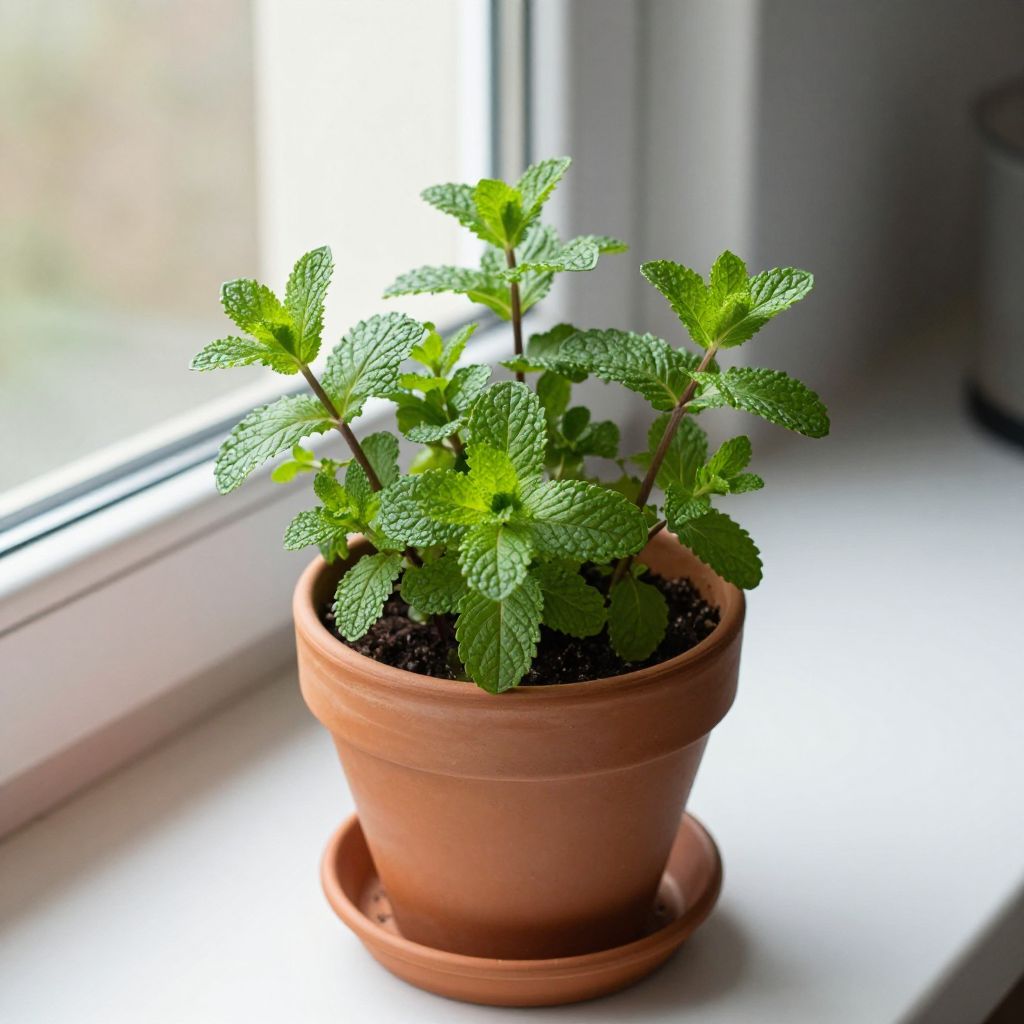
Can you grow mint indoors? Yes—mint is one of the easiest herbs to keep inside if you give it bright light, steady moisture, and regular trimming. It grows quickly in pots, tolerates imperfect conditions better than many herbs, and can provide fresh leaves for months when managed well.
The main challenge is not getting mint to grow, but keeping it healthy and contained. Indoors, mint often becomes leggy, dries out too fast, or gets crowded in a pot, so a few simple care habits make all the difference.
Can you grow mint indoors?
Yes, mint grows very well indoors when it has a pot with drainage, bright light, evenly moist soil, and regular pruning. It prefers cool-to-moderate indoor temperatures and will do best in a container because mint spreads aggressively and can quickly overtake garden beds or mixed planters.
Why mint is such a good indoor herb
Mint is forgiving, fast-growing, and easy to harvest repeatedly. That makes it a great choice for kitchens, sunny windowsills, and small spaces where you want fresh herbs without much fuss.
It also bounces back well after cutting, which is helpful for beginners. If you miss a watering or trim it a little too hard, mint usually recovers as long as the roots stay healthy.
Best mint types for indoors
Common peppermint (Mentha × piperita) and spearmint (Mentha spicata) are both reliable indoor choices. Spearmint is often a bit milder in flavor, while peppermint has a stronger aroma.
Choose a plant that looks compact, green, and free of pests. A healthy starter plant is usually easier indoors than growing mint from seed, especially if you want quick results.
How to plant mint indoors
Start with a pot that has at least one drainage hole. Mint dislikes sitting in water, and poor drainage is one of the fastest ways to lose an indoor herb plant.
- Choose a pot 6 to 8 inches wide for a small plant, or larger if you want more room for growth.
- Use a quality potting mix rather than garden soil.
- Set the plant at the same depth it was growing before.
- Water thoroughly until excess drains out.
- Place it in bright light right away.
If you are repotting a store-bought mint plant, gently loosen crowded roots. Mint grows fast, and nursery pots can become rootbound quickly.
Soil and drainage
Mint does best in a loose, well-draining potting mix that still holds some moisture. A standard indoor potting mix is usually fine, and you can improve it with a small amount of compost if the soil seems poor or tired.
Avoid heavy, compacted soil. Indoors, dense soil stays wet too long and can lead to root rot, fungus gnats, and weak growth.
Light, temperature, and placement
Mint grows best with bright light for several hours a day. A south- or west-facing window is often ideal, though an east-facing window can work if the plant gets enough direct or bright indirect light.
If natural light is limited, a grow light can help keep mint compact and leafy. Without enough light, stems stretch, leaves become smaller, and the plant may look sparse.
How much light does mint need indoors?
As a practical rule, aim for at least 4 to 6 hours of strong light daily. In darker homes, supplementing with a grow light for 12 to 14 hours can make a noticeable difference.
Mint also prefers moderate temperatures. It generally does well in normal indoor conditions, but it may struggle near hot radiators, cold drafts, or very dry air vents.
Watering mint indoors
Keep the soil evenly moist, not soggy. Mint likes consistent moisture, and the top inch of soil should dry slightly before you water again.
Check the pot with your finger instead of following a rigid schedule. A plant in bright light, warm rooms, or a small pot may need water more often than one in cooler, lower-light conditions.
Signs you are watering too much or too little
- Too much water: yellowing leaves, soft stems, soggy soil, or a musty smell.
- Too little water: drooping leaves, dry crispy edges, and a pot that feels very light.
If the plant wilts but the soil is wet, do not add more water. Check for poor drainage or root rot instead.
Pruning and harvesting for fuller growth
Regular trimming is one of the best things you can do for indoor mint. Pinching the tips encourages branching, which keeps the plant bushier and more productive.
Harvest stems often, but avoid removing too much at once. A good rule is to take only what you need and leave enough leaves behind for the plant to keep growing strongly.
How to harvest mint indoors
- Use clean scissors or pinch stems just above a leaf pair.
- Cut long stems back to encourage new side shoots.
- Remove any flower buds if they appear, since flowering can reduce leaf production.
Harvesting regularly also helps prevent mint from becoming tall and leggy. If the plant starts to look thin, cut it back more firmly and move it to brighter light.
Feeding mint in pots
Mint does not need heavy fertilizing indoors. Too much fertilizer can produce fast, weak growth with less flavor and may stress the roots.
If the potting mix is fresh, you may not need to feed for a while. For older plants, a light feeding during active growth can help, but use a gentle approach and follow the product label carefully.
When compost helps
Mixing a little compost into the potting soil at planting time can improve moisture retention and add mild nutrition. Use compost sparingly in containers so the mix stays airy and drains well.
Common indoor mint problems and fixes
Most mint problems indoors come from light, water, or crowding. Fortunately, these issues are usually easy to correct once you spot them.
- Leggy growth: Move the plant to brighter light and pinch it back.
- Yellow leaves: Check drainage, reduce watering if the soil is wet, or repot if roots are crowded.
- Small leaves: The plant may need more light, more room, or regular trimming.
- Fungus gnats: Let the surface soil dry a bit more between waterings and avoid overwatering.
- Leaf spots or mold: Improve air circulation and remove damaged leaves.
Pests to watch for
Indoor mint can attract aphids, spider mites, and whiteflies, especially if the air is dry or the plant is stressed. Inspect the undersides of leaves regularly so you can catch problems early.
If you see pests, isolate the plant from other houseplants and remove affected growth. A gentle rinse or appropriate insecticidal soap can help, but always test carefully and follow label directions.
Should mint stay indoors year-round?
Mint can stay indoors all year if conditions are good, but it may also benefit from a seasonal reset. Over time, indoor mint can become woody, crowded, or less vigorous.
When the plant looks tired, you can prune it hard, repot into fresh mix, or divide it if the root ball is large enough. Fresh soil and more space often restore strong growth.
Can you move indoor mint outside?
Yes, you can move mint outdoors in suitable weather, but do it gradually. Sudden changes in light and temperature can shock the plant, so harden it off by exposing it to outdoor conditions a little at a time.
Because mint spreads so easily, keep it in a container outdoors unless you want it to take over a bed. A pot gives you control and makes it easier to bring the plant back inside before cold weather.
Best practices for long-term success
Indoor mint thrives when you keep three things balanced: light, moisture, and pruning. If one of those is off, the plant usually shows it quickly.
- Use a pot with drainage holes.
- Give bright light and rotate the pot every week or so.
- Water when the top inch of soil begins to dry.
- Trim often to keep the plant bushy.
- Repot when roots fill the container.
One of the biggest mistakes is planting mint in a decorative pot without drainage. It may look attractive, but the roots can stay too wet and decline fast.
Conclusion
Can you grow mint indoors? Absolutely. With a well-draining pot, bright light, steady watering, and regular harvesting, mint can be one of the easiest and most rewarding herbs to keep inside. Start with a healthy plant, trim it often, and adjust care based on how your home conditions actually behave.
If you enjoy growing herbs and other compact crops indoors, you may also like reading about growing strawberries indoors.