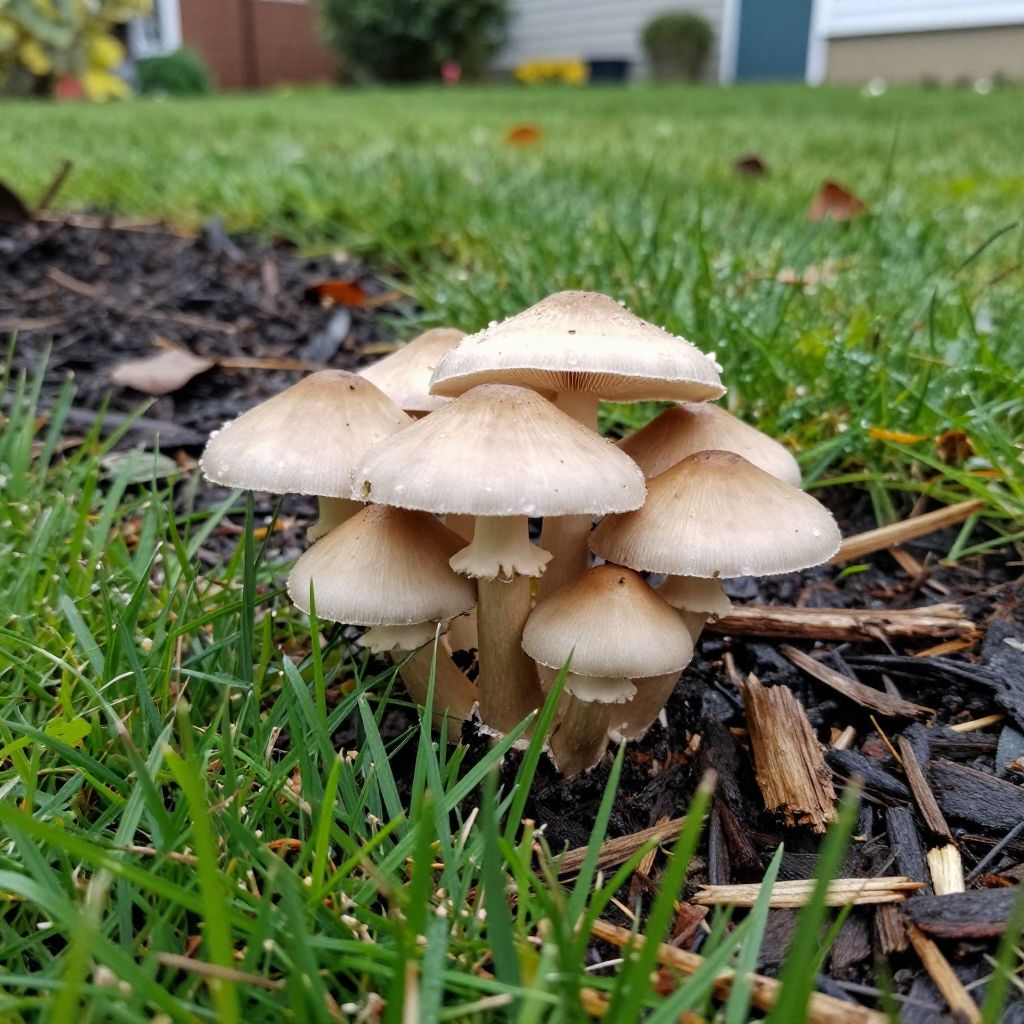
Why are there mushrooms growing in my yard? In most cases, it means the soil is moist, organic matter is breaking down, and fungal networks are doing their normal job underground. Mushrooms are the fruiting bodies of fungi, so their appearance usually points to decaying wood, mulch, buried roots, or compacted, damp soil rather than a serious plant disease.
That said, mushrooms can be a clue that your lawn or landscape is staying too wet, has excess thatch or wood debris, or is being watered a little too often. The good news is that most yard mushrooms are harmless, and you can usually reduce them by improving drainage, adjusting watering, and removing the food source they are feeding on.
Why are there mushrooms growing in my yard?
Mushrooms grow in your yard when fungi have the moisture and organic material they need to reproduce. They are especially common after rain, in shaded areas, in thick mulch, or where buried wood, roots, or old stumps are decomposing. The mushrooms themselves are usually temporary, but the conditions that support them can last much longer.
Common causes of yard mushrooms
1. Excess moisture in the soil
Fungi thrive in consistently damp ground. If your lawn stays wet after rain or irrigation, mushrooms may appear in clusters, rings, or scattered patches.
- Poor drainage
- Overwatering
- Heavy clay soil
- Low spots that collect runoff
If the area feels soggy for more than a day or two after rain, moisture is likely a major factor.
2. Decaying organic matter underground
Many yard mushrooms are feeding on buried wood, old roots, tree stumps, buried construction debris, or thick layers of mulch. The fungus breaks down this material and produces mushrooms when conditions are right.
Important: If mushrooms keep returning in the same spot, there is often something decomposing below the surface.
3. Shade and limited airflow
Shady, sheltered areas dry out slowly, especially under trees, along fences, or beside buildings. Less sun and poor air movement help fungi stay active longer.
Lawns in deep shade often have more moss, thinner grass, and more mushroom activity than sunnier areas.
4. Thatch and compacted soil
A thick thatch layer can hold moisture near the surface, creating an ideal environment for fungi. Compacted soil can also prevent water from draining properly, which keeps the area damp.
If water puddles or grass feels spongy underfoot, compaction may be part of the problem.
5. Mulch that is too thick or too fresh
Mulch naturally supports fungi as it decomposes, and that is not always a bad thing. But very thick mulch layers, especially around trees, shrubs, or garden beds, can encourage mushroom growth.
Fresh wood chips are more likely to produce fungi than well-aged mulch, particularly in wet weather.
Are yard mushrooms harmful?
Most mushrooms in yards are not harmful to grass, trees, or shrubs. In fact, the fungi are often helping break down organic matter and recycle nutrients. The mushrooms are the visible sign of that process.
However, there are two important cautions:
- Do not eat wild mushrooms from your yard. Many species are toxic, and some look similar to edible types.
- Some mushrooms can be a warning sign of excess moisture, buried wood, or root decay near trees and landscape plants.
If a tree is declining and mushrooms appear near the trunk or roots, the fungus may be feeding on dead or weakened wood. That does not automatically mean the tree is doomed, but it is worth investigating.
What to do when mushrooms appear
Step 1: Remove the mushrooms
Pick mushrooms as soon as you notice them, especially if children or pets use the yard. Wear gloves and place them in a bag or trash container.
Removing the mushroom caps does not eliminate the fungus underground, but it reduces the chance of accidental ingestion and keeps spores from spreading around the yard.
Step 2: Find the moisture source
Check whether the area is staying too wet because of irrigation, poor drainage, or shade.
- Inspect sprinkler coverage and look for overspray or pooling.
- Notice whether the area stays damp long after rain.
- Look for leaking outdoor faucets, downspouts, or drainage issues.
- Check whether nearby trees or shrubs are creating dense shade and slow drying.
Step 3: Reduce excess watering
If you irrigate the area, water less often and only when the soil actually needs it. Lawns and landscape beds generally do better with deeper, less frequent watering than with shallow daily watering, but your local weather and soil type should guide you.
Let the top layer of soil dry somewhat between waterings when possible. Avoid watering in the evening if the area already tends to stay damp.
Step 4: Improve drainage and airflow
For chronically wet areas, drainage improvements can make a big difference.
- Redirect runoff from downspouts away from the problem spot.
- Break up compacted soil with aeration where appropriate for turf.
- Topdress low spots to prevent standing water.
- Prune nearby plants carefully to increase light and airflow.
If the area is severely waterlogged, a more substantial fix such as regrading or installing drainage may be needed.
Step 5: Remove buried wood or excess organic debris if possible
If mushrooms keep returning in a ring or patch, there may be buried wood, roots, or old mulch underneath. In landscape beds, you may be able to dig out decaying material and replace it with cleaner soil or compost.
In established lawns, you may not be able to remove the source without major disruption. In that case, focus on moisture management and patience, since the fungi will eventually exhaust their food supply.
How to prevent mushrooms from coming back
Keep mulch at the right depth
Mulch should support plants, not smother them. A layer about 2 to 3 inches deep is usually enough for most beds, but keep mulch pulled back from trunks and stems.
Avoid piling mulch against trees or shrubs. Thick “mulch volcanoes” trap moisture and create ideal fungal conditions.
Rake up leaves and debris
Leaves, grass clippings, and dead plant material can hold moisture and feed fungi as they break down. Regular cleanup helps reduce the organic matter available to mushrooms.
This is especially helpful in shaded lawns and under dense shrubs.
Aerate compacted turf
If your lawn is compacted, core aeration can improve water movement and root health. Better soil structure means less standing moisture and fewer fungal flushes.
For best results, aerate when your grass is actively growing, but the exact timing depends on whether you grow cool-season or warm-season turf in your region.
Adjust shade and watering together
In shaded areas, soil dries more slowly, so watering that works in full sun may be too much here. You may also need to thin nearby plants or prune branches to let in more light.
Even small changes in airflow can help the surface dry faster after rain or irrigation.
When mushrooms may signal a bigger problem
Near trees or shrubs
If mushrooms are appearing at the base of a tree, especially repeatedly, inspect the trunk, roots, and surrounding soil. Look for soft wood, cracking bark, dieback in the canopy, or a sudden lean.
Mushrooms alone do not prove a tree is diseased, but they can indicate decay in roots or lower trunk tissue.
In a lawn that is thinning out
If mushrooms are paired with yellowing, thinning, or patchy grass, the underlying issue may be poor drainage, thatch, compaction, or buried debris. The fungus is often a symptom, not the cause.
Fix the site conditions first. Fungicides are rarely the answer for ordinary yard mushrooms and usually do not solve the real problem.
After heavy rain or seasonal changes
Mushrooms often appear after extended wet weather, then disappear on their own as conditions dry. This is normal and does not always require intervention.
In many yards, mushroom flushes are seasonal and tied to temperature, rainfall, and decomposition cycles.
What not to do
- Do not assume all mushrooms are dangerous, but do not eat them either.
- Do not spray random chemicals in the lawn without identifying the actual moisture or drainage issue.
- Do not overwater to “help” grass recover if the area is already damp.
- Do not bury fresh wood chips, stumps, or branches deeper into the soil.
- Do not ignore mushrooms near trees if the tree also shows signs of decline.
Simple troubleshooting guide
- Mushrooms after rain only: Usually normal fungal activity; monitor and remove if needed.
- Mushrooms in one repeated spot: Check for buried wood, roots, or a drainage problem.
- Mushrooms in shady, wet lawn areas: Reduce watering and improve airflow.
- Mushrooms in mulch beds: Often caused by decomposing mulch; thin or refresh mulch if it is too deep.
- Mushrooms near a tree base: Inspect for decay, damage, or poor root-zone drainage.
Conclusion
If you are wondering why there are mushrooms growing in my yard, start by looking at moisture, shade, and decaying organic matter. In most cases, the mushrooms are harmless, but they are telling you something useful about your soil conditions.
Remove the mushrooms, check for overwatering or poor drainage, and correct the underlying issue where you can. If the problem keeps returning in the same place, investigate for buried wood or root decay, especially near trees and shrubs. For more lawn and landscape troubleshooting, you may also want to read about improving soil drainage in the garden and how to manage mulch around trees and beds.