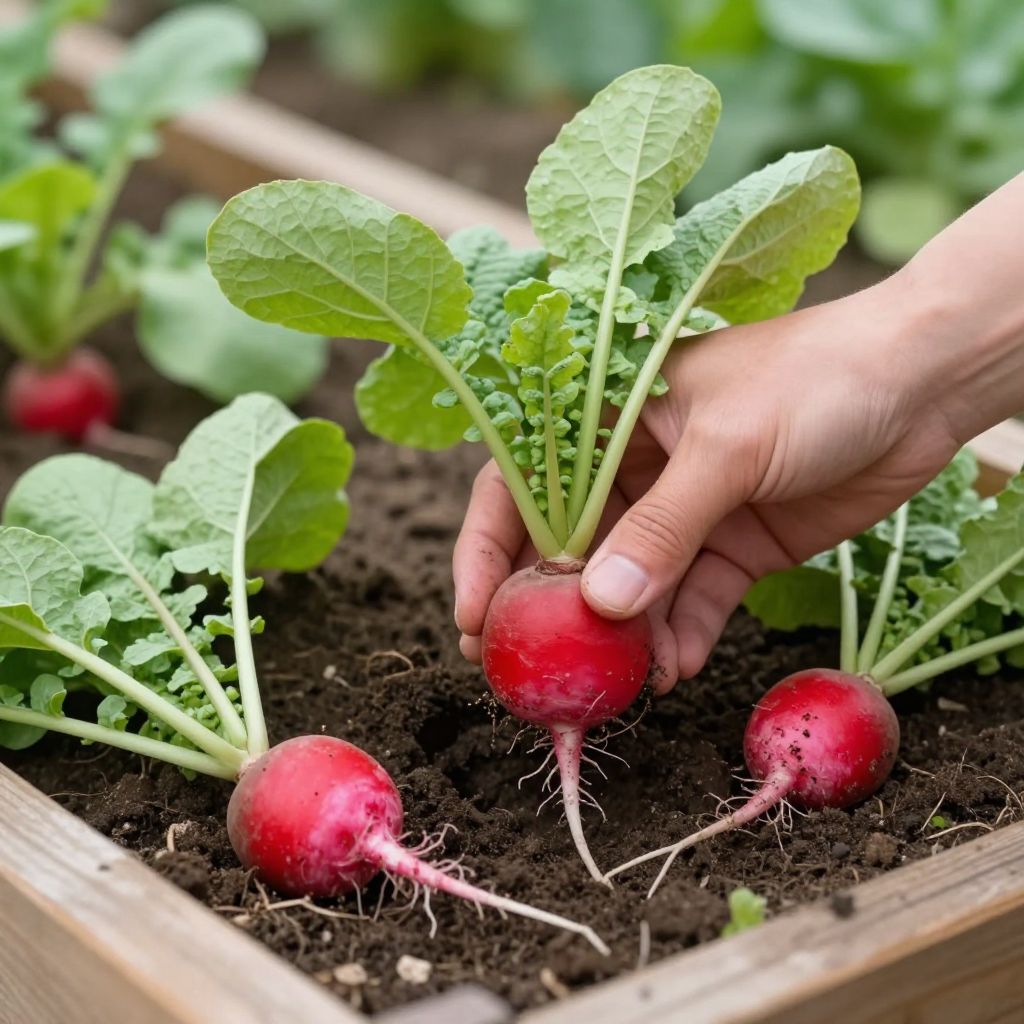
Wondering when are radishes ready to harvest? The short answer is: usually very quickly, often in as little as 20 to 30 days for many spring types, but the best time depends on the variety, weather, and how fast the roots are developing. Radishes are at their sweetest and crispest when harvested young.
If you wait too long, they can turn pithy, woody, or overly spicy. The good news is that radishes give clear visual clues, so you can check them easily before pulling the whole crop.
When Are Radishes Ready To Harvest?
Most radishes are ready when the root shoulders are about 1 inch across, or when the seed packet’s maturity window has passed by a few days and the tops look full. Harvest as soon as roots reach usable size, because radishes enlarge quickly and quality drops fast once they get too big.
How to Tell Radishes Are Ready
Radishes are one of the easiest vegetables to judge by sight and touch. You do not need to wait for a fixed calendar date if the plants are telling you they are ready.
Look at the root size
For many round red radishes, the edible root is ready when the top of the bulb is visible at the soil line and measures about 3/4 to 1 inch across. Daikon and other long radishes are ready when the shoulder is substantial and the root has reached the size described for that variety.
Check the tops
Healthy radish greens usually mean the plant is still actively growing. Once the roots are near harvest size, the tops may look full and upright. If the leaves start to yellow or the plant begins to bolt, harvest promptly.
Do a gentle test pull
When in doubt, loosen the soil beside one plant and tug it carefully. A ready radish should feel firm and pull up cleanly. If it is tiny, leave the rest for a few more days and check again.
Typical Radish Harvest Timing
Radish maturity varies by type, temperature, and growing conditions. Use the packet or plant label as your first guide, then confirm by size.
- Small spring radishes: often 20 to 30 days from sowing
- Longer-season radishes: often 30 to 60 days
- Daikon and winter radishes: often 50 to 70 days or more, depending on variety
Cool weather usually produces better texture and milder flavor. In hot conditions, radishes can mature faster than expected and become sharp or hollow if left too long.
Best Conditions for Good Radish Harvests
Radishes grow best in loose, evenly moist soil with good drainage. Compacted or rocky soil can distort roots, making them small, forked, or misshapen even if the plants look healthy above ground.
Soil and compost
Work in compost before planting to improve structure, but avoid overly rich soil with too much nitrogen. Excess nitrogen can produce lots of leafy growth and small roots.
Sunlight
Radishes prefer full sun, but in warmer climates a little afternoon shade can help slow bolting and keep roots tender. In cooler seasons, full sun supports faster growth.
Watering
Keep the soil evenly moist from sowing until harvest. Irregular watering can cause cracking, pithiness, or a hot, woody texture. Watering consistency matters more than heavy feeding for radishes.
How to Harvest Radishes the Right Way
Harvesting is simple, but a gentle approach helps preserve the roots and nearby plants. Pulling too hard can snap roots or disturb the rest of the row.
- Water lightly if the soil is dry, so roots release more easily.
- Loosen the soil beside the plant with a hand fork or trowel if needed.
- Grasp the leaves near the base and pull straight up.
- Shake off loose soil and trim the tops if you are storing them.
- Check the size of nearby radishes and harvest the rest over the next few days.
If you planted a thick row, harvest the largest roots first and leave smaller ones to size up a little longer. This staggered approach helps you get the best texture from each plant.
What Happens If You Harvest Too Late?
Overgrown radishes often become tough, spongy, or hollow in the center. Many also develop a stronger, more pungent flavor. Once radishes start to bolt, the roots usually decline quickly in quality.
Late harvest is not always a total loss, though. Very large radishes can still be usable if they are firm and not woody, especially in cooked dishes or if you enjoy a stronger flavor. But for crisp raw eating, earlier is better.
Common Problems That Affect Harvest Timing
Radishes are all leaves and no root
This usually means the plants are crowded, shaded, or getting too much nitrogen. Thin seedlings early so each plant has room to form a root, and avoid heavy feeding with high-nitrogen fertilizer.
Roots are cracked
Cracking often happens when soil moisture swings from very dry to very wet. Keep watering steady, especially as roots swell.
Roots are tiny
Small roots can result from poor soil, overcrowding, heat, or harvesting too early. Thin seedlings to the recommended spacing for your variety and grow them in cool weather when possible.
Plants bolt before roots size up
Bolting means the plant sends up a flower stalk. This is more common in warm weather or when radishes are stressed. Once bolting starts, harvest immediately because root quality usually declines fast.
Can You Harvest Radish Greens Too?
Yes. Radish greens are edible when young and tender, and harvesting a few leaves will not usually harm the plant if you are careful. Avoid stripping too many leaves from small plants, because the foliage helps feed root growth.
If you want both greens and roots, take only a few outer leaves from each plant and leave the center growing point intact. For the best root harvest, limit leaf picking and focus on growing the bulb.
Harvesting Different Types of Radishes
Round spring radishes
These are the easiest to judge. Harvest when the top of the root is visible and the bulb is still smooth and firm. If they get too large, they often become sharp and pithy.
Long radishes and daikon
These need more room and a little more patience. Check the packet for expected length, then gently probe the soil to see how much root has formed. Loose soil makes them easier to pull without breaking.
Winter radishes
These can stay in the ground longer than quick spring types, but they still need to be harvested before severe cold or major quality decline. Watch for size and firmness rather than waiting too long.
Storing Radishes After Harvest
For the best texture, remove the tops soon after harvest so they do not draw moisture from the roots. Store unwashed radishes in the refrigerator in a perforated bag or container with a little humidity.
- Trim greens to about 1/2 inch above the root
- Brush off excess soil
- Keep roots cold and moist, but not wet
- Use them within a week or two for the best crispness
If you leave the greens attached, the roots lose moisture faster and soften more quickly. The tops can be stored separately and used soon after harvest.
Practical Tips for Better Radish Timing Next Time
Radishes reward close attention. A few simple habits will help you harvest at the right moment every time.
- Sow a small row every 1 to 2 weeks for a steady harvest.
- Thin seedlings early so roots have room to size up.
- Keep soil evenly moist, especially during warm spells.
- Check a test plant once the earliest maturity date approaches.
- Harvest promptly instead of waiting for the biggest possible root.
The more often you grow radishes, the easier it becomes to read their size and quality. A quick look at the shoulders, a gentle test pull, and attention to weather are usually enough.
Conclusion
If you are asking when are radishes ready to harvest, the best answer is: as soon as the roots reach usable size and before they become oversized or tough. Check the root shoulders, compare them with the variety’s expected maturity, and harvest young for the crispest flavor. For more help with root crops, you may also want to read about growing carrots in loose soil and how to thin seedlings for better harvests.