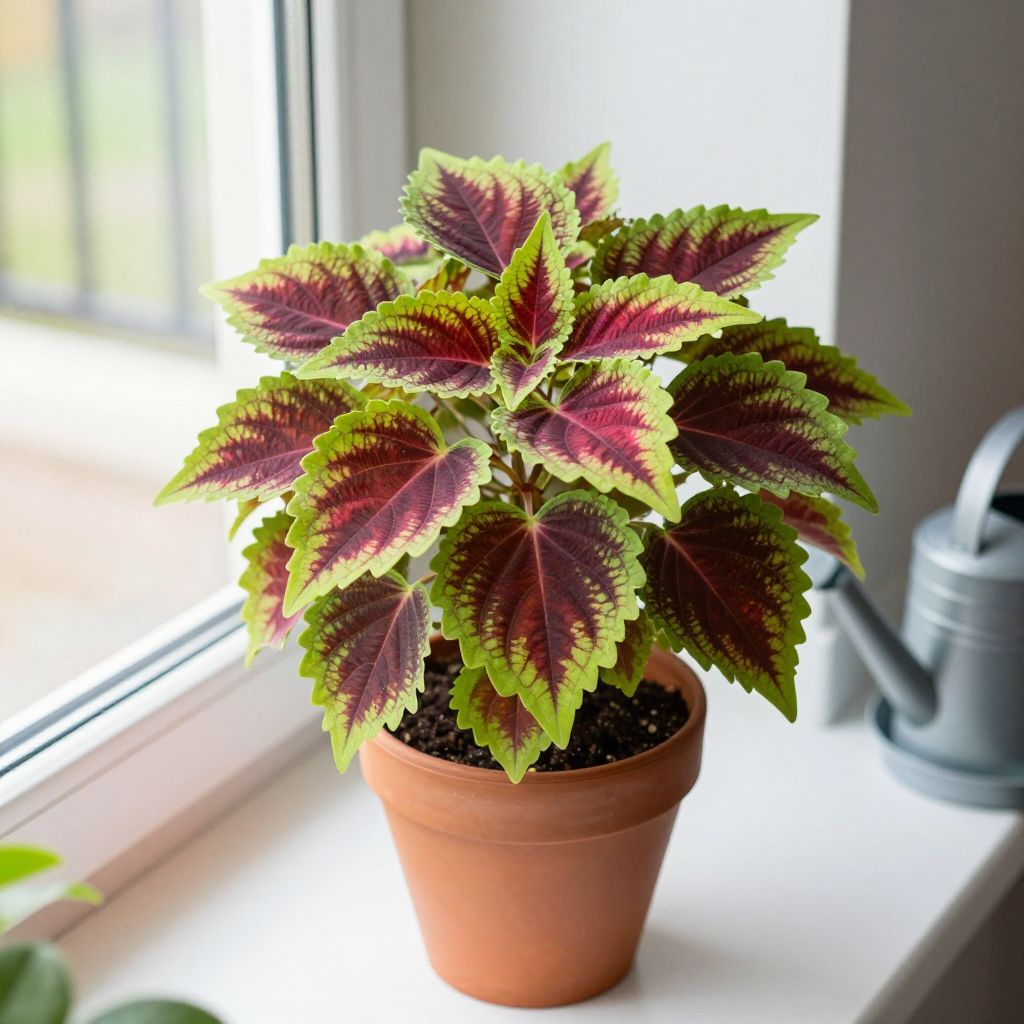
Can coleus grow indoors? Yes—coleus adapts very well to indoor life if you give it bright light, steady warmth, and regular pinching. It is usually grown for its colorful foliage, not flowers, so the goal indoors is to keep the leaves full, vivid, and compact.
The main challenge is light. With the right window, pot, and watering routine, coleus can stay attractive for months or even longer as a houseplant.
Can Coleus Grow Indoors?
Yes. Coleus (Plectranthus scutellarioides) can grow indoors as a colorful foliage plant, especially near a bright window or under grow lights. It prefers warm temperatures, evenly moist soil, and regular pinching to prevent legginess. Indoors, it often grows best as a seasonal houseplant or a plant you overwinter from the garden.
What Coleus Needs Indoors
Coleus is easy to grow indoors when you match its basic needs. Think bright light, moderate moisture, airy soil, and consistent warmth. If any one of those is off, the plant usually responds with faded color, drooping leaves, or stretched growth.
Light
Light is the biggest factor in keeping coleus healthy indoors. Most varieties need bright, indirect light to hold good color without scorching.
- Place it near an east- or west-facing window.
- A south-facing window can work if the plant is set back from direct midday sun.
- If your home is dim, use a grow light for 12 to 14 hours a day.
Too little light causes weak, leggy stems and dull colors. Too much direct sun can bleach or scorch the leaves, especially through glass.
Temperature and humidity
Coleus likes indoor temperatures that stay comfortably warm, roughly in the range most homes already provide. Avoid cold drafts, heat vents, and sudden temperature swings.
- Keep it away from chilly windows in winter.
- Do not let leaves touch cold glass for long periods.
- Average indoor humidity is usually fine, but very dry air can crisp leaf edges.
If your home is especially dry, group plants together or place the pot on a pebble tray with water beneath it, making sure the pot itself does not sit in water.
Soil and drainage
Coleus does best in a light, well-draining potting mix. A standard indoor potting soil works well if it drains freely and does not stay soggy.
- Choose a pot with drainage holes.
- Use a loose potting mix rather than heavy garden soil.
- If the mix feels dense, blend in a little perlite for extra air space.
Good drainage matters because coleus roots can rot in wet, compacted soil. A pot that drains well is more important than a decorative container with no holes.
How to Grow Coleus Indoors Successfully
If you are starting with a young plant or bringing one inside from the garden, the transition is straightforward. The key is to reduce stress and encourage bushy growth from the start.
- Choose a healthy plant. Look for firm stems, colorful leaves, and no signs of pests.
- Pick the right pot. Use a container only slightly larger than the root ball.
- Plant in well-draining mix. Set the plant at the same depth it was growing before.
- Water thoroughly once. Let excess water drain away completely.
- Place it in bright light. Rotate the pot every week or so for even growth.
- Pinch the tips. Remove growing tips regularly to keep the plant full.
Should you repot immediately?
Not always. If the plant is already in a suitable container, let it settle in first. Repot only if roots are crowded, the soil breaks down quickly, or water runs straight through the pot without soaking in.
Watering Coleus Indoors
Coleus prefers evenly moist soil, but not wet soil. Indoors, overwatering is one of the most common mistakes because the plant uses water more slowly than it would outside in summer.
- Check the top 1 inch of soil with your finger.
- Water when that surface layer feels dry.
- Water until it drains from the bottom, then empty the saucer.
Do not let the pot sit in standing water. If the lower soil stays soggy for days, reduce watering and check drainage.
Signs of watering problems
- Drooping leaves with dry soil: the plant likely needs water.
- Yellowing leaves and soft stems: the plant may be overwatered.
- Crispy leaf edges: the air may be too dry, or the plant may be drying out too much between waterings.
Pruning and Pinching for a Fuller Plant
Coleus naturally grows fast and can become lanky indoors. Regular pinching keeps it compact and encourages side shoots, which gives you a fuller plant with more leaves.
- Pinch off the top growing tip when stems are 4 to 6 inches long.
- Repeat pinching every few weeks during active growth.
- Remove flower spikes as soon as they appear if you want the plant to focus on foliage.
Flowering is not harmful, but it can make the plant look tired and may reduce leaf production. For indoor coleus, foliage is the main attraction.
Fertilizing Indoor Coleus
Indoor coleus benefits from light feeding during active growth, but too much fertilizer can cause weak, overly lush growth or salt buildup in the potting mix.
- Use a balanced houseplant fertilizer or a foliage-plant fertilizer at a mild rate.
- Feed only when the plant is actively growing and receiving good light.
- Pause feeding in low-light winter conditions if growth slows.
If leaves look pale but the plant is otherwise healthy, the problem may be light rather than nutrients. Fix the light first before adding more fertilizer.
Common Indoor Problems and How to Fix Them
Most indoor coleus problems are easy to correct once you identify the cause. Watch the leaves and stems closely; they usually tell you what the plant needs.
Leggy growth
Long stems with wide gaps between leaves usually mean the plant needs more light. Move it closer to a brighter window or add a grow light, then pinch back the stems to encourage branching.
Faded color
Color can fade in low light, but it can also bleach in harsh direct sun. Adjust the plant’s position gradually until the color improves.
Leaf drop
Sudden leaf drop often follows stress from cold drafts, overwatering, underwatering, or a big change in light. Keep conditions steady and avoid moving the plant around too often.
Pests
Indoor coleus can attract common houseplant pests such as aphids, spider mites, whiteflies, and mealybugs. Check the undersides of leaves and the joints where stems meet.
- Isolate the plant if you see pests.
- Rinse the foliage gently with water.
- Remove visible pests by hand or with a cotton swab dipped in rubbing alcohol for mealybugs.
Good air circulation and regular inspection help catch problems early.
Root rot
Wilting despite wet soil, yellow leaves, and a sour smell from the pot can point to root rot. If caught early, you may be able to save the plant by trimming damaged roots and repotting into fresh, well-draining mix.
Can You Move Outdoor Coleus Indoors?
Yes, and many gardeners do this at the end of the season. Coleus is tender, so it cannot tolerate frost. Bring it inside before cold weather arrives, while nights are still mild.
- Inspect the plant carefully for pests before bringing it indoors.
- Trim it back if it is too large or floppy.
- Place it in bright light and let it adjust gradually.
Expect some leaf drop after the move. That is normal as the plant adapts to lower indoor light and humidity.
Propagating Coleus Indoors
Coleus is easy to propagate from stem cuttings, which is one reason it is such a useful indoor plant. If the parent plant gets leggy, you can use the cuttings to start a fresh, compact plant.
- Cut a healthy stem just below a leaf node.
- Remove the lower leaves.
- Place the cutting in water or moist potting mix.
- Keep it warm and in bright, indirect light.
- Transplant once roots are well formed.
Propagation is a practical way to refresh an older plant and keep your favorite color pattern going.
Best Indoor Care Routine for Coleus
A simple routine usually works best. Coleus does not need complicated care, but it does need consistency.
- Check soil moisture every few days.
- Rotate the pot for even growth.
- Pinch back new tips to keep it bushy.
- Inspect regularly for pests.
- Adjust light as the seasons change.
In winter, growth may slow because of shorter days. That is normal. Reduce watering and avoid overfeeding until light levels improve again.
Conclusion
So, can coleus grow indoors? Absolutely—if you give it bright indirect light, well-draining soil, careful watering, and regular pinching, it can be a colorful, easy houseplant. Start by placing yours in the brightest suitable spot in your home and check the soil before watering.
If you enjoy growing plants indoors, you may also like reading about growing strawberries indoors.