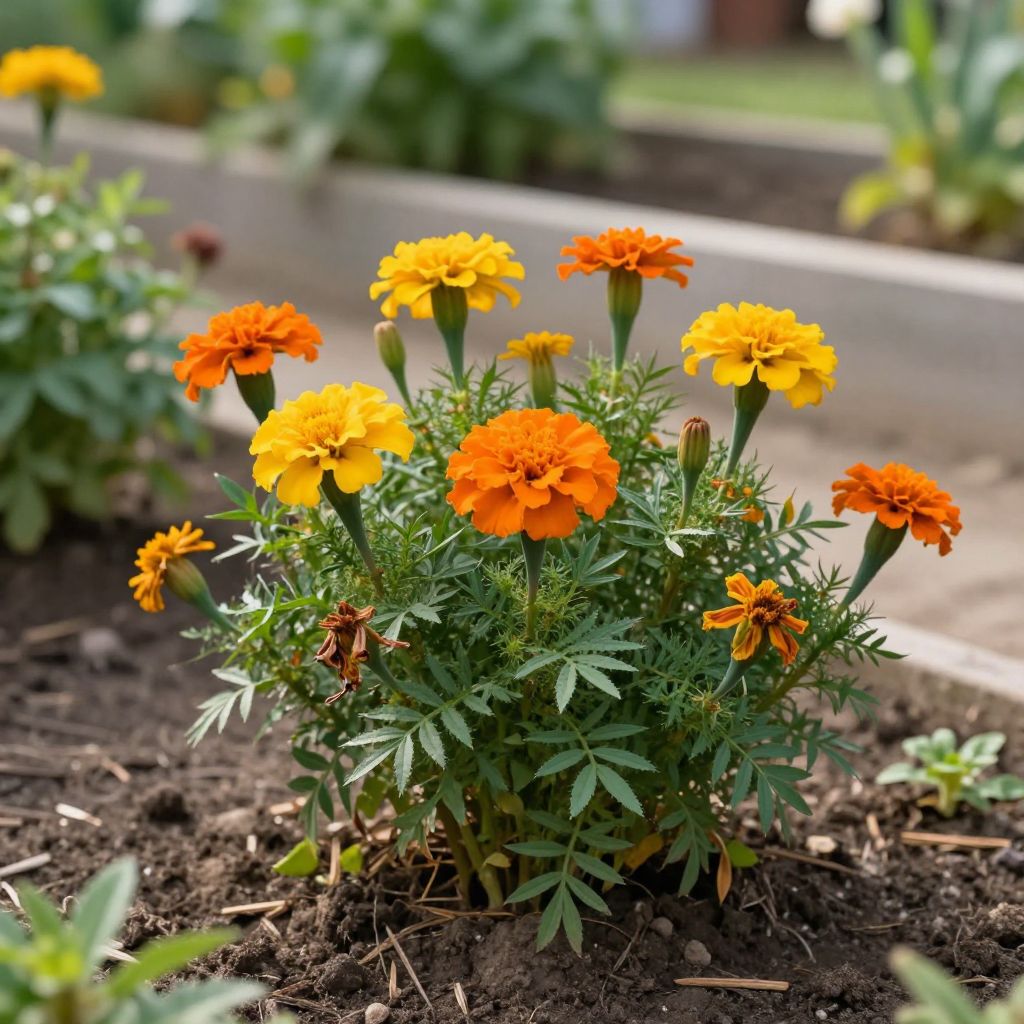
Do marigolds come back? It depends on the type you grow and your climate. Some marigolds are true annuals that finish their life cycle in one season, while others may reseed or behave like short-lived perennials in frost-free areas.
The good news is that marigolds are easy to grow, quick to bloom, and often return in one form or another if conditions suit them. With the right planting and a little cleanup, you can enjoy them again without much fuss.
Do marigolds come back?
Most garden marigolds are annuals, so they do not come back from the same plant after winter. However, they often self-seed, and in warm climates some types may persist longer than one season. If you want them every year, save seed or let a few flowers go to seed.
Which marigolds are you growing?
French marigolds
French marigolds (Tagetes patula) are compact, colorful annuals commonly grown in beds, borders, and containers. They usually die after frost, but they may reseed if you leave spent blooms in place.
African marigolds
African marigolds (Tagetes erecta) are larger, taller annuals with big flower heads. They also usually complete their life cycle in one growing season and are killed by cold weather.
Signet marigolds
Signet marigolds (Tagetes tenuifolia) are smaller, finer-textured plants with edible flowers and foliage. Like other common marigolds, they are generally annuals, though they may self-sow readily in mild areas.
Can marigolds survive winter?
In most climates, no. Marigolds are frost-tender and usually stop growing when temperatures drop. A hard frost will blacken the foliage and end the plant’s season. In frost-free regions, they may keep blooming longer, but older plants still decline over time.
If you garden in a warm climate, you may notice marigolds acting more like short-lived perennials. Even then, they often perform best when replanted each season because younger plants bloom more vigorously and look tidier.
How to get marigolds back next year
Let them self-seed
If you want marigolds to return on their own, leave a few healthy flowers on the plant until they dry and form seed heads. The seeds can fall into the soil and sprout the following season if conditions are right.
This works best when you leave some bare soil around the plants and avoid heavy mulching over the seed area. Self-seeded marigolds may not appear exactly where you want them, but they are easy to transplant while small.
Collect and save seed
Saving seed is the most reliable way to have marigolds come back in your garden. Wait until the flower heads are dry and brown, then remove the seeds and store them in a cool, dry place until planting time.
- Choose fully mature, dry flower heads.
- Snip them off on a dry day.
- Separate the long, slender seeds from the dried petals and base.
- Let the seeds dry a little more indoors if needed.
- Store them in a labeled paper envelope or breathable container.
Dry storage matters. Moisture can cause saved seed to mold or lose viability faster.
Overwinter indoors in containers
If you grow marigolds in pots and want to try keeping them longer, move them to a bright, sheltered spot before frost. This is more practical in mild climates than in cold ones, and even then the plants may become leggy and less floriferous.
Before bringing them in, inspect for pests and trim back any weak growth. Keep the soil slightly moist, not soggy, and provide as much light as possible.
Best growing conditions for healthy marigolds
Sunlight
Marigolds bloom best in full sun, which usually means at least 6 hours of direct light each day. In very hot climates, a little afternoon shade can help prevent stress, especially for container plants.
Soil
Use well-drained soil that is moderately fertile. Marigolds tolerate average garden soil well, but they dislike waterlogged conditions. If your soil is heavy clay, mix in compost to improve structure and drainage rather than making the bed constantly wet.
Watering
Water newly planted marigolds regularly until they establish. After that, let the top layer of soil dry slightly between waterings. Overwatering is a common mistake and can lead to weak growth, fewer blooms, and root problems.
Container marigolds dry out faster than those in the ground, so check pots often in warm weather. Water deeply when the top inch or two of soil feels dry, and make sure excess water can drain freely.
Spacing and airflow
Good spacing helps marigolds stay healthy and reduces disease. Crowded plants hold moisture on the leaves longer, which can encourage fungal issues. Leave enough room for the mature size of the variety you grow.
Why marigolds sometimes disappear
Frost damage
The most common reason marigolds do not come back is cold weather. Once frost hits, the plants collapse and will not regrow from the same stems and roots.
Poor drainage
Wet soil can rot roots or weaken the plant so it declines early. If marigolds keep failing in the same spot, improve drainage or move them to a raised bed or container.
Too much shade
Marigolds in shade often grow lanky, bloom poorly, and may not produce enough seed to return the next year. More sun usually means sturdier plants and better reseeding.
Pests and disease
Aphids, spider mites, and thrips can stress marigolds, especially in hot, dry weather or crowded plantings. Powdery mildew and root rot can also shorten the plant’s life if airflow and drainage are poor.
How to keep marigolds blooming longer
Deadheading helps marigolds put energy into new flowers instead of seed production. Remove faded blooms regularly by pinching or snipping them just above a leaf set or side shoot.
- Pick off spent flowers once they fade.
- Trim leggy stems to encourage bushier growth.
- Remove yellowing or diseased leaves promptly.
- Keep plants in full sun for the best bloom production.
If growth slows in midsummer, a light trim and steady watering can often refresh the plant. Avoid heavy feeding, which can produce more leaves than flowers.
Propagating marigolds for repeat plantings
Because most marigolds are annuals, propagation usually means starting new plants from seed each year. This is simple, inexpensive, and often gives better results than trying to keep old plants alive through winter.
Sow seeds after frost danger has passed, or start them indoors a few weeks earlier if you want an earlier display. Use a light seed-starting mix and keep the medium evenly moist until germination.
Transplanting seedlings
Move seedlings outdoors once nights are reliably mild and the plants have a few sets of true leaves. Harden them off gradually by exposing them to outdoor conditions over several days.
Plant them in prepared soil, water them in well, and mulch lightly if needed to conserve moisture without burying the stems.
Common mistakes to avoid
- Planting marigolds in shade and expecting strong reblooming.
- Keeping soil constantly wet.
- Letting plants become overcrowded.
- Ignoring spent blooms if you want seed to form.
- Assuming every marigold will overwinter outdoors.
One of the biggest misconceptions is that all marigolds return like perennials. In reality, most garden marigolds are best treated as seasonal plants that you replant or reseed each year.
When to replace marigolds
If your marigolds are tired, sparse, or diseased, it is often better to replace them than to nurse them through decline. Fresh plants usually recover the color and fullness that older ones lose late in the season.
In long growing seasons, you may even plant a second round after the first flush fades. This can keep beds looking full and colorful well into fall, depending on your local climate.
Conclusion
So, do marigolds come back? Usually not from the same plant, but they often return through self-seeding or by replanting saved seed. Give them sun, drainage, and regular deadheading, and you can enjoy them again with very little effort.
If you want to keep learning, you may also find these related guides helpful: do marigolds come back every year and do hummingbirds like marigolds.