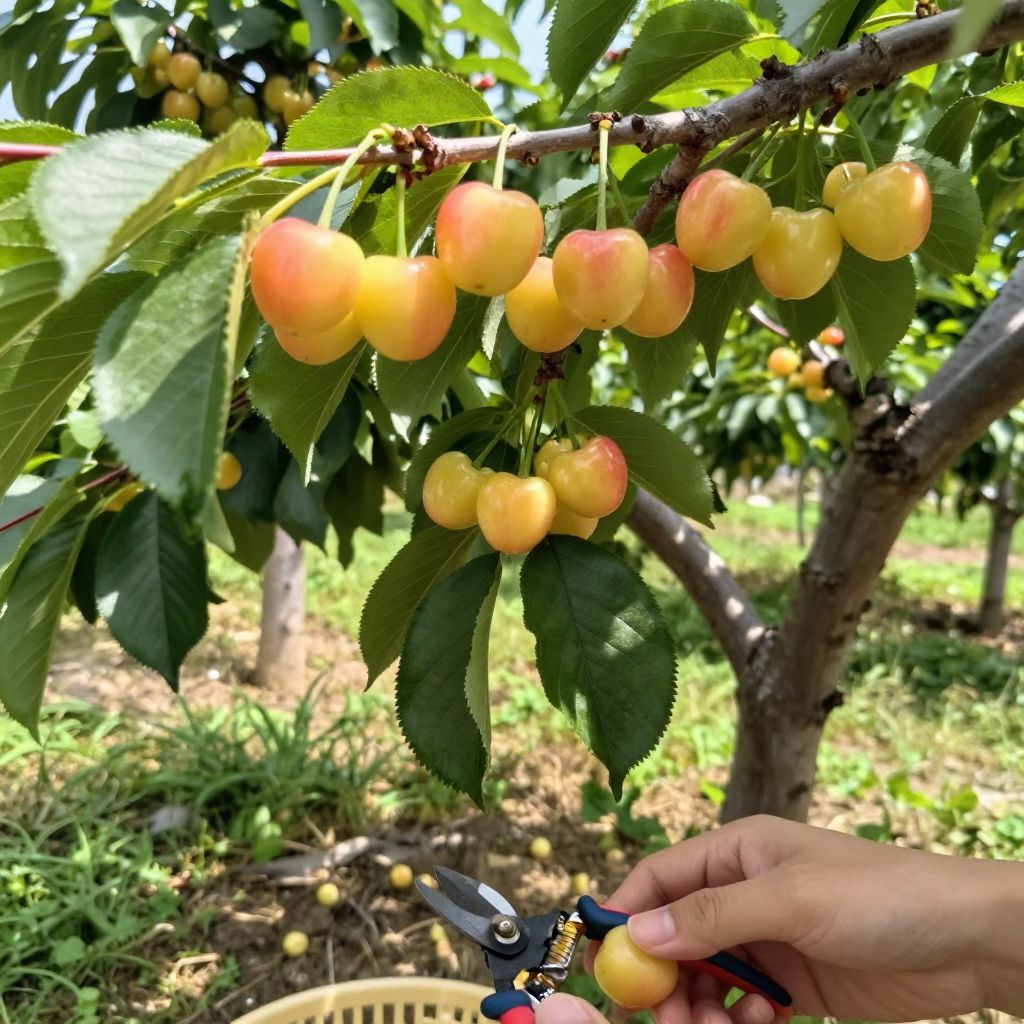
When are Rainier cherries in season? If you grow or shop for this sweet yellow-red cherry, the short answer is that the harvest window is usually early summer, often from late June into July depending on your climate and the weather that year.
For gardeners, the timing matters because Rainier cherries ripen quickly, are easily damaged by rain, and need the right site and care to produce well. Knowing the season helps you plan harvests, protect fruit, and understand what your tree needs before and after picking.
When are Rainier cherries in season?
Rainier cherries are typically in season in early summer, with harvest often landing between late June and mid-July in many growing areas. In warmer regions they may ripen earlier, while cooler sites can push harvest later. Local weather, bloom time, and tree age all affect the exact picking window.
What makes Rainier cherries different from other sweet cherries?
Rainier cherries are a sweet cherry cultivar known for their pale yellow skin with a red blush, tender flesh, and delicate flavor. They are usually less forgiving of rough handling than darker cherries, so harvest timing and careful picking matter more than many gardeners expect.
Why the season is so short
Rainier cherries ripen fast once they begin coloring. A tree can move from “almost ready” to overripe in a matter of days, especially during warm spells.
That short window is why many home gardeners check fruit daily as harvest approaches. If you wait too long, the cherries can soften, split after rain, or lose quality quickly.
How to tell when Rainier cherries are ready to pick
Look for a creamy yellow base color with a strong red blush, firm but yielding flesh, and a sweet flavor with no green or starchy taste. The stem should detach with a gentle twist. Cherries do not continue to ripen much after picking, so taste-testing is the best guide.
Signs your fruit is at peak ripeness
- Color: yellow background skin with a good red blush
- Taste: fully sweet, not tart or grassy
- Texture: firm, juicy, and not hard as a stone
- Stem attachment: fruit comes off easily with a slight lift and twist
- Seed color: the pit is fully developed, though this is less useful than taste and color
If you are unsure, pick one or two cherries from different parts of the tree and taste them. Sun-exposed fruit often ripens sooner than shaded fruit, so checking one branch is not enough.
How climate affects Rainier cherry season
Rainier cherry season shifts with your local climate. Warm springs can advance bloom and harvest, while cool, wet springs may delay ripening. Frost, wind, and cloudy weather can also slow development or reduce fruit quality.
Regional timing differences
- Warmer inland areas: often earlier harvests
- Cooler coastal or higher-elevation sites: later harvests
- Microclimates: south-facing walls and sheltered yards can speed ripening
- Rainy finish to the season: may increase cracking and shorten the picking window
If you are growing Rainier cherries at home, watch your tree rather than relying only on calendar dates. Your own bloom time is the best clue to harvest timing.
Growing conditions that help Rainier cherries ripen on time
Healthy trees are more likely to flower, set fruit, and ripen well. Rainier cherries do best in full sun, well-drained soil, and a site with good air movement. Poor drainage, low light, and crowded canopies can delay ripening and increase disease pressure.
Sunlight and spacing
Give the tree full sun whenever possible. At least 6 to 8 hours of direct light helps fruit color and sugar development.
Space trees so branches are not packed tightly against fences, buildings, or other fruit trees. Good airflow helps leaves dry faster after rain and reduces fungal problems.
Soil and drainage
Rainier cherries prefer soil that drains well but still holds some moisture. Heavy clay that stays wet can stress roots and weaken the tree over time.
If your soil is dense, improve it before planting with compost and by choosing a raised bed, berm, or mound where appropriate. Avoid planting where water stands after rain.
Watering during fruit development
Keep soil evenly moist during bloom, fruit set, and sizing, especially in dry weather. Irregular watering can contribute to fruit splitting and stress the tree.
Water deeply rather than frequently sprinkling the surface. A mulch layer can help steady soil moisture, but keep mulch a few inches away from the trunk.
Pruning and maintenance for better harvest timing
Pruning does not make cherries ripen overnight, but it can improve light penetration, air circulation, and fruit quality. Well-managed trees are easier to harvest and less likely to develop disease during the season.
When to prune
For many home gardeners, light structural pruning is best done during the dormant season. Summer pruning can be used carefully to remove vigorous growth that shades fruit, but avoid overdoing it.
What to remove
- Dead, damaged, or crossing branches
- Dense interior shoots that block light
- Water sprouts that crowd the canopy
- Low branches that make harvest difficult
Do not remove so much growth that the tree is shocked. Excessive pruning can push leafy growth instead of fruit and may reduce next year’s crop.
Common problems that can affect Rainier cherry season
Several issues can shorten the harvest window or reduce fruit quality. The most common are rain cracking, bird damage, pests, and fungal diseases that weaken the tree or blemish the fruit.
Rain cracking
Rainier cherries can split when rain falls close to harvest. Once fruit cracks, it spoils quickly and attracts insects.
To reduce losses, harvest promptly when fruit is ripe. If your area gets frequent summer rain, consider protective covers or selecting a site with good drainage and airflow.
Birds and wildlife
Birds often discover ripe cherries before you do. Netting is one of the most effective ways to protect a small home tree.
Install netting before fruit turns fully ripe so birds do not learn the tree is a food source. Secure the edges well to prevent entanglement.
Pests and diseases
Look for aphids, cherry fruit fly where present, and fungal issues such as brown rot or leaf spot. These problems do not always stop harvest, but they can reduce fruit quality and tree vigor.
Good sanitation helps: remove fallen fruit, rake up diseased leaves, and prune for airflow. If you see recurring problems, identify the issue early rather than waiting until harvest is nearly over.
How to harvest Rainier cherries correctly
Pick cherries in the cool part of the day if possible. Use gentle handling and shallow containers so fruit does not bruise under its own weight.
- Check color and taste on several parts of the tree.
- Hold the stem, not the fruit, and twist gently.
- Place cherries in a shallow basket or container.
- Remove damaged or split fruit first.
- Recheck the tree every day or two during peak ripening.
Do not pull hard on the fruit. A clean stem attachment helps the cherries store better and reduces skin damage.
After harvest care
Cool cherries as soon as possible after picking. Even short exposure to heat can reduce texture and sweetness.
Sort out any cracked or soft fruit right away. Use the best fruit first, since Rainier cherries are best eaten soon after harvest.
Can you grow Rainier cherries in a home garden?
Yes, if your climate suits sweet cherries and you can provide a sunny, well-drained site. Rainier cherries can be rewarding, but they are not the easiest fruit tree for every yard.
Many gardeners need to think carefully about pollination, space, pruning, and bird protection before planting. If your area has frequent spring rain or very humid summers, fruit quality may be harder to maintain.
Before planting, consider these points
- Whether your local climate supports sweet cherry production
- How much sun the site receives
- Whether soil drains well after rain
- Whether you can protect fruit from birds and cracking
- Whether you have room for proper tree size and pruning access
If you are just starting out, talk with a local nursery or extension service about cherry varieties that perform well in your region. Local advice is often more useful than a general calendar date.
Quick seasonal checklist for Rainier cherry growers
- Watch bloom time in spring to estimate harvest later
- Keep soil evenly moist during fruit development
- Prune for light and airflow during the dormant season
- Monitor fruit color closely as summer approaches
- Protect ripening cherries from birds and rain damage
- Harvest promptly once flavor and color are right
Conclusion
When are Rainier cherries in season? Usually in early summer, with the exact harvest time shaped by your local climate and the weather that year. The best approach is to watch color, taste, and firmness rather than relying on a fixed date.
If you are growing them, focus on sun, drainage, steady moisture, and careful pruning so the fruit can ripen well. For more fruit-tree timing and care, you may also want to read related guidance on pruning fruit trees and protecting fruit from birds.