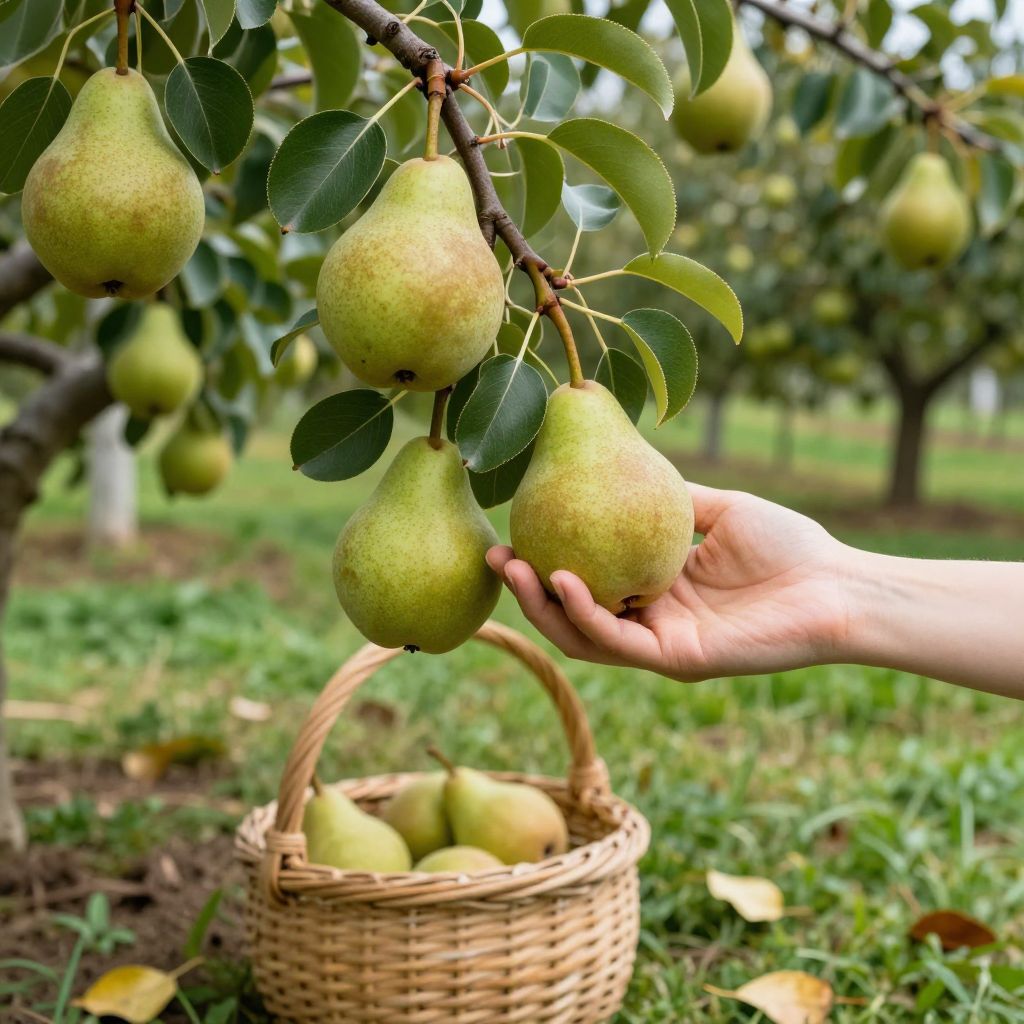
Wondering when are pears in season so you can pick the best fruit or time your harvest properly? The answer depends on the pear type, your climate, and whether you’re buying fruit or growing a tree. Most pears ripen from late summer into autumn, but some varieties are ready earlier or later.
If you grow pears at home, timing matters even more than the calendar. Pears are often harvested before they fully soften on the tree, then ripened indoors for the best texture and flavor.
When are pears in season?
Pears are generally in season from late summer through autumn, with many common dessert pears harvested from August to October in the Northern Hemisphere. Exact timing varies by variety and region. Homegrown pears are usually picked when mature but still firm, then allowed to ripen off the tree for the best eating quality.
How pear season works in the garden
Pears do not all ripen at the same time. Some summer pears are ready early, while many popular European pears mature in early to mid-autumn. Asian pears often ripen a little earlier and are usually eaten crisp rather than soft.
For gardeners, the key difference is between harvest maturity and eating ripeness. A pear can be ready to pick before it tastes ready to eat.
Common seasonal patterns
- Summer pears: often harvested from mid to late summer.
- Autumn pears: the main harvest for many backyard trees.
- Late-season pears: some varieties hang into late autumn, depending on weather.
- Storage pears: certain types are picked in autumn and improve after a period of cool storage.
How to tell when pears are ready to pick
Do not rely on skin color alone. Pears are usually ready when they reach full size, the background color shifts slightly, and the stem separates easily from the spur when lifted gently. The fruit should feel firm, not soft, unless you are dealing with a variety that naturally ripens on the tree.
Simple ripeness checks
- Lift the pear gently and twist it upward.
- If it comes away easily, it may be ready to harvest.
- Check the background color near the stem for a slight change from green to yellow-green, if that suits the variety.
- Sample one fruit from the tree and ripen it indoors to judge flavor.
Important: pears that are left too long on the tree often become grainy, mealy, or bruised by wind and birds.
Ripening pears after harvest
Many pears taste best after ripening indoors at room temperature. Place them in a bowl or paper bag and check daily. Once the flesh near the stem gives slightly to gentle pressure, they are ready to eat.
If you want to slow ripening, move firm pears to a cool place such as a refrigerator or unheated storage area, depending on your climate and the fruit’s condition.
Best practice for home growers
- Pick pears when mature but still firm.
- Ripen a few fruits at a time indoors.
- Store unripe pears cool to extend their keeping time.
- Handle fruit carefully to avoid bruising.
Seasonal care for pear trees
Knowing when are pears in season also helps you plan tree care. The months before harvest affect fruit size, quality, and disease pressure. Good soil, steady moisture, and sensible pruning all influence whether your pears ripen well.
Sunlight and site
Pear trees fruit best in full sun, with at least 6 to 8 hours of direct light daily where possible. A sunny, open site helps fruit ripen evenly and reduces disease problems by improving air movement.
Soil and drainage
Pears prefer well-drained soil. Heavy, waterlogged ground can weaken roots and increase disease risk. If your soil stays wet after rain, plant on a raised area or improve drainage before planting.
Work in compost to improve soil structure, but avoid overloading the planting hole with rich amendments that can create a “pot effect” and trap roots in poor drainage.
Watering during fruit development
Young trees need regular watering while they establish. Mature trees benefit from deep, occasional watering during dry spells, especially when fruit is sizing up. Aim for even moisture rather than alternating drought and saturation.
Mulch helps conserve moisture and suppress weeds, but keep mulch a few inches away from the trunk to prevent rot and rodent damage.
Pruning and fruit quality
Pruning affects airflow, light penetration, and fruiting wood. For most backyard pear trees, winter pruning helps shape the tree, while light summer pruning can manage overly vigorous growth.
Remove crowded, crossing, or damaged branches so sunlight reaches the canopy. A well-opened tree usually produces better-colored, better-flavored fruit and dries faster after rain.
Pruning mistakes to avoid
- Do not remove too much wood at once.
- Do not leave dense, shaded centers.
- Do not prune heavily right before expected fruit ripening.
- Do not ignore dead or diseased branches.
Pollination and fruit set
Some pear trees need a compatible pollination partner to produce a good crop, while others may set some fruit on their own. If your tree flowers well but sets little fruit, poor pollination may be part of the problem.
For better fruit set, plant compatible varieties nearby, encourage pollinators with diverse flowering plants, and avoid spraying insecticides during bloom unless absolutely necessary and label directions allow it.
Common pests and diseases as harvest nears
As pears approach season, watch for pests and diseases that can damage the crop or shorten storage life. Early action often saves more fruit than waiting until the problem is obvious.
Problems to watch for
- Codling moth: larvae can tunnel into fruit.
- Pear scab: causes dark, rough spots on leaves and fruit.
- Fire blight: can blacken shoots and flowers and may spread quickly in warm, wet conditions.
- Bird damage: pecking can ruin nearly ripe fruit.
- Wasps and bees: may be drawn to split or overripe pears.
If you notice damaged fruit, remove it promptly from the tree and the ground. Sanitation helps reduce pest cycles and disease spread.
Harvesting pears without bruising them
Pick pears on a dry day if possible. Wet fruit bruises more easily and stores poorly. Use both hands to support the fruit and stem, then lift upward rather than pulling downward.
Place fruit gently into a shallow container. Deep buckets can bruise pears at the bottom, especially if you are harvesting a large crop.
Tools that help
- Picking basket or shallow crate
- Bypass pruners for stubborn stems
- Orchard ladder for tall trees
- Soft gloves if fruit is thorny or branches are rough
Growing pears in different climates
Because season timing depends on local weather, your harvest may shift earlier or later than a general calendar suggests. Warm regions often see earlier ripening, while cooler areas delay harvest. A windy, hot summer can also speed things up.
Keep notes on bloom time, fruit size, and harvest date for your own garden. After a year or two, your tree’s pattern becomes much easier to predict.
Adjusting to your site
- In cooler climates, expect later harvests and slower ripening.
- In warmer climates, check fruit more often as season approaches.
- In frost-prone areas, choose varieties suited to your local growing season.
- In small gardens, consider dwarf or semi-dwarf trees for easier harvest and pruning.
Storing pears after harvest
Storage life depends on variety and harvest maturity. Some pears are best eaten soon after ripening, while others keep well for weeks or longer if picked at the right stage and stored cool.
Check stored fruit regularly. Remove any pear that softens too quickly, develops spots, or shows mold, because one bad fruit can affect the rest.
Conclusion
When are pears in season? Usually from late summer through autumn, but the exact timing depends on the variety and your local climate. For the best flavor, harvest pears when they are mature and firm, then ripen them indoors.
If you are planning next season’s harvest, take note of your tree’s bloom and picking dates now, and review other fruit-tree care topics such as pruning and pest control to improve your crop next year.